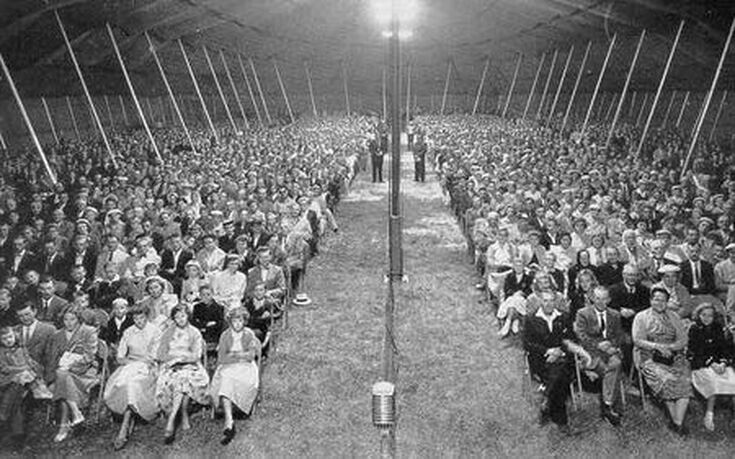

BIBLICAL THEOLOGY: SCRIPTURE INTERPRETING SCRIPTURE


  • Home
  • Are You Saved?
  • The Passion of Jesus Christ
  • What Is Revival?
  • Folly in Israel
  • Calvinism vs. Arminianism
  • Seminary, Academia, Psychology, & Science
  • Church History
  • Persecution, Suffering, Mortality, & Immortality
  • The Last Days
  • The Descension, Resurrection, & Ascension of Jesus Christ
  • Contact

Confusion as the Primary Affliction

7/30/2025

0 Comments


Article #7 on Mortality in the Book of Job 

Picture

Job's Confusion was the Primary Affliction in Job 9:1-10:22

At the testimony of Eliphaz (Job 4:1-5:27), and Bildad as a second witness (Job 8:1-22), Job feels forced to grapple with the doctrinal subject matter in the argument of his friends. This makes Job 9-10 unique at this stage in the discourse. Job speaks less of his physical suffering (in one sense) and more about his personal confusion about the situation. Job’s physical suffering is truly unfathomable without comprehending his confusion. The fact that Job feels condemned before God is the crux of the matter! Job’s personal torment would be radically eased, if only he could find spiritual peace with God in righteousness. His physical suffering would be relatively easy to endure, if only he could know the sweet assurance of justification before God in the Spirit as in months past (Job 29:1-25). Speaking of this, Job said: 
“If I say, I will forget my complaint, I will leave off my heaviness, and comfort myself: I am afraid of all many sorrows, I know that Thou wilt not hold me innocent.” – Job 9:27-28
Marvelously, as a token of divine grace, the fear of the LORD is restraining Job from utter godlessness – forcing him to be preoccupied by the fact that he is currently condemned before the Almighty. Confessedly, Job is stooping for “heaviness” under the weight of God’s hand of divine wrath (Job 9:13, 27). Feeling weary of life and bitter in soul (Job 10:1), Job’s attention is focused on his “confusion” as his primary “affliction” (Job 10:15). In other words, Job’s real problem is a spiritual sense of increasing divine indignation coming upon him (Job 10:17) – he says that it’s like a man being chased and pounded by an unrelenting Tempest (Job 9:17-18), or like a man being hunted by an inescapable Lion (Job 10:16)! The pressure and heat of divine anger appears so strong and vehement, Job feels unable to pass a single moment of peace and serenity. Spiritually speaking, he feels like a man suffocating to death in “bitterness” while gasping in vain for a single “breath” of fresh air (Job 9:18). 
Of course, Job cannot deny anything that Bildad was saying doctrinally from a Biblical perspective. Job admits that Bildad speaks the “truth” (Job 9:2). However, Job is obviously confused about his situation. His conscience will not allow him to simply believe, as Eliphaz and Bildad do wrongly assume, that he was wicked and therefore deserving of these divine judgments. Consequentially, Job’s deliberation is palpable throughout the discourse. Seeing that Job did indeed meet the criterion of righteousness revealed in the Word of God (Job 5:27, 6:10, 25, 22:22, 23:12), and was nevertheless divinely judged as the wicked (so it seems!), Job finds himself halting between opinions about his situation: firstly, He wonders whether a man can truly be “just with God” (Job 9:2) and, secondarily, he wonders whether God is truly being just with him.

Remember, Job crossed the threshold of outrightly accusing God in Job 7:11-21, so now Job is pondering about how it would be possible to be “just with God” in his present situation: namely, while Job is murmuring and contending against the Almighty (Job 9:2-4, 12, 14-16). While Job feels that he cannot deny that he was “righteous” (Job 9:15-16), he also cannot imagine any good success in taking up a bitter contention with God (Job 9:32-33). Even if it were possible, and somehow Job had an opportunity to “plead” with God (Job 9:19), if Job claims that he is being judged “without cause” by God because he is indeed “righteous” (Job 9:17, 15), then Job is condemning God in the process of justifying himself. This would come in the form of charging God with folly. Why? Because Job’s argument ultimately promotes the unjust and corrupt idea that “[God] destroyeth the perfect and the wicked” (Job 9:22). In other words, Job is strongly tempted with (and intermittently overcome by) the thought that God “will laugh at the trial of the innocent” when they are suddenly slaughtered by a mighty scourge (Job 9:23). 
“This is one thing, therefore I said it, He destroyeth the perfect and the wicked. If the scourge slay suddenly, he will laugh at the trial of the innocent.” - Job 9:22-23
Speaking of the same sentiments, Job asks God later on: “Is it good unto Thee that Thou shouldest oppress, that thou shouldest despise the work of thine hands, and shine upon the counsel of the wicked?” (Job 10:3). Let’s be clear! Job knows that this is a perverted and intolerable heresy (Job 9:20-21, 28). He even admits that his “own mouth shall condemn” him and “prove [him] perverse” in making such an argument (Job 9:20-21). Nevertheless, this is all that he can intellectually deduce from his own situation in the flesh. Remember, Job is oblivious to the heavenly situation unveiled in Job 1-2. Therefore, confessedly, he is “full of confusion” about everything (Job 10:15).

However, instead of boldly accusing God with bitter impudence, like before (Job 7:11-21), Job’s tone is more humble when speaking to God in Job 10:1-22. Instead of outrightly charging God with wickedness, Job inquires of God about it in Job 10:3, while in the process of entreating the LORD not to condemn him (Job 10:2). Job’s only hope is that God will shed light on the situation. For, he is basically wondering if God has iniquity (Job 9:22-23, 10:3), because Job is certain that God knows that he is “not wicked” as Eliphaz and Bildad are assuming (Job 10:7), and yet God is nevertheless searching and enquiring after Job’s “iniquity” and “sin” through these marvelous judgments (Job 10:6, 16-17). So, while Job knows and openly confesses to God, “Thou knowest that I am not wicked” (Job 10:7), he wonders what “sin” God is marking and why the Almighty is not rather acquitting him from his “iniquity” (Job 10:14). In other words, Job wonders why there is no forgiveness for his sins.

Feeling like a victim (Job 10:8-12, 16-17), Job sank deeper into confusion through a strong disbelief that God will even answer him on these matters of supplication (Job 9:3, 11-14, 28, 32-33), which in turn makes Job strongly cry to God for death to usher him away into “the land of darkness” (Job 10:18-22). This is Job opposing himself (2 Tim. 2:15). Attempting to humble himself, Job basically asks God to come and help him, and then in the next breath he strongly urges God to just leave him alone and let him die (Job 10:18-22)! Nevertheless, God had compassion on the sorry estate of this fallen man. He didn’t answer those rash prayers for death! Nor did he allow Job to abide in the chains of bitter unbelief (Isa. 29:18)! The very thing that Job couldn’t believe, or wouldn’t believe, God did despite his unbelief (Ezek. 20:44)! God sent a Prophet and then came down to meet with Job in a whirlwind (Job 32-42). Even so, we, as readers, “have seen the end of the Lord; that the Lord is very pitiful, and of tender mercy” (James 5:11). 
0 Comments

Suicide in the Bible?

7/30/2025

0 Comments


Article #6 on Mortality in the Book of Job 

Picture
Dying men sometimes pray for death. Maybe you haven't because you have always been healthy! Mortally ill people who teeter on the brink of death for a prolonged period of time sometimes give in to these desires. Even a secular world can empathize. However, it is important to note, even believers can be driven to this dark place through spiritual illness. Many occasions of this can be observed in Biblical Church History. The holiest men on earth are no exception to this weakness.

At a time of faltering, Moses, Elijah, and Jonah all prayed to die (Num. 11:15, 1 Kings 19:4, Jonah 4:3). Why? They all found themselves in the same unpleasant circumstances. They were backslidden! The sting of sin eats away at the spiritual sanity of the soul (1 Cor. 15:56). Moses was murmuring in distress, Elijah was fleeing like a coward, and Jonah was angry with God. Similarly, Job and Jeremiah were so confused over their current circumstances, they cursed their own birth and wished to die (Job 3:1-26, 7:15, 10:18-19; Jer. 15:10, 20:14-18); and let’s not forget Solomon’s erroneous glorification of death in the Book of Ecclesiastes (Eccl. 4:2). Of course, the same thing was happening to Job in Job 6:8-10.
"Oh that I might have my request; and that God would grant me the thing that I long for! Even that it would please God to destroy me; that he would let loose his hand, and cut me off! Then should I yet have comfort; yea, I would harden myself in sorrow: let him not spare; for I have not concealed the words of the Holy One." - Job 6:8-10
Job was utterly persuaded that he was dying, but with each passing day he continued to live. As he teetered on the edge of the grave, he mourned the thought of life altogether. Then in an outburst of sheer depravity, Job requested that God would “destroy” him – that the divine “hand” of God would be loosed to “cut [Job] off!” (Job 6:9). Suffice it to say, to be “cut off” by God is never a good thing in Scripture. Eliphaz already made this point in Job 4:7. Everyone knows this. 
Cut Off: Job 4:7, 6:9, 11:10, 18:16, 21:21, 24:24, 36:20 (Cut Off: Ex. 31:14, Lev. 7:20-21, 25, 27, 17:4, 9-10, 18:29, 19:8, 20:3, 5-6, 17-18, 23:29, Num. 9:13, 15:30, 19:20, Ps. 12:3, 34:16, 37:9, 22, 28, 34, 38, 54:5, 75:10, 76:12, 90:10, 94:23, 101:5, 8, 109:13, 15, 143:12, Prov. 2:22, 23:18, 24:14; Put Away: Deut. 13:5, 17:7, 12, 19:19, 21:21, 22:22, 24, Judges 20:13, Lev. 20:14)
Eliphaz was doctrinally correct when he said to Job, “…who ever perished, being innocent? Or where were the righteous cut off?” (Job 4:7). Again, every credible witness in biblical times acknowledges this fact! Nevertheless, upon Job verbalizing his desire to be cut off, he had the audacity to say that he would then find “comfort” (Job 6:9-10). Why? This is an enlargement of one of the primary themes of the Book of Job, the Doctrine of Mortality, as the discourse moves into Job 6-7.

In looking upon death, Job was speaking from the same vantage point as when he first broke the silence in Job 3:1-26. As a figure of speech, the “comfort” of Job 6:10 is the same as the stillness, quietness, sleep, and rest of Job 3:13-19 – such that comes to the human body physically when it loses animation upon death, giving the appearance that one is now at rest or asleep. Do you disagree? If Job was speaking about the exclusive experience of the righteous in the afterlife in Job 6:10, when he used the word “comfort”, then one could argue that Job believes that “the wicked” of Job 3:13-19 are also going to paradise in the afterlife.

On the contrary, Job and his friends were absolutely certain that the wicked were, are, and will be utterly condemned (Job 8:22, 10:15, 11:20, 18:5, 21, 20:29, 21:17, 30). Furthermore, given the circumstances, it is not possible that Job would be speaking about going to paradise in the afterlife. Job knew that he was under the wrath of God because of unforgiven sin in the present circumstances, and no one in this condition would sanely desire the stroke of death from the mighty hand of God. 
0 Comments

Hardening Yourself in Sorrow

7/29/2025

0 Comments


Article #5 on Mortality in the Book of Job 

Picture

Job’s Suffering in Job 6:1-7:21 

Depressed and faithless souls long to commiserate about their circumstances. If given space to speak they will eloquently glorify their own “grief” and magnify their own “calamity” with profound detail (Job 6:2)! They do this because they don’t believe anyone can understand what they are going through. Job claims that if his grievous calamity were to be “thoroughly weighed” in a balance, so as to determine its weight, then “it would be heavier than the sand of the sea” (Job 6:3)! In other words, the man feels crushed by an immeasurable weight of deadly force that can’t possibly be imagined by anyone.

However, strangely, even though misery makes a man hunched over and drooping for sadness, if misery is given the chance to preach – then suddenly it becomes lively and fervent in an embellished description of the pain! Why? Because sad and hopeless souls are strong believers in bad news. God help them! What’s worse is that they feel deeply misunderstood by their friends, family, and brethren, especially if they refuse to commiserate about the situation. Job felt betrayed by his friends and brethren (Job 6:14-15, 27), which is partly why he rashly went off on a rant about his wish to be destroyed by God (Job 6:8-9)! At this point even Job knows that he is hardening himself in sorrow (“…yea, I would harden myself in sorrow” – Job 6:10).

Job was clearly being provoked by Eliphaz (Job 6:27). It’s not that he disagrees with the doctrine of Eliphaz. Expressing agreement, Job says, “How forcible are right words!” (Job 6:25). Job agrees that these calamities are the just desert of the wicked! However, seeing that Job was indeed a man that “feared God” and “eschewed evil” before these calamities came upon him (Job 1:1, 8), he puts the burden of proof upon Eliphaz, saying, “but what doth your arguing reprove?” (Job 6:26). In other words, if Eliphaz believes that Job is justly suffering because of wickedness, Job askes Eliphaz to “cause [him] to understand wherein [he has] erred” (Job 6:24).

Then Job begins to bitterly complain about his “wearisome nights” spent “tossing” and turning until the dawning of the day (Job 7:3-4). His sorrow appears to be exacerbated by the contention with his friends (Job 6:27). Utter hopelessness plunges him deeper into darkness and depravity (Job 7:6-7)! A hellish desperation to be vindicated comes over him, an urge that is partly inspired by a sense that he is soon to vanish away suddenly in death and thus is doomed to be forgotten (Job 7:7-10), so Job decides to no longer “refrain” his “mouth” from speaking against God (Job 7:11). Alas! The mouth that worshipped and blessed God is now moved to speak against God (James 3:9-11; Job 1:20-21). The man who refused to “sin with his lips” so as to think evil of the Almighty and “charge God foolishly” (Job 1:22, 2:10), is moved to cross a threshold of diabolical boldness against the LORD that is unimaginable. 

​​“Therefore I will not refrain my mouth; I will speak in the anguish of my spirit; I will complain in the bitterness of my soul.” - Job 7:11 
In directing his speech against God personally for the first time, Job complains and slanderously misrepresents the Almighty for 10 verses… and then falls silent (Job 7:11-21). Before this point in the discourse Job only spoke against himself, his situation, and his brethren, but he never spoke directly against God. When he finally does, lo and behold: Job is still complaining about his sleepless nights and miserable days upon his couch or bed (Job 7:3-4, 13-14), blaming God for everything as if divine cruelty will not even allow him swallow down his spittle (Job 7:19). This is blasphemy. 
0 Comments

Mortality from the Vantage Point of Angels

7/29/2025

0 Comments


Article #4 on Mortality in the Book of Job 

Picture

Eliphaz Encountered an Angel & it Spoke about
​the Mortality of Mankind in Job 4:13-21

​In this encounter, the spirit was quoting the Word of God while making a wrong application in Job’s situation, similar to how the Devil quoted Scripture attempting to deceive Jesus Christ in Matthew 4:1-11.
"Beloved, believe not every spirit, but try the spirits whether they are of God: because many false prophets are gone out into the world." - 1 John 4:1

"And no marvel; for Satan himself is transformed into an angel of light." - 2 Cor. 11:14

"But though we, or an angel from heaven, preach any other gospel unto you than that which we have preached unto you, let him be accursed." - Gal. 1:8

​The Tempter can rarely succeed to ensnare godly men through outright immoral temptations, but through misinterpretations of Scripture or a misapplication of biblical truth he can deceive them by making them think that they are doing the right thing. Even so, where Satan failed to deceive the Son of God in Matthew 4:1-11, he succeeded with Eliphaz in Job 4:13-21 – thus Eliphaz and his friends were preaching and promoting right doctrine with the wrong application in Job’s unique situation. Demonic encounters serve their purpose as a little nudge to push godly men forward in a wrong direction. Where Eliphaz was cautiously suspicious before, he then became confident and resolved thinking that he knew all that he needed to know about Job’s situation (see Job 4:13-21, 15:15-16, 25:4-5). 

The Doctrine of Mortality 

The angel spoke the truth about how unjust and impure mortal men are in comparison to angels and God (Job 4:17). Job and his friends agreed with this doctrine. As the distant disciples of Adam, Seth, and Enoch, and the more immediate disciples of Noah, Shem, and Eber, these men knew all about the fall of angels and men in the Genesis of time, and the catastrophic consequences that followed in the justice of the Almighty (Job 4:18).

This is what the angel was emphasizing in his argument: the mortality of men (the presence of death) reveals their unrighteousness and impurity. For, even immortal angels were found to be impure in God’s sight (Job 4:18, Ezek. 28:15, Rev. 12:3-4); and, the angel argues, how much more are mere men to be despised, and justly condemned, seeing that men were made finite and weak insomuch that they perish every moment in comparison to angels.
​
There is a bodily difference between men and angels (Lk. 20:34-38, 1 Cor. 15:35-51). The former are mortal and the latter are immortal. A man’s body is a physical and earthly body, while an angelic body is a “spiritual body” (1 Cor. 15:44, Heb. 1:14) – an otherworldly body whose excellence is like the flame of fire (Heb. 1:7). As it was written, “Who maketh His angels spirits; His ministers a flaming fire:” (Heb. 1:7). It is a good thing that God didn’t make the angels fleshly and earthly when they were originally created. The fact that God “maketh” the angels “spirits” is a marvelous feat of glory and excellence, namely because literally their spirituality is an excellence like “a flaming fire”. 
If you were to see the unseen world of angels, their bodily appearance would look like fire. Of course, this is why the highest-ranking angels are called Seraphim or “Burning Ones” (Isa. 6:2), according to Isaiah the Prophet. 

If you were to behold angels riding on heavenly horses, and angelic chariots, you would call them spiritual horses (Isa. 31:3), and thus you would describe them as “horses and chariots of fire” (2 Kings 2:11, 6:17). The same could be said of their weaponry. If you could see the kind of sword that these mighty angels wield, you would say that it is “a flaming sword” (Gen. 3:24). None could trespass the east side of Eden with the Cherubims standing guard. 

If you were to behold the Throne of God in Heaven (Rev. 6:16, 20:11), like Daniel, then you would freely confess that “His Throne was like a fiery flame” (Dan. 7:9). Literally, the Seat of all power and authority in the visible and invisible universe, the Throne of God itself, is visibly and characteristically similar to the spiritual essence of other heavenly beings and objects. 

If the Throne of God in all of its heavenly glory were to suddenly descend upon your location, as it did to Ezekiel by the river Chebar, the burst of majestic splendor at its sudden appearance would include “a whirlwind”, “a great cloud”, “a fire infolding itself”, and “a brightness…about it” (Ezek. 1:4). When and if you were able to make out the appearance of angelic beings in “the midst of the fire” (Ezek. 1:4), then “their appearance” would be “like burning coals of fire” or like “lamps” – a “bright” and otherworldly kind of “fire” that was mixed with the going forth of “lightning” (Ezek. 1:13). Visibly, the movement of the angels, in going & returning, would be “as the appearance of a flash of lightning” (Ezek. 1:14). Can you imagine it? This says a lot about the mobility of the Throne of God! While the Cherubim transported the Throne from beneath it like a chariot (Ezek. 1:4, 13-14), whether they were standing stationary at the moment, or they were moving in the transport of it, you would freely confess that the angels and wheels at the base of the Throne are like “wheels of burning fire” (Dan. 7:9; Ezek. 1:2-28, 3:13, 10:1-22, 11:22). 

​
​The sight of the Throne being stationary is equally impressive. If you were to watch from afar as hundreds of millions of angels in their courses are coming and going from before the Throne of God, like Daniel did (Dan. 7:9-10), even as the angels are attending to the divine commandments that can be audibly heard from the Throne, then how do you think you would describe the vision? As the fiery angels go to and fro all at once with unimaginable speed like lightning (Ezek. 1:13-14, Ps. 103:19-22), the vision of the angelic thoroughfare in the eye of the beholder would appear to be “a fiery stream” that is coming out from the Throne of God (Dan. 7:10). 
What a dreadful sight this must have been for the prophets of old! Nevertheless, “Behold, he put no trust in his servants; and his angels he charged with folly:” (Job 4:18). Despite their dignity and superiority, God didn’t even put his “trust” in “His angels” (Job 4:18). Alas! They were found to be untrustworthy in the fall (Rev. 12:3-4).

Therefore, the angel that was speaking to Eliphaz implied that Job, as a mere man, shouldn’t trust in himself, for in doing so he is exalting himself against angels and God. Do you understand this ancient line of reasoning (Jude 1:8-10)? The sinfulness of men is magnified in the fragility of their mortal lives – they dwell in “houses of clay”, and their weakness and movableness is like a “foundation” in “dust” (Job 4:19; Matt. 7:26), namely in that they are easily “crushed” – like the garment before the moth, inglorious men are feeble and defenseless before the power of the worm (Job 4:19-20). The feeding stages of the moth when it devours garments is before metamorphosis, when the moth is a mere larva worm.

The angel went on to say, “they perish for ever without any regarding it” (Job 4:20), which is to say that men perish so frequently, and nearly continuously, there are people dying worldwide “from morning to evening” (Job 4:20). Statistically, a staggering 56 million people worldwide die every year! This comes out to around 6,000 people every hour, 106 people every minute, and ≈2 people dying every second of the day. Immortals looking on at this situation are amazed to behold the destruction. The frail bodies of the strongest of men can fall sick in the morning and utterly perishing in the evening, not unlike grass dies in a single day when exposed to the burning heat of the sun (Ps. 90:6). Like an insignificant grass blade, which perishes without anyone “regarding it” (Job 4:20), even so it is with men in respect to their mortality as it is compared to a superior race of immortal angels. The mortality of men is their doom. By the virtue of committing one sin…they all must die (Gen. 2:16-17, Ezek. 18:4, 20). Therefore, mortality is the curse of human depravity.

However, this dogmatic declaration, “they perish for ever” (Job 4:20), or others like it (Job 14:14, 16:22), do not deny the existence of the resurrection, seeing that Job and his friends knew about and believed in the resurrection (Job 14:14). This statement perfectly agrees with other declarations of Scripture that emphasize the destruction of wicked sinners without denying the resurrection (Ps. 39:13, 92:7). The constancy of death seizing mortal men throughout all time is being emphasized.

Nevertheless, with respect to the afterlife, men who die in want of salvation do indeed perish forever. Evidently, in this sense, these words are fulfilled in the resurrection of the damned. For, even though the damned souls of sinners are resurrected, and thus rejoined to their human bodies, it is not so that they would live among the inhabitants of the earth, or return to life as normal in the world that they loved; rather it is for them to be judged by Christ before the Great White Throne, and from thence to be cast into the Lake of Fire (“the second death” – Rev. 20:6, 14, 21:8), which will eternally destroy both the bodies and the souls of sinners.

In conclusion, the dogmatic statements of the Book of Job need to be taken in context. Otherwise, interpreters will assume that the belief system of these ancient saints was very primitive and even erroneous. Many heretics resort here to support false doctrines that are contrary to the full body of Holy Scripture. 

“Who can bring a clean thing out of an unclean? not one.” - Job 14:4 [Job 15:14, 25:4-6] 
One might think that Job and his friends imagine everyone to be unclean, or that true righteousness is unobtainable to sinners, or that nobody can truly be forgiven of their sins (Job 14:4, 15:14, 25:4-6), but that is obviously not what they are meaning in these various instances based upon other acknowledgements within the discourse. The dogmatic statements made by ancient saints must be interpreted within the context of all that they affirm to be true in the lengthy doctrinal discourse of the Book of Job. 
0 Comments

The Illusion of Rest for Sinners in Death

7/29/2025

0 Comments


Article #3 on Mortality in the Book of Job 

Picture
The Book of Job has been a focal point of much philosophical and theological discussion for thousands of years. The depth of what is communicated about human suffering has clearly struck a chord in the human heart.  Why do you think this book has garnered so much attention over the years? Literally, as Job grapples with the justice of the suffering that he is going through, and Eliphaz, Bildad, and Zophar render accusations against Job in an attempt to vindicate the divine justice of it all, many hurting and depressed readers look on with bated breath in wonder about their own experiences in life.

The Book of Job is a treatise of doctrine that eloquently unveils to the reader the Mortality of Men. Mortality by definition is the state or condition of being subjected to death. The language and vocabulary employed to communicate mortality is profound and shocking. These mighty men of God were able to verbally discourse on these things with ease! Their fluency in amplifying the Doctrine of Mortality through the use of a variety of terms, rich metaphors, and real historical events in their pastime was used by God to provide for the saints a treasury of divine truths. The saints of the forthcoming generations put this treasury to good use for thousands of years. Hence, many everlasting doctrines of Holy Scripture appear in Job for the very first time. 
“Let the day perish wherein I was born, and the night in which it was said, There is a man child conceived. Let that day be darkness; let not God regard it from above, neither let the light shine upon it. Let darkness and the shadow of death stain it; let a cloud dwell upon it; let the blackness of the day terrify it. As for that night, let darkness seize upon it; let it not be joined unto the days of the year, let it not come into the number of the months. Lo, let that night be solitary, let no joyful voice come therein. Let them curse it that curse the day, who are ready to raise up their mourning. Let the stars of the twilight thereof be dark; let it look for light, but have none; neither let it see the dawning of the day: Because it shut not up the doors of my mother's womb, nor hid sorrow from mine eyes.” - Job 3:3-10
As a prominent theme of the Early Church, physical life and death are associated with light and darkness (Job 3:20). When Job cursed both “the day” and “the night” in which he was born (Job 3:3-10), wishing that he would have died (Job 3:11-12), he declared that this day and night should have been ones of total darkness; not only that the day should have no light, but that the night should be pitch black through the darkening of the stars (Job 3:9). This is how Job communicated his desire to die as an infant in the womb. However, Job wasn’t the only one to covet this lot. Solomon spoke of the exact same desire while he was backslidden. 
“If a man beget an hundred children, and live many years, so that the days of his years be many, and his soul be not filled with good, and also that he have no burial; I say, that an untimely birth is better than he. For he cometh in with vanity, and departeth in darkness, and his name shall be covered with darkness. Moreover he hath not seen the sun, nor known any thing: this hath more rest than the other.” – Eccl. 6:3-5
Being backslidden, Job was suffering badly under the sting of death, which is sin – thus Job’s soul was tormented under the guilt of unforgiven sin working death in his members (1 Cor. 15:56, Job 3:23, James 1:15, Rom. 7:5). The enormity of his suffering seemed unbearable to him, like the scattered souls of the Jewish Captivity in Babylon would one day be made to feel (Deut. 28:65-67; Rev. 9:6), because this is how a just God pleads with backsliders to bring them to repentance (Ezek. 5:12-17, 20:32-44). In the process, these fallen souls are overcome with a twisted desire to die, only inasmuch as they stubbornly persist in rebellion (Job 7:4; Rev. 9:6).

Somehow, someway, they become delusional in the midst of their physical suffering to think that death would grant them some sense of relief. On the physical side of things, there is some truth to this, but delusional backsliders always tend to exaggerate things according to their own lusts. In Job’s case, he thought that death would bring him stillness, quietness, and rest from his present circumstances (Job 3:13), and he wasn’t talking about what is to be enjoyed in the afterlife when redeemed souls are ushered into paradise through physical death. The emphasis being made was not at all about what happens to the soul but rather the body at the moment of death – not the stillness, quietness, and rest of the soul but of the body. 

“I should have slept” – Job 3:13
Job’s perspective here turns out to be a prominent manner of speech when talking about death in the Bible. In fact, the universal experience of physical death – as one falling asleep – is something that is experienced by the righteous and the wicked in bodily presence. Only from this vantage point, people are speaking about what is to be gained through death strictly from a physical sense. Of course, Job wasn’t speaking about his desire to inherit the lot of the wicked whose souls are in the domain of the dead in the afterlife.

Have you ever wondered why the inspired authors of the New Testament identified the dead as those who had fallen asleep? The most ancient origin of this doctrine can be traced back to the Book of Job. Explicit references of this can be found in Job 3:13, 7:21, & 14:12. There was something more to this manner of speech than the ramblings of backslidden Job. Consequentially, the same figure of speech was used in the New Testament to describe physical death (John 11:11-16, Acts 13:36, 1 Cor. 11:30, 15:6, 18, 51, 1 Thess. 4:13-18, 5:10, 2 Pet. 3:4). 

“For now should I have lain still and been quiet, I should have slept: then had I been at rest, With kings and counsellors of the earth, which built desolate places for themselves; Or with princes that had gold, who filled their houses with silver: Or as an hidden untimely birth I had not been; as infants which never saw light. There the wicked cease from troubling; and there the weary be at rest. There the prisoners rest together; they hear not the voice of the oppressor. The small and great are there; and the servant is free from his master.” - Job 3:13-19
The discourse of these ancient saintly men uniquely focused upon the experience of physical death and the consequences of it from an earthly perspective, like how worldly “kings”, “counselors”, and “princes” leave behind “desolate” houses when they are taken away through death (Job 3:14-15); and while the major points of the conversation were rarely accompanied with visions of the afterlife, when they came it was like a staggering burst of light in the discourse (Job 14:7-14; see “sleep” in Job 14:12). These men knew about how death happens instantly, the moment the body “give[s] up the ghost” (Job 3:11), so that the conscious being of the person through the soul lives on in the afterlife. They knew that the bodies and souls go downward into the earth upon death (Job 3:21) – the bodies to the grave (Job 3:22) and the souls to Sheol (Job 7:9, 11:8, 21:13, 24:19, 26:6). However, rather than emphasizing where the departed souls of the dead go in the afterlife, the emphasis often centered on what was left behind in the world, and what becomes of the physical bodies of the dead immediately, and upon decomposition.

Literally, when men die their bodies becomes lifeless and still in a total loss of animation, so that whatever they were doing before is halted immediately. Strictly from a physical perspective, Job went on to say: this is when the oppressive Master ceases from troubling his Servants, and is silent, and thus the weary Prisoners under rule are brought to rest and quietness (Job 3:13-19). Job reflected upon this, howbeit in a twisted way, because in wishing for his own death, he was desiring to be released from what he erroneously perceived to be the oppression of the Almighty. The “rest” being glorified here illustrates the stillness of the physical body upon death, as one that is sleeping, rather than the potential conscious torment of the soul, spiritually speaking, in the afterlife.

Accordingly, “sleep” is employed in Scripture to describe the physical death of both the righteous and the wicked, as can be observed in 1 Corinthians 11:30, where those who had fallen asleep died because of the “damnation” (1 Cor. 11:29) and “condemnation” (1 Cor. 11:34) of God, which means that this experience of death in context is something dreadful to be avoided (1 Cor. 10:12). On the contrary, remarkably, both Job and Solomon obsessed over this topic while in the spiritual darkness of a backslidden estate. They glorified death rather than life, only because they were tormented by the sting of death (1 Cor. 15:56). They became mad for its poison and began to hate life itself (Job 3:20-24, Eccl. 2:17). 

0 Comments

Job’s Suffering in Job 3:1-26

7/29/2025

0 Comments


Article #2 on Mortality in the Book of Job 

Picture
Job is afflicted! However, what Job describes of his suffering throughout the discourse from here on out comes as a result of being backslidden or fallen from grace (Gal. 5:4), which means that he is painfully aware that he is under the wrath of God because of a crushing sense of unforgiven sin (Job 3:23, 25). Such souls are prone to rashness that grossly exaggerates reality. Unrealistic thoughts prevail because unhappy souls find a strange delight in cursing themselves while they bemoan their misery and speak loftily about what they suppose is their unavoidable fate. Ah! Bitterness of soul makes really bad nights much worse (Job 3:20, Heb. 12:15)! 
“Why is light given to a man whose way is hid, and whom God hath hedged in? For my sighing cometh before I eat, and my roarings are poured out like the waters. For the thing which I greatly feared is come upon me, and that which I was afraid of is come unto me.” - Job 3:23-25
Miserable souls are so dark within and blackened by sin, instead of feeling cheered by the sunrise, they feel that it rises in hostility against them (Job 3:20). This spiritual condition of madness and folly is what Solomon called, “a wounded spirit” (Prov. 18:14, Eccl. 2:17) – a seemingly senseless agony where the man feels that he is imploding within, or mortally wounded inside (Jer. 15:18), which then makes him desperately grasp after even a momentary glimpse of spiritual sanity all to no avail (Prov. 19:3). To all such men even the dullest moment is dreadfully unbearable. The afflictions suffered outwardly are unimaginably exaggerated by the pain and torment experienced inwardly. This is the bitter cup of the backslider!

Job was deceived to think that death would ease his “sorrow” (Job 3:10; 2 Cor. 7:10). He became delusional at the thought of enduring another night, when all the former nights felt like an eternity for the disquietness of his soul every moment (Job 3:13). For, though he lies down for slumber, he was without any sense of “rest” or stillness of body and soul (Job 3:13). He anxiously awaits the passing of each second and minute with a haunting sense of eternity within time! Therefore, if you can believe it, Job demonically covets the supposed freedom of “rest” enjoyed by “the prisoners” of the underworld in Hell (Job 3:17-19). If he could dig into Hades…he would (Job 3:21)! 

“Wherefore is light given to him that is in misery, and life unto the bitter in soul; Which long for death, but it cometh not; and dig for it more than for hid treasures; Which rejoice exceedingly, and are glad, when they can find the grave?” - Job 3:20-22
Job vainly imagines what rejoicing and gladness would come over him if he could bid mortal life goodbye (Job 3:22). However, because he is unable to bring himself to the point of suicide for a restraining sense of fear toward God, Job continues to “eat” food in order to survive albeit with “sighing” and “roarings” all throughout the unpleasant exercise (Job 3:24). Nevertheless, at sundry times, a gust of divine providence clears the smoke to allow the depressed sinner to breathe a breath of fresh air, and thus he is made to remember the real problem all along. An allusion to this is made in Job 3:23 to underscore the main issue.  Namely, that Job feels forsaken by God and lost in sin (Job 3:23; Ps. 51:11-12). 
0 Comments

The Revival of Job?

7/29/2025

0 Comments


Article #1 on Mortality in the Book of Job

Picture
A book written about a controversy is bound to be controversial. A situation that confounded the most godly men of the Early Church will no doubt confuse readers today. Doubtful readers of the Book of Job would do well to put aside all preconceived notions, and let the Almighty introduce the Book of Job. 

Heaven’s Official Introduction: Job 1:1-2:13

As a vital interpretation to the earthly situation that was soon to unfold, the first two chapters of Job give the reader a glimpse into Heaven. For, unless men look heavenward, their earthly pilgrimage will be fraught with stumbling-stones that purposefully debase proud mortals into the dust from which they came (Ezek. 3:20, Jer. 6:21). 
​The Heavenly Vision: Job 1:1, 6-12, 2:1-7
The Book of Job is unique from all others in the Bible because it is a written record of an actual discourse between several of the godliest men in the Church, who were exchanging words with Job while in sharp disagreement with him. Therefore, seeing that nearly the whole book is a record of an ongoing controversy that took place in real time, a heavenly perspective is offered in retrospect at the beginning of the Book to prevent the reader from being tossed about with confusion during the discourse, which begins in Job 3.

There would have been no controversy at all, if only Job’s friends had been more informed about the heavenly situation that is freely conveyed to the reader in Job 1-2. For, the controverted issue was whether or not Job was righteous or wicked to begin with, which would determine whether these calamitous judgments were unmerited or merited. Lo and behold, Job was righteous (Job 1:1, 2:8)! Furthermore, Job’s righteousness was far from average. God said, “there is none like him in the earth” (Job 1:8)! This extraordinary divine statement about Job is worthy of our studious consideration (“What about Job?”). The 42 Chapters provided should be cherished by Christians everywhere. At the very least, this would mean that the life of Job is a character study worthy of our utmost attention.

Heaven loved Job. Therefore, he became the focal point of conversation between Satan and God amidst an assembly of Holy Angels in the splendor of Eternity (Job 1:6, 2:1). God directed the attention of Satan to Job by the question, “Hast thou considered My servant Job…?” (Job 1:8). The man was so esteemed by Heaven he became known in Hell! …can you believe it? Job wasn’t the last person on earth to garner such a reputation among Devils either. 
“And the evil spirit answered and said, Jesus I know, and Paul I know; but who are ye?” - Acts 19:15
For obvious reasons the Apostle Paul was known in Hell. Christianity today isn’t wondering why the Fallen Angel of Acts 19:15 already knew about Paul. He was a man full of the Holy Ghost and power by the grace of God in Christ. Therefore, every waking moment that he was alive, the Gates of Hell were being pushed back and suffering defeat (Php. 1:19-24). However, for less obvious reasons Job was known in Hell. The 42 Chapters of the Book of Job would offer some good reasons, but sadly this would be a tiresome read to most people. Suffice it to say, Job was a man of consequence in his generation like the Apostle of Paul was in the 1st Century. Hence, the calamity that befell him was occasioned as a result of Job’s extraordinary righteousness (not wickedness!), while it honestly appeared to be the contrary in the eyes of the generally assembly of the Saints (Job 5:1; Jude 1:14).

Nevertheless, in love, Eliphaz, Bildad, and Zophar were burdened to come and comfort him (Job 2:11), but upon hearing his first outcry of bitterness after 7 days of silence (Job 3:1-26), which further convinced them that Job had been secretly engaging in wickedness before God, Job’s friends were moved to rebuke him for his foolishness. The fact that Job broke the silence of 7 days with such vile words of bitterness and worldly sorrow certainly complicated things for Eliphaz, Bildad, and Zophar (Job 2:12-3:1). 
Job Curses his Birth and Wishes to Die: Job 3:1-26, 6:8-9, 10:18-22
However, despite the fact that Job fell into sin in this way from Job 3 and onward, this doesn’t change the reality that Job was blameless and upright prior to this time (Job 1:20-22), which would mean that this calamity didn’t befall him for any wickedness found in him. Therefore, upon being reproved and reasoned with by his friends, Job held to his integrity. 
Job Holds to his Integrity: Job 6:10, 14-15, 24-25, 9:15-28, 10:7, 14-15, 12:3, 9-10, 13:2, 15-18, 16:16-17:10, 19:3-5, 7, 23-27, 21:5-6, 16, 19-20, 22, 29-31, 23:11, 27:4-6, 30:25, 31:1-40
Job said a lot of things amiss while holding to his integrity! Truly. Nevertheless, there would be no argument, or ongoing discourse, if it wasn’t integrous for Job to maintain the confession that he was indeed righteous before God to begin with. This is where Job was proved right and the others were proved wrong at the end of the day (Job 42:8). Eliphaz, Bildad, and Zophar were convinced that this calamity originally came upon Job because of wickedness that he was committing in secret before God, and the fact that Job held to his integrity only further exasperated the others, and this in turn further exasperated Job. 
Explicit Instances where Job’s Friends Sought to Erroneously Prove to Job that he was Wicked: Job 4:7-8, 5:3-5, 8:3-7, 11-22, 11:2-20, 21:27-28, 22:3, 5-23
This isn’t to be taken lightly (Ps. 55:12-14). Job loved these men as dear friends and brethren (Job 6:14-15, 27)! Therefore, it pained him deeply to be dealt with falsely and wrongly accused, and as a result Job’s spiritual condition worsened over time. In the beginning, Job’s worldly sorrow and bitterness was directed towards himself, and so he cursed his birth and wished to die and nothing more (Job 3). At this point Job refused to accuse God of any wrongdoing. However, as bitterness progressed within his soul, and as the discourse escalated in sharp disagreement with his friends, Job then began to doubt the integrity of God and accuse the Most High (Job 7:11-21), even desiring to argue with the Almighty if only such a thing could be possible! 
Job Doubts the Integrity of God and Utters Accusations, even Desiring to Argue with the Almighty: Job 7:11-21, 9:3, 14, 19, 22-23, 32-33, 10:3, 13:3, 13, 19, 16:21, 23:3-4, 7, 27:2, 31:35 
Clearly, Job expected Eliphaz, Zophar, and Bildad to have spiritual discernment about what was happening to him (Job 16:4, 17:2, 4-5, 7-10), but instead they approached an extraordinary situation in an ordinary way by adhering to the protocols of doctrine that they all agreed upon as a Church. This was a mistake. 
Evidence of a Unified Church: Job 2:10, 11-13, 4:3-7, 5:1, 8, 27, 6:10, 25, 8:8-10, 9:2, 12:2-3, 9-10, 12-13, 13:1-2, 15:7-10, 17-19, 16:2, 4, 8, 17:2, 4, 8-10, 18:3-4, 20-21, 19:3-5, 7, 20:2-4, 21:29-31, 22:15-17, 24:1, 27:12 (Laws of Perpetuity: Deut. 32:7-8, 4:32, Ps. 44:1, 77:5-12, 78:1-8, Ps. 119:52, Isa. 46:9, 63:11, Joel 1:2-3) 
Job was an anomaly. What was happening to Job had never been seen before in all of Church History (Job 5:1)! Eliphaz, Bildad, and Zophar had never heard from Noah, Shem, & Eber (who were indoctrinated by the likes of Adam, Seth, & Enoch) that God would ever allow such sore judgments to befall a righteous man. Therefore, Job serves as a type of Christ (Isa. 53:1-12, Ps. 22:1-19) – whose reproach is also borne by true Christians (Heb. 13:13) in the mysterious Gentile Church Age of the New Covenant (Ps. 44:9-26, Rom. 8:35-39), all of which will change when God turns back to the Jews at the 2nd Advent of Christ (Rom. 11:25-36).

However, after Job fell into sin, his darkened soul serves as a typological Captivity both physically and spiritually according to the Prophets, which is why at the end of the Book, Job’s restoration is said to be when “the LORD turned the Captivity of Job” (Job 42:10). This deserves some careful consideration. For, this is yet another major reason why Job is such a remarkable figure of Holy Scripture. Firstly, it’s remarkable that Job didn’t fall into sin in the beginning. Secondarily, the manner in which he eventually fell into sin correlates with the peril experienced by the Jews in the Assyrian & Babylonian Captivities of the future. Lastly, the manner in which Job is brought to repentance and restored spiritually and physically shadows the glorious Restoration that was and will be brought to pass in the aftermath of the tribulation periods of the past and the future. These things can be traced as follows.

Physically, Job’s glory is systematically dissolved from every direction at the same time in one day – by the Sabeans & Chaldeans and by Fire & Wind – and it was all reported to Job by back-to-back messengers who were the lone survivors of each event, so that their reports came suddenly and in rapid succession resulting in a moment of maximum temptation to Job (Job 1:13-22). Nevertheless, in all this Job did not sin with his lips (Job 1:22). This is truly remarkable.
​
However, upon falling into sin Job’s spiritual Captivity began. The following are evidences that Job was backslidden and consciously under the wrath of God, despite his resolve to “trust” the LORD as described in Job 13:15. Namely, because of the hidden face of God associated with spiritual enmity (Job 13:24, 19:11), the wrath of God associated with divine hatred for sin (Job 16:9), the delusions of God associated with spiritual darkness (Job 19:7-8), and the destruction of God associated with spiritual arrows (Job 19:10, 16:13). 
Job
“Wherefore hidest Thou Thy face” – Job 13:24
“Wherefore…holdest me for Thine enemy” – Job 13:24
“He teareth me in His wrath, Who hateth me” – Job 16:9
“Behold, I cry out of wrong, but I am not heard: I cry aloud, but there is no judgment. He hath fenced up my way that I cannot pass… …and He hath set darkness in my paths” – Job 19:7-8
“He hath destroyed me” – Job 19:10
“kindled His wrath against me…counteth me unto Him as one of His enemies” – Job 19:11
“His archers compass me round about, He cleaveth my reins asunder” – Job 16:13 
Lamentations
“against me is He turned” – Lam. 3:3
“The Lord was an enemy: He hath swallowed up Israel” – Lam 2:5
“He hath… pulled me in pieces: He hath made me desolate” – Lam. 3:11
“when I cry and shout, He shutteth out my prayer” – Lam. 3:8
“He hath hedged me about, that I cannot get out…He hath inclosed my ways with hewn stone” – Lam. 3:7, 9
 “brought me into darkness, but not into light” – Lam. 3:2
 “He was unto me as a bear lying in wait, and as a lion in secret places” – Lam. 3:10
 “Thou hast not pardoned” – Lam. 3:42
 “Thou hast not pitied” – Lam. 3:43
 “desolation and destruction” – Lam. 3:47
 “bent His bow” & “caused the arrow” – Lam. 3:12-13, 2:4
The harmony of these perilous experiences simply cannot be denied. Evidently, Job was speaking of the same spiritual experience suffered by the Jews in the Babylonian Captivity according to the Book of Lamentations. Therefore, let the reader understand: true faith in Job would have delivered him from divine wrath by ushering him into the presence of God resulting in confessions exactly contrary to the above lamentations (Ps. 14:7, 53:6, 68:18, 78:61, 85:1, 126:1, 4). Can you believe it?

The Church on your street corner wouldn’t agree. It would tell you that Job is a philosophical masterpiece on why or how a good God allows so much human suffering to take place in the world. Sitting in the galleries, the Christian Academics of today would have you bow in reverence to such a thesis as this for the Book of Job. Nevertheless, something about it just doesn’t heal the hurt of sad and gloomy Christians (Jer. 6:14, 8:11). What amuses insensitive Scholars in seminaries then abuses suffering sinners who resort to Job for hope and comfort.

Job is popular today, and referenced often by peace preachers, because it seems that people have never been more depressed than in modern times. Of course, they misinterpret Job! So, his story becomes nothing more than a dimly lit candle in the dungeon of despair to help the mourners cope with their misery. No cure is offered through an incorrect interpretation (2 Cor. 1:24). No freedom is granted through false peace. Job needed to repent! “Am I therefore become your enemy, because I tell you the truth?” (Gal. 4:16). Why else do you think Elihu and Jehovah so sorely rebuked Job in the end of the Book in Job 32-42. Likewise, may a correct interpretation of Job’s misery serve as a wakeup call to the tens of thousands of depressed and impenitent Christians of the modern era, even as they delight to trace their misery in Job’s experience to tell themselves that everything is going to be okay.

Depressed souls like these become sadder at the sound of preaching on repentance. They cannot suffer anyone to tell them about the faithfulness of God – how the LORD would certainly lift their spirits if only they would denounce and totally divorce their secret affection for iniquity. They don’t want anyone to tell them that their sadness is sin! For the record, the bible calls it worldly sorrow (2 Cor. 7:10-11). Coincidentally, modern readers also believe Eliphaz, Bildad, and Zophar to be the antagonists of the situation simply because they had a heavy burden for Job and were persuaded that he was in sin. They totally disregard the fact that Job was in total agreement with the doctrine and practice of his friends, even echoing them, and at times excelling them, which shows that these were universally recognized truths among all the saints of the Early Church, namely because they were all learning from the same sources of aged counselors and teachers.
​
Sadly, the most noble morals of ancient generations are totally disregarded by future generations. The most noble doctrines of former times are totally denounced in latter times. Even so, today, Christians are prone to grossly oversimplify the discourse between Job and his friends because they are totally ignorant of the Early Church in Genesis 1-11.
0 Comments

Holy Angels by Rank & Position in the Worship of Heaven

3/16/2025

0 Comments


Article #4 on Mortality, Immortality, & Eternity 

Picture
Somewhere up on high, at the peak of the slopes of glory, as one is going up on the sides of the north, there sits a King who is exalted above the Stars of God (Isa. 14:13-14, Heb. 12:22). Innumerable Angels of every rank are continuously present around the Throne in a serious engagement of worship (Rev. 4:4-8, 5:11-12, 7:11-12). Above all, and first of all, the Angels were created to love God, and in loving God, these heavenly beings were fashioned to express their love by worshipping the LORD forever and ever. 
“Thou, even thou, art LORD alone; Thou hast made Heaven, the Heaven of Heavens, with all their Host, the earth, and all things that are therein, the seas, and all that is therein, and thou preservest them all; and the Host of Heaven worshippeth thee.” – Neh. 9:6
The Angels are organized by rank in their position before the Throne (Mk. 10:40). The highest-ranking Angels, the Cherubim, are “in the midst of the Throne, and round about the Throne”, and they cry out continuously day and night, saying, “Holy, holy, holy, Lord God Almighty, which was, and is, and is to come.” (Rev. 4:6-8; Isa. 6:1-6). This specific location is the Holy of Holies of Heaven! The Cherubim were “anointed” for this holy station (Ezek. 28:14). 
“The LORD reigneth; let the people tremble: He sitteth between the Cherubims; let the earth be moved.” – Ps. 99:1 
The Cherubim are the loudest worshippers in the Host of Heaven. Their voices are the most powerful and commanding when it comes to proclamations, and their notes are the most captivating and beautiful when it comes to singing. Their abilities are unmatched in respect to all the musical instruments of Heaven! Speaking of this, God said of the Cherubim, “…the workmanship of thy tabrets and of thy pipes was prepared in thee in the day that thou wast created” (Ezek. 28:13). The Cherubim were created to be worship leaders in the stary host of Heaven’s choir. 
“And round about the throne were four and twenty seats: and upon the seats I saw four and twenty Elders sitting, clothed in white raiment; and they had on their heads crowns of gold. And out of the Throne proceeded lightnings and thunderings and voices: and there were seven lamps of fire burning before the Throne, which are the seven Spirits of God.” – Rev. 4:4-5
The second rank of holy Angels is made up of 24 heavenly beings who look like aged men in their countenance (Rev. 4:4-5; compare with Rev. 1:14). Angels have been frequently called or mistaken to be men throughout history (Gen. 18:1-2, 32:24, Dan. 10:5, Judges 13:6, Lk. 24:4, Heb. 13:2). These angels are specifically called, “Elders” (Rev. 4:4, 10, 5:5-6, 8, 11, 14, 7:11, 13, 11:16, 14:3, 19:4), and this name is given to them as a royal title of rulership in Heaven. Elders were the rulers of Israel in the Old Testament (Ex. 3:16, 24:1, Num. 1:4-16, Josh. 22:14, Acts 4:8). Elders are also the rulers of the Church in the New Testament (1 Tim. 5:17, Tit. 1:5, Heb. 11:2, 13:7, 17, 24, James 5:14, 1 Pet. 5:1). It comes as no surprise that the same title is used among angels in Heaven.

The twenty-four Elders are not positioned in the midst of the Throne of God like the Cherubim. Reflecting their rank, they are positioned further away from the Throne. On special occasions, when all the Sons of God are summoned to come and present themselves before the LORD (Job 1:6, 2:1), the Elders can be seen sitting on twenty-four thrones that are located “round about” the Throne of God (Rev. 4:4-5). They wear “crowns of gold” on their heads as a representation of their authority over angels and men as “the Chief Princes” (Rev. 4:4; Dan. 10:13, 21; Note: even the principalities of hell wear crowns as a representation of their dark rulership according to Rev. 9:7 & Eph. 6:12). 

“Praise ye the LORD. Praise ye the LORD from the Heavens: praise Him in the Heights. Praise ye Him, all his Angels: praise ye Him, all His Hosts.” - Psalm 148:1-2
Each occasion before the Throne of God is mixed with various forms of praise and worship. Sometimes, throughout the procession of heavenly events, all twenty-eight of these high-ranking angels fall prostrate before the Throne of God as they make unanimous declarations of worship in perfect harmony (Rev. 4:9-11). Meanwhile, the angelic Princes can be seen casting their crowns before the Throne in a shocking display of subjection and humility! Sometimes, as the occasion requires, all these angels suddenly break-out in the singing of “a new song” before the Throne of God (Rev. 5:9).

Amazingly, these spontaneous songs of worship ring out symphonically in the presence of musical instruments. Every one of these angels are equipped with “harps” and “golden vials” for such occasions (Rev. 5:8)! Literally, while they are all singing, the melodious sounds of heavenly harps join the loud chorus of angelic voices. Consequentially, worship fills the air of Heaven as an inescapable fragrance, even as the golden streets of eternity are continually resounding with the excellent sounds of holy adoration.

The last and final rank of holy Angels is positioned outside the border of the twenty-four thrones in every direction. An innumerable company of heavenly beings gather there when all the Sons of God appear before the LORD (Job 1:6, 2:1). The crystalline sea of glass extends indefinitely providing sufficient space for the standing presence of hundreds of millions of Angels (Rev. 5:11). All the Angels of every rank and position are “round about the Throne” in a majestic scene of pure glory (Rev. 5:11-12)! And, as each occasion requires, this innumerable company of Angels joins in concert with the leading Angels of higher rank, whether it be in the sudden acts of intense prostration corresponding to various proclamations, or in worshipping the LORD through the ministry of song. This is a beautiful situation (Ps. 48:1-2)! However, all this is to say nothing about the dawning light of eternity that illuminates Heaven with divine brightness. 

“…the blessed and only Potentate, the King of kings, and Lord of lords; Who only hath immortality, dwelling in the light which no man can approach unto; whom no man hath seen, nor can see: to whom be honour and power everlasting. Amen.” – 1 Tim. 6:15-16

“…Thou that dwellest between the Cherubims, shine forth.” - Psalm 80:1

The heavenly situation of the Throne above is mirrored on earth through the symbolism of the Tabernacle and the Temple (Ex. 26:1, 36:8; Ex. 26:31-35, 36:35; 1 Kg. 6:29, 2 Chron. 3:7, Ezek. 41:25). Golden images of the Cherubim stood 17.5 ft high on either side of the Throne in the Holy of Holies (1 Kings 6:23, 26). The mighty statues of these Angels had a combined wingspan of 35 feet wall-to-all in the Throne Room of God (2 Chron. 3:11-13, 1 Kings 6:23-28). Their wings were outstretched to act as a “covering” to the Mercy Seat (Ex. 25:18-20, 37:7-9). Literally, they acted to overshadow and cover the Throne with their wings (2 Chron. 3:12-13, 5:7-8; Heb. 9:5; Ex. 25:18-20, 37:7-9), because the theater of typology is a miniature of the heavenly situation.

The Cherubim are much bigger in height and wingspan in reality. They have to be extremely large in order to act as a covering for the Great White Throne of Heaven (Rev. 20:11). Four Cherubim are positioned on each side of the Throne for an overshading in all directions (Rev. 4:6). Each Cherubim possesses six wings for the job (Rev. 4:8). The Daystar of eternity, exceeding the brightness of the sun, shines forth from behind the Cherubim in a dazzling display of glory (Acts 26:13, Ps. 80:1, Rev. 1:16, 2 Pet. 1:19). Somehow, through refraction, the whole spectrum of light can be seen as a glow of brightness around the Throne (Ezek. 1:26-28)! “Blessed be the glory of the LORD from His place.” (Ezek. 3:12). 

0 Comments

In Eternity Before the Beginning

3/16/2025

0 Comments


Article #3 on Mortality, Immortality, & Eternity 

Picture
An eternity transpired before the beginning. An eternity! The stillness and silence of eternity was filled with God. The divine being of God inhabited eternity. Mortal men cannot fathom such greatness. 
“For thus saith the High and Lofty One that Inhabiteth Eternity, whose name is Holy; I dwell in the High and Holy Place, with him also that is of a contrite and humble spirit, to revive the spirit of the humble, and to revive the heart of the contrite ones.” – Isa. 57:15
We are compelled by Scripture to gaze in wonder at the unfathomable greatness. “Behold, God is great, and we know Him not, neither can the number of His years be searched out.” (Job 36:26). It seems that Moses was made to peer into eternity when he said, “even from everlasting to everlasting, Thou art God” (Ps. 90:2). One can only imagine what prophetic visions empowered Moses to become the narrator of the Book of Genesis. 
“In the beginning God created the Heaven and the Earth.” - Gen. 1:1 
Finally, after an eternity, then came “the beginning”.  In the beginning…God! Mortals need to be confronted with the reality of an uncreated God in eternity. The LORD preexisted everything and everyone! In the infinite space of eternity there wasn’t ever anything or anyone else besides the LORD. 
“Thus saith the LORD the King of Israel, and his redeemer the LORD of hosts; I am the first, and I am the last; and beside me there is no God.” – Isa. 44:6
God was first. God is “the First” (Rev. 22:13). Literally, God is “the Beginning” (Rev. 21:6). He is the beginning of creation. He is the beginning of time. He is the beginning of the new creation. He is the end of time. God is above all, and over all…transcending everything! Meanwhile, the LORD took on mortality through the incarnation to visit lowly mankind as a Savior. 
“…Before me there was no God formed, neither shall there be after me. I, even I, am the LORD; and beside me there is no Saviour.” – Isa. 43:10-11
Everyone should be awestruck with amazement to hear Jesus Christ say, “I am Alpha and Omega, the First and the Last” (Rev. 1:11). These divine declarations force the adoration of myriads in Heaven! Oh, to be prostrated alongside John! To feel the touch of omnipotence giving strength to the weak! To hear the divine word coming softly upon mortal ears, “Fear not; I am First and the Last” (Rev. 1:17). God speaks! Let all mortal flesh keep silent (Rev. 2:8). 
0 Comments

The Dying Man Clinched His Teeth While Crying: "Hell! Hell! Hell!"

2/14/2024

0 Comments

 
Picture
Near L____ lived P____ K____, talented and wealthy, but a hater of God, of the Lord Jesus Christ and of the Holy Bible. He talked, lectured and published books and tracts against the Savior and the sacred scriptures, circulating them freely wherever he could. His influence for evil had been very great in all that country for years.

From a near neighbor and from members of his household, the following facts are learned concerning his death:
​
The man's death-bed beggared description is truly horrifying. He clinched his teeth, and blood spurted from his nostrils while he cried "Hell! Hell! Hell!" with a terror that no pen can describe. A neighbor declared that he heard him a quarter of a mile away. His family could not endure the agony of that death-bed scene. They fled to the woods across the road, and there remained among the trees until all became quiet at home. One by one they ventured back, only to find the husband and father cold in death. He literally had been left to die alone, abandoned of God and of man. 
Picture
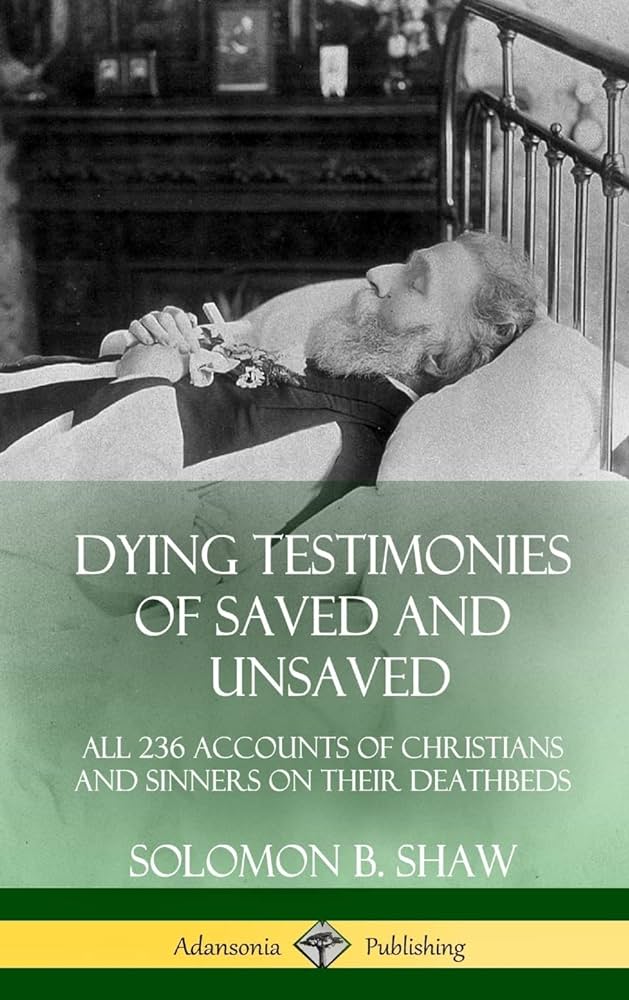
This shocking testimony is an excerpt from a book that was written and compiled by Solomon B. Shaw in 1898, entitled, "Dying Testimonies of the Saved and Unsaved". 

“Not only have millions upon millions of God’s children witnessed in life and death of Jesus’ power to save, but most infidels, skeptics, and sinners of every grade are constrained to acknowledge the truth of the Christian religion before they die.” - S.B. Shaw 

“Multitudes, while dying, see and hear things that are not seen or heard by others.” - S.B. Shaw
0 Comments
<<Previous

    Persecution, Suffering, & Apostasy 

    Article #1: ​"Seriously Count the Cost" - George Whitefield
    ​

    Article #2: ​"Slanders & Reproaches" - John Bunyan

    Article #3: ​"The Most Fearful Slander" - C.H. Spurgeon

    Article #4: ​Biblical Due Process 

    Article #5: ​"BACK TO THE NEW TESTAMENT" - Rolfe Barnard
    ​

    Article #6: ​The Doctrine of Persecution

    Article #7: ​Persecuted by the Church

    Article #8: ​"So Send I You" - Jesus (Jn. 20:21)

    Article #9: ​"Get Off the Sinking Ship" - A.W. Tozer

    Article #10: ​"The Gift of Prophecy" - A.W. Tozer

    Article #11: ​"God, Send Us Prophets!" - Leonard Ravenhill

    ​
    Article #12: Historical Accounts of Martyrdom Compared to the Passion of Jesus Christ 

    Mortality, Immortality, & Eternity   

    ​Article #1: No Fear in Death! 

    ​
    Article #2: The Salvation of an Infidel at the 11th Hour 

    ​
    Article #3: In Eternity Before the Beginning 

    ​
    Article #4: Holy Angels by Rank and Position in the Worship of Heaven 

    Dying Testimonies of Unsaved Souls! 

    Article #1: The Dying Man Clinched His Teeth While Crying: "Hell! Hell! Hell!" 

    Article #2: "I Shall Soon be a Dead Man, and My Souls Shall be in Hell!" 

    Article #3: "Oh! The Devil is Coming to Drag my Soul Down to Hell!" 

    Article #4: The Awful Calamity that Befell a Young Lady who Offered a Mock Prayer 

    Article #5: It Was a Place of Darkness and Devils Until He Died 

    Article #6: "My God, My God! My Doom is Sealed! I Am Lost! Lost!" 

    Article #7: "Oh, It is Too Late Now! There is No Hope For Me!" 

    Article #8: "I Have No Feeling! The Spirit of God Has Left Me!" 

    Article #9: "The Devils are in the Room, Ready to Drag My Soul Down to Hell!" 
    ​
    Article #10: "I Have Neglected the Salvation of My Soul!" 
    ​
    Article #11: "I Cannot Be Pardoned! It is Too Late! Too Late!" 

    Article #12: "I Can't Die! I Won't Die!" 

    Article #13: "I Am In the Flames! Pull Me Out, Pull Me Out!" 

    Article #14: "The Fiends, They Come; Oh! Save Me! They Drag Me Down! Lost, Lost, Lost!" 


    Article #15: The Awful Death of a Kind and Benevolent Sinner

    ​Article #16: "I Can See the Old Devil Here on the Bed With Me!" 

    Mortality in the Book of Job 

    Article #1: The Revival of Job? 

    ​
    Article #2: Job's Suffering in Job 3:1-26

    ​
    Article #3: The Illusion of Rest for Sinners in Death 

    Article #4: Mortality from the Vantage Point of Angels 

    ​
    Article #5: Hardening Yourself in Sorrow 

    ​
    Article #6: Suicide in the Bible? 

    ​
    Article #7: Confusion as the Primary Affliction 

    Archives

    July 2025
    March 2025
    February 2024
    May 2023
    September 2022
    November 2020
    December 2019
    September 2018
    August 2018

    Categories

    All

    RSS Feed

    Author

    Sean Michael Morris 

HOME   |   THE PASSION OF JESUS CHRIST | CALVINISM VS. ARMINIANISM   
 WHAT IS REVIVAL? | ARE YOU SAVED? | FOLLY IN ISRAEL | SEMINARY  
CHURCH HISTORY  | PERSECUTION  | THE LAST DAYS   |   ​CONTACT

Copyright © YouMustBeBornAgain.org | All rights reserved.

Related Sites:
You Must Be Born Again
The Revelation of Jesus Christ 
Years of Ancient Times