BIBLICAL THEOLOGY: SCRIPTURE INTERPRETING SCRIPTURE


  • Home
  • Are You Saved?
  • The Passion of Jesus Christ
  • What Is Revival?
  • Folly in Israel
  • Calvinism vs. Arminianism
  • Seminary, Academia, Psychology, & Science
  • Church History
  • Persecution, Suffering, Mortality, & Immortality
  • The Last Days
  • The Descension, Resurrection, & Ascension of Jesus Christ
  • Contact

The 3rd Utterance of Jesus Christ on the Cross

12/2/2025

0 Comments


Article #5 on the 7 Utterances of Jesus Christ on the Cross 

Picture

“And about the ninth hour Jesus cried with a loud voice, saying, Eli, Eli, lama sabachthani? that is to say, My God, my God, why hast thou forsaken me?” – Matt. 27:46

The 3rd utterance of Jesus Christ on the Cross, “Eli, Eli, lama sabachthani?” (Matt. 27:46, Mk. 15:34), serves as a timely word in a climactic moment of the 9th hour, with only minutes before the death. While giving us a positive affirmation that Jesus Christ was indeed being forsaken of God, a question was posed: “Why?”. Psalm 22:1 expands this into two questions, the second one being: “Why art Thou so far from helping Me, and from the words of My roaring?”. 
“My God, My God, why hast Thou forsaken Me? Why art Thou so far from helping Me, and from the words of My roaring?” – Psalm. 22:1 
It appeared to the Jews that Jesus of Nazareth was being forsaken of God in death as a condemned sinner and a false prophet (Matt. 27:39-44). In reality, the Son of God was being forsaken in a different way, and for different reasons, according to the overall testimony of Psalm 22. The questions asked in Psalm 22:1 are being answered in Psalm 22:2-31. “Understandest thou what thou readest?” (Acts 8:30).

Matthew 27:46 is more than a rhetorical question. In prayer, speaking to God the Father, Jesus Christ asked, “Why?”, and God immediately answered this prayer by causing the crucifixion scene of Psalm 22 to come rushing into the minds of the elect who were gathered on mount Calvary. Furthermore, God has been showing the elect Psalm 22 for thousands of years now as an answer to the same prayer. Literally, as the spectators on mount Calvary heard the outcry of Psalm 22:1, the minds of the elect were directed by the Holy Ghost to remember Psalm 22:2-31. 
Picture
It is only natural for the first line of a song to bring to memory the whole song, but something supernatural was happening (Heb. 4:12). Something was being “revealed” with quickening power and divine assurance to the soul (Isa. 53:1, 1 Thess. 1:5)! The elect bystanders suddenly realized what they were looking at – seeing the crucifixion scene in real time (exactly as it was described in Psalm 22:12-18). Consequentially, they were stabbed in their hearts with conviction, and this created in them repentance and faith on the spot (Acts 2:37). The thief on the Cross was one of the unlikely converts. 
0 Comments

The 2nd Utterance of Jesus Christ on the Cross

12/2/2025

0 Comments


Article #4 on the 7 Utterances of Jesus Christ on the Cross 

Picture

“When Jesus therefore saw his mother, and the disciple standing by, whom he loved, he saith unto his mother, Woman, behold thy son! Then saith he to the disciple, Behold thy mother! And from that hour that disciple took her unto his own home.” – John 19:26-27

The noise and commotion of the crowd eventually calmed down. This gave opportunity for Mary and the apostle John to draw near to the Cross, among others. It is doubtful that they would have drawn near at a heated time amidst the throng. Their “far off” position during the 9th hour is intentionally noted by one Evangelist (Mk. 15:40-41). Thus, we can assume that they were in a far off position at the beginning and ending of the Passion of our Lord on the Cross, and they intentionally chose to draw near momentarily during a brief reprieve of commotion from antagonists.

Upon praying, “Father, forgive them; for they know not what they do.” (Lk. 23:34), in the 1st utterance of Christ from the Cross, the crowd remain undeterred in their mockery and blasphemy. One would hope that such a prayer would break the hardened hearts of sinners, but the Jews were still purposed to stamp out the embers of the dying Lamb by extinguishing his life from the earth. Many of them even felt provoked at this good prayer. Why? Because it was uttered in the face of pure evil (Rom. 12:19-21). They didn’t understand what Christ was saying, or why the alleged Messiah would pray such a thing while being tortured to death on the Cross. They felt offended that the Man would show such love in the face of murder.

Therefore, while the Jews were still glorying (for all the wrong reasons) that Jesus of Nazareth was apparently Godforsaken and doomed to die on the Cross, Mary and company drew near to the Cross, and then the 2nd Utterance was given. Notice the exclamation points: “Woman, behold thy son!…Behold thy mother!” (Jn. 19:26-27). Jesus Christ was committing the care of his mother to John while in essence, saying, “I am going to die!”. This would have been shocking for Mary, John, and everyone else to hear. The Son of God had a certain expectation of death, even while His adversaries were challenging Him to come down from the Cross and live as the proof of His messianic identity! Once again, the crowds were gripped while watching the Son of God being tortured to death on the Cross because nobody knew for sure what the Miracle Worker of Nazareth was capable of doing. Nevertheless, the Jews would have interpreted the 2nd Utterance as an admission of defeat, which seemed to play into the erroneous narrative of the Jews. 

0 Comments

The 1st Utterance of Jesus Christ on the Cross

12/2/2025

0 Comments


Article #3 on the 7 Utterances of Jesus Christ on the Cross 

Picture

“Father, forgive them;
for they know not what they do
.
”
– Luke 23:34

This intercessory prayer was louder than thunder. It shook the third Heaven! It struck deep into the holy heart of the Father.  “For He hath not despised nor abhorred the affliction of the afflicted; neither hath He hid His Face from Him; but when He cried unto Him, He heard.” (Ps. 22:24). So far from desertion, what we are seeing here is triumphant intercession! “He…made intercession for the transgressors.” (Isa. 53:12). Literally, this prayer was recorded in the courtroom of Heaven as new legislation, effectively creating a law of redemption, because justice was being served upon sinners in real time through the suffering of Jesus Christ on the Cross. 
“Blotting out the handwriting of ordinances that was against us, which was contrary to us, and took it out of the way, nailing it to His Cross;” – Col. 2:14
The Son asked…and the Father gave! As it was written (Ps. 2:8). This prayer, “Father, forgive them” (Lk. 23:34), was heard by God from the earthly altar of the Cross (Heb. 13:10-13), as if it was prayed at the golden altar of incense in the third Heaven (Rev. 6:9, 8:3, 5, 9:13, 14:18, 16:7) – a mighty and angelic altar that had horns like those of ancient unicorns (Ps. 22:21, Job 39:9-12). This prayer was answered, and now Heaven is filled with millions of sinners who were freely forgiven by God as they believed upon Jesus Christ. 
“And sitting down they watched him there; And set up over his head his accusation written, THIS IS JESUS THE KING OF THE JEWS.” – Matt. 27:36-37

“And the people stood beholding.” – Lk. 23:35

“And they that passed by reviled him, wagging their heads…” – Matt. 27:39 (Mk. 15:29)

Curious, like an assembly of demons, everyone was watching, but most people weren’t seeing what was really happening. Recklessly, like a frenzy of stampeding bulls, the crowd kept growing with people who wanted to insult and intimidate the King of the Jews. Ravenous, like lions, the eyes of these sinful souls were feeding on the gory scene. Exalting themselves, like roaring lions, obnoxiously, like barking dogs, these people roared and barked their insults at the sinless Savior. 
“Many bulls have compassed Me: strong bulls of Bashan have beset Me round. They gaped upon Me with their mouths, as a ravening and a roaring lion.” – Ps. 22:12-13

“For dogs have compassed Me: the assembly of the wicked have inclosed Me: they pierced My hands and My feet. I may tell all My bones: they look and stare upon Me. They part My garments among them, and cast lots upon My vesture.” – Ps. 22:16-18

The Almighty’s flesh was emaciated. The body of God-incarnate was dehydrated. The Holy One of Heaven was naked and dying on earth like a condemned criminal. Struggling to breath, as the body of Jesus Christ was stretched and nailed in a hanging position, our Lord says, “I may tell all My bones: they look and stare upon Me.” (Ps. 22:17). The very bones of our dying King were visibly exposed before the feasting eyes of animalistic sinners.

A purposeful connection is being made between Psalm 22:12-13 and Psalm 22:16. The human depravity being put on display was so outrageous, Christ was compelled to call His persecutors bulls, lions, and dogs. They were acting like wild and immoral animals. This is a well-known doctrine in the Bible (2 Pet. 2:12, Jude 1:10). Sinners experience an animalistic degeneration when they are demon possessed (Matt. 7:6, 12:45, Rev. 18:2, Lk. 22:3, Jn. 13:2, 27). 

“And they that passed by reviled him, wagging their heads, And saying, Thou that destroyest the Temple, and buildest it in three days, save thyself. If thou be the Son of God, come down from the cross. Likewise also the chief priests mocking him, with the scribes and elders, said, He saved others; himself he cannot save. If he be the King of Israel, let him now come down from the cross, and we will believe him. He trusted in God; let him deliver him now, if he will have him: for he said, I am the Son of God. The thieves also, which were crucified with him, cast the same in his teeth.” – Matt. 27:36-44

“And they that passed by railed on him, wagging their heads, and saying, Ah, thou that destroyest the Temple, and buildest it in three days, Save thyself, and come down from the cross. Likewise also the chief priests mocking said among themselves with the scribes, He saved others; himself he cannot save. Let Christ the King of Israel descend now from the cross, that we may see and believe. And they that were crucified with him reviled him.” - Mark 15:26-32

“And the people stood beholding. And the rulers also with them derided him, saying, He saved others; let him save himself, if he be Christ, the chosen of God. And the soldiers also mocked him, coming to him, and offering him vinegar, And saying, If thou be the King of the Jews, save thyself. And a superscription also was written over him in letters of Greek, and Latin, and Hebrew, THIS IS THE KING OF THE JEWS.” – Luke 23:35-38

According to the chronology provided in Luke 23:33-38, immediately following our Lord’s prayer of intercession, the people proceeded to revile, mock, scorn, and challenge Jesus Christ. Their challenge is a part of a growing controversy that began in the early days of Christ’s ministry. Upon cleansing the Temple, the Jews scornfully asked for a sign in a pretentious quest for faith (Jn. 2:13-25). The answer given deeply offended the Jews. 
“What sign shewest Thou unto us, seeing that Thou doest these things? Jesus answered and said unto them, Destroy this Temple, and in three days I will raise it up.” – Jn. 2:18-19
Jews from various regions repeatedly asked for a sign in the same manner, so the Lord ended up elaborating upon the same answer again and again (Matt. 12:38-40, Lk. 11:29-32). Even the most infamous adversaries of Jesus were all given the same sign (Matt. 16:1-5; Mk. 8:11-15). However, the Jews completely misunderstood what Jesus Christ was saying in the sign. Our Lord’s words were interpreted as a threat because the Jews thought He was talking about the destruction of the Jewish Temple.

The Jews were sure that the Man couldn’t destroy the Temple and rebuild it in three days, so they took it upon themselves to slanderously promoted this sign as proof that Jesus Christ was a false prophet and worthy of death. This is why His accusers brought up this sign before the Sanhedrin as they sat in judgment to condemn Jesus Christ to death (Matt. 26:61). Upon being crucified, the Jews mocked Jesus Christ by challenging Him to perform the same sign as proof of His Messianic Identity (Matt. 27:36-44, Mark 15:26-32). However, to do so, He would have to come down from the Cross, so their challenge evolved into this: “Let Christ the King of Israel descend now from the cross, that we may see and believe.” (Mk. 15:31). In the eye of a blind beholder, Jesus Christ appeared to be utterly forsaken of God as He roared in torment, being rightly condemned as a false prophet. 

“…Why art Thou so far from helping Me, and from the words of my roaring?” – Ps. 22:1
The offended spectators needed an interpretation. Therefore, this question was both asked and answered in Psalm 22: “Why?”. The word, “helping”, in Psalm 22:1, is literally speaking about the “saving help” of God the Father. This comes through in the Hebrew because the word “yeshua” was being used (H3444). Hebrew readers would easily recognize this fact as they are familiar with Psalm 22. Indicating this, the ESV translates this verse, “Why are You so far from saving Me, from the words of My groaning?” (Ps. 22:1b).

Remember, the scornful challenge of the Jewish unbelievers was, “save Thyself” (Matt. 27:40, Mk. 15:30, Lk. 23:37), and by this they meant, “If thou be the Son of God, come down from the Cross.” (Matt. 27:40, Mk. 15:30). Again, they said, “He saved others; Himself He cannot save.” (Matt. 27:42, Mk. 15:31, Lk. 23:35). This challenge is also recorded in Psalm 22. The Jews said, “He trusted on the LORD that He would deliver Him: let Him deliver Him, seeing He delighted in Him.” (Ps. 22:8). Hour by hour, from the 6th to the 9th hour, the Jews kept looking to see if Jesus will in this manner be saved from the Cross, thinking that maybe even Elijah will come to “save” Jesus Christ (Matt. 27:49). Even the impenitent Thief on the Cross said, “If Thou be Christ, save Thyself and us.” (Lk. 23:39).

Historically, in context, we can see the relevance of the question posed by Jesus Christ, “Why art Thou so far from helping / saving Me, and from the words of My roaring?” (Ps. 22:1b). The same can be said about the question, “My God, My God, why hast Thou forsaken Me?” (Ps. 22:1a). Of course, the Son of God anticipated this very moment of controversy and gave the following public clarification with a thunderous answer from Heaven. 

“Now is my soul troubled. And what shall I say? ‘Father, save Me from this hour’? But for this purpose I have come to this hour. Father, glorify your name.” Then a voice came from heaven: “I have glorified it, and I will glorify it again.” The crowd that stood there and heard it said that it had thundered. Others said, “An angel has spoken to him.” Jesus answered, “This voice has come for your sake, not mine. Now is the judgment of this world; now will the ruler of this world be cast out. And I, when I am lifted up from the earth, will draw all people to myself.” He said this to show by what kind of death he was going to die.” - John 12:27-33
In retrospect, we can all see why God wasn’t minded to help Jesus Christ by saving Him from the Cross. The Son of God would not dare to pray for God to save Him from the Cross. As stated, this would defy the very purpose that He was born. Instead of saving Himself from the Cross, our Lord was pleased to “save the world” by the Cross (Jn. 12:47). Nevertheless, let it be known that Christ did pray for God’s “help” two times while being tortured to death on the Cross, as recorded in Psalm 22 – once in Psalm 22:11 and second time in Psalm 22:19. Those prayers for “help” were heard by God and answered, according to the testimony of Psalm 22:19-31, to be declared in due time. That being said, the crucifixion scene must run its course until the Son of God expires in death. The Hind of the Morning, being bitten and torn by wild animals, must expire in death while appearing defenseless and helpless before the scornful eyes of spectators.

Notice how David entitled Psalm 22, “Aijeleth Shahar”. Being interpreted, this means, “The Hind of the Morning”. A female deer feeding on the grassy hills of Zion at dawn is a beautiful sight. That being said, when the hind is caught by predatory lions and dogs, it is totally defenseless and helpless…and doomed to die. The Son of God, the darling of the Father, is this defenseless Hind in the dawn of the Atonement. God will not save the Hind! Like a tender and defenseless “Lamb” it must be led to the slaughter (Jn. 1:29, 36).
​
Nobody, except perhaps John the Baptist, was expecting this to happen to the King of the Jews. Our Lord’s closest disciples were immediately offended when they first heard about the Cross (Matt. 16:21-23). The same men personally heard the agonizing cries of Jesus Christ in the Garden of Gethsemane and at the Cross, and they were offended at how He seemed abandoned by God and given over to distress (Ps. 22:1-2). Of course, they didn’t understand the internal conflict of Jesus Christ in Gethsemane, nor how it was righteous for the Son of God to feel this way, both in the Garden and at the Cross.

They were confused to see the Messiah drenched in bloody sweat and praying, “Let this cup pass from Me” (Matt. 26:39), while knowing that the Father refused to answer this prayer. They never heard anything like this before as they lived and prayed with Jesus Christ for three years (Ps. 22:2). They never observed Christ in conflict with the Father at any time. They were expecting Christ to grow stronger and stronger both privately and publicly, and they had biblical and historical reasons for this expectation. 
“Our fathers trusted in thee: they trusted, and thou didst deliver them. They cried unto thee, and were delivered: they trusted in thee, and were not confounded.” - Psalm 22:4-5
It was the duty of the Kings of Israel to go to war and vanquish the holy land of sinners (Ps. 101). This expectation is biblical and historical, but it was misplaced in respect to the 1st Advent of Christ. The timing was wrong. A thrice holy God demanded a sacrifice first of all (Ps. 22:3)! Divine love thought it good to die for sinners before annihilating them. Therefore, rather than exaltation, Christ was called to humiliation. Rather than glorification, Christ was bound by nails to the Tree of condemnation, much to the delight of the enemies of God. 
“But I am a worm, and no man; a reproach of men, and despised of the people. All they that see me laugh me to scorn: they shoot out the lip, they shake the head, saying, He trusted on the LORD that he would deliver him: let him deliver him, seeing he delighted in him.” - Psalm 22:6-8
Being utterly given over to the “scorn” and “reproach” of sinners, Jesus Christ appeared worthless and contemptible like a “worm” before the enemies of God. The faith of the disciples was dashed to pieces as the Hind of the Morning was torn to shreds before their very eyes. But the sinless Son of God was still precious and invaluable to God the Father. Jesus Christ was the first Man since the Fall to be born sinless, and we can be sure that He will die sinless (Ps. 22:9-10). Consequentially, the Man wasn’t dying for His own sins on the Cross of Rome. 
“But thou art he that took me out of the womb: thou didst make me hope when I was upon my mother's breasts. I was cast upon thee from the womb: thou art my God from my mother's belly.” - Psalm 22:9-10 [see Isaiah 49:1, 2, 5] 
The eternal Son – born to die - became a Man and courageously faced His destiny. “I gave My back to the smiters, and my cheeks to them that plucked of the hair: I hid not my face from shame and spitting.” (Isa. 50:6). Nevertheless, the scattering of His disciples was disappointing, and a cause for lamentation (Isa. 49:4). 
0 Comments

Introducing the 7 Utterances of Jesus Christ on the Cross

12/2/2025

0 Comments


Article #2 on the 7 Utterances of Jesus Christ on the Cross 

Picture

Introduction 

Nobody ever gets saved without coming before the Cross of Jesus Christ. The Evangelists of our Gospel bring these scenes before us in 3 chapters each (Matt. 26-28, Mk. 14-16, Lk. 22-24, Jn. 18-20). Consequentially, these are the most important 12 chapters in all of the Bible. Furthermore, the 7 utterances of Jesus Christ on the Cross are absolutely essential to understanding the operation and work of the Cross.

The timing of each utterance in chronological order will prove to be important in producing a correct interpretation, and we know as believers that a correct interpretation will bring sinners under the power of gospelization. Therefore, we should pay attention to every painstaking detail of the Evangelists: Mathew, Mark, Luke, & John. How are readers brought before the Cross of Jesus Christ?
Picture
Only seconds into the crucifixion, lo and behold, the 1st utterance is made as our Lord is being tortured to death while hanging on the Cross. “Father, forgive them; for they know not what they do.” (Lk. 23:34). This was followed by a lot of noise and commotion from the enemies of God (Luke 23:35-38, Matthew 27:39-44, & Mark 15:29-32). Evidently, the 1st utterance did not come with converting power. The tumult of blasphemers only increased continually. When things calmed down, this allowed for the 2nd utterance. “Woman, behold thy son!...Behold thy mother!” (Jn. 19:26-27). Once again, this was likely spoken sometime during the first 2+ hours of Christ on the Cross.

Later, during the latter part of the passion at the last hour of Christ on the Cross, the 3rd utterance comes ringing out with staggering power, thus announcing a string of undeniable miracles that eventually converted mockers and blasphemers. “Eli, Eli, lama sabachthani?” (Matt. 27:46, Mk. 15:34). Appropriately, the 4th utterance is the reaping of a very unlikely convert, the Thief on the Cross. “Verily I say unto thee, To day shalt thou be with me in paradise.” (Lk. 23:43). At last, this brings us to the 5th, 6th, and 7th utterances, which closely details the final minutes and seconds of Christ’s bloody passion on the Cross.
​
The 5th utterance, “I thirst” (Jn. 19:28), reinforces the divine power of the 3rd utterance, forcing the elect to think upon Psalm 22:1 and Psalm 22:15. The 6th utterance is a punctuating remark that shows how the Lamb was able to discern that the satisfaction of divine wrath was at hand and soon to be completed in death. “It is finished” (Jn. 19:30). Triumphantly, in the 7th utterance, our Lord nobly surrendered His own eternal Spirit in death, and He did so with the last and final breath of His mortal body. “Father, into thy hands I commend my spirit:” (Lk. 23:46). There are many wonders to be seen here, even after death, in the final wound delivered to the body of Jesus Christ, which brings readers back to Psalm 22:14, Exodus 12:46, Psalm 34:20, and Zechariah 12:10. 
​
“The Jews therefore, because it was the preparation, that the bodies should not remain upon the cross on the sabbath day, (for that sabbath day was an high day,) besought Pilate that their legs might be broken, and that they might be taken away. Then came the soldiers, and brake the legs of the first, and of the other which was crucified with him. But when they came to Jesus, and saw that he was dead already, they brake not his legs: But one of the soldiers with a spear pierced his side, and forthwith came there out blood and water. And he that saw it bare record, and his record is true: and he knoweth that he saith true, that ye might believe. For these things were done, that the scripture should be fulfilled, A bone of him shall not be broken. And again another scripture saith, They shall look on him whom they pierced.” - John 19:31-37

“Now when the centurion saw what was done, he glorified God, saying, Certainly this was a righteous man. And all the people that came together to that sight, beholding the things which were done, smote their breasts, and returned. And all his acquaintance, and the women that followed him from Galilee, stood afar off, beholding these things.” – Luke 23:47-49

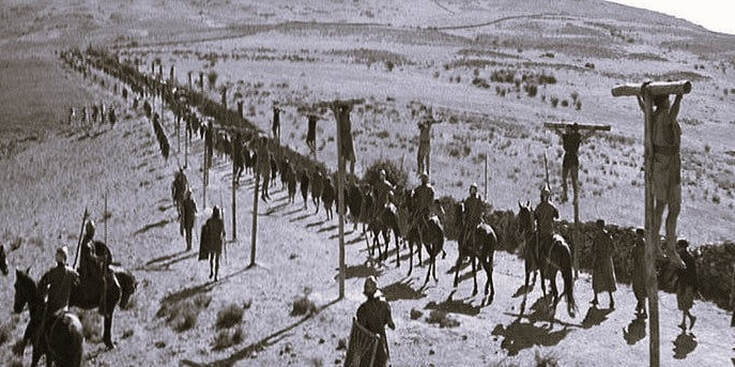
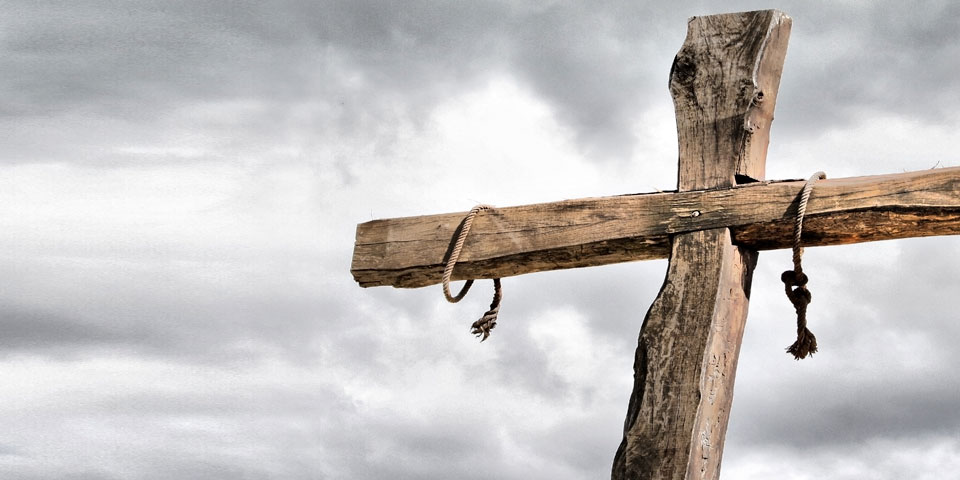
Getting absorbed in the marvelous details of the Passion of the Cross and the corresponding miracles is an exercise that is proven to convert the hardest of sinners. However, if we hope to comprehend these mysteries, we need to closely observe everything unique and extraordinary about “the Cross of Christ” (1 Cor. 1:17-18, Gal. 5:11, 6:12, 14, Php. 2:6-8, 3:18, Col. 1:20-22). Literally, no one has ever been crucified like Christ, nor has there ever been any other Cross in history that even remotely resembles the Cross of Christ. 

The Cross of Jesus Christ 

Upon summiting the mountain of outcasts, called Golgotha, our champion Redeemer unshouldered the burden of the Cross. The surreal scene must have moved in slow motion before the onlooking eyes of holy Angels sitting in the galleries of Heaven. It was the longest and hardest half-mile journey of any Man since the beginning of the world (John 19:17; Article #14). 
Picture
The worst was yet to come. Now our Lord must be “crucified” (Matt. 27:35, Lk. 23:33, John 19:18). It was noonday, and a visible darkness was thickening overhead as the soldiers prepared the tools of torture and execution. 
“Now from the sixth hour there was darkness over all the land unto the ninth hour.” – Matt. 27:45
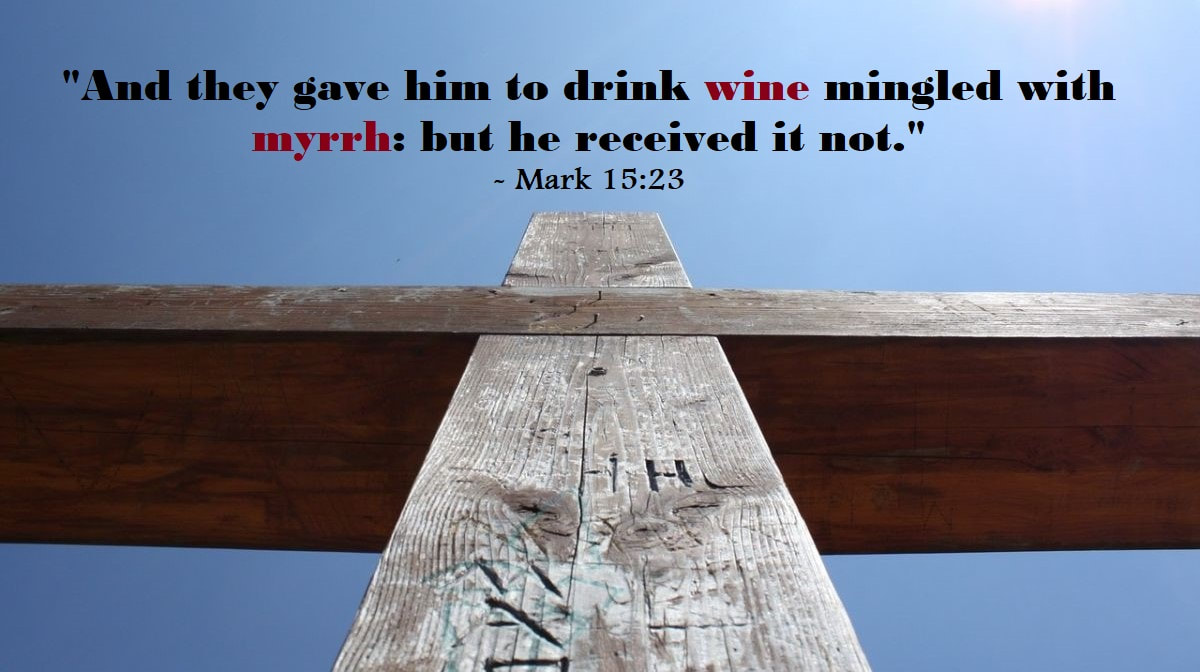
One soldier fetched an analgesic out of the handbag to give it to Christ. It contained sour wine (vinegar), myrrh, and gall – a typical potion of execution pharmacology (Article #16). Our noble King tasted it and refused to drink it (Matt. 27:34, Mk. 15:23). This was intended as an act of compassion to condemned criminals. The Romans were trying to dull the pain of the Cross of Rome, but this was the least of our Lord’s concern on this momentous occasion.
Picture
Looking up, everyone else only saw darkness, a thick darkness, insomuch that the light of the sun was blotted out during the brightest hour of the day. The Jews and Romans gathered there didn’t know that a world of divine fury was being concealed by a heavenly curtain of darkness in the sky (Article #18). Only the Son of God could see beyond the vail of darkness.
Picture
​The Romans then proceeded to strip Jesus Christ of His clothing in a ruthless act of humiliation – something customary in executions (Article #17). All the Evangelists of our Gospel specifically cite this event in Matthew 27:35, Mark 15:24, Luke 23:34, & John 19:23-24. 
Picture
“They part my garments among them, and cast lots upon my vesture.” - Psalm 22:18
Most people would rather the Evangelists overlooked this nauseating detail! But all of them were emphatic in writing about this detail because they were directing readers to Psalm 22:18. They wanted everyone to go there and look at the whole scene of Messianic Prophecy in Psalm 22:12-18. There, the whole story is retold in staggering detail from the personal vantage point of the dying Messiah, who boldly declared: 
“My strength is dried up like a potsherd; and my tongue cleaveth to my jaws; and [God] hast brought me into the dust of death.” - Psalm 22:15
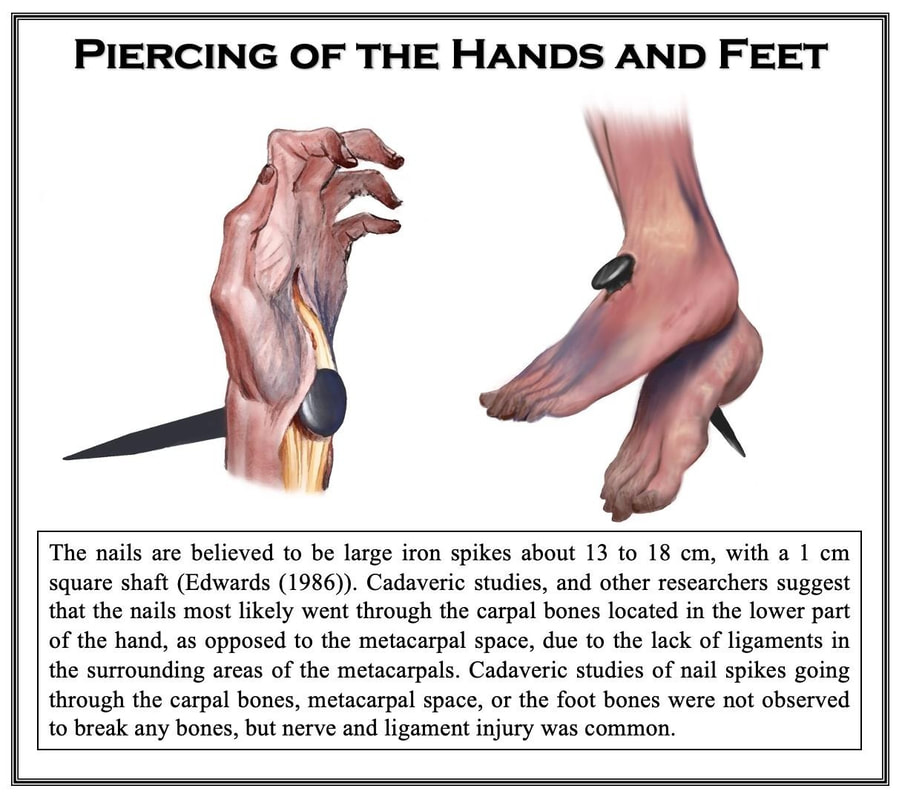
Exhausted, severely wounded, stripped, and under a canopy of thickening darkness, our Lord’s hands and feet were seized by sinners as He was suspended over the Cross and violently stretched for nailing. This procedure was so violent it often dislocated the shoulders, ankles, and hand bones of condemned criminals (Article #19).
Picture
​Speaking of this, the sinless Son of God said, “…all My bones are out of joint:” (Ps. 22:14). The Cross was then erected and Christ, the Crucified One, was “lifted up” before the multitude (Jn. 12:32). 
“And with him they crucify two thieves; the one on his right hand, and the other on his left. And the scripture was fulfilled, which saith, And he was numbered with the transgressors.” – Mk. 15:27-28 [Isa. 53:9, 12] 
The enemies of the Lord viewed the crucifixion as a moment of victory. Now that Jesus of Nazareth was literally nailed to an execution device of pure torture, they were sure that they got Him. The enemies of God celebrated the fact that Christ wasn’t going to come down from the Cross of Rome! They were convinced that He was as good as dead. But no one could be sure what the Miracle Worker from Nazareth was going to say or do. Therefore, as all the moving parts of the scene became still, everyone began looking intently to see what would happen next. 
“And when they were come to the place, which is called Calvary, there they crucified him, and the malefactors, one on the right hand, and the other on the left. Then said Jesus, Father, forgive them; for they know not what they do. And they parted his raiment, and cast lots.” – Lk. 23:33-34
The crucified One could be heard groaning and “roaring” in pain as His nerves pressed hard against the metallic edge of the nails (Ps. 22:1). Blood trickled down from the nailed extremities of our Lord and stained the Cross with streams of holy blood. Thus begins the final three plus hours of the Passion. Divine justice will do its mysterious work as the Lamb of God absorbs the full force of divine wrath towards sinners, like the fire of Jewish altars totally consuming the sacrifices until they were reduced to ashes (Article #23). 
Picture
The Lamb was effectively bound to the altar of Golgotha, even as it was written, “bind the Sacrifice with cords, even unto the horns of the altar” (Ps. 118:27). Signifying this, Jesus Christ said, “they pierced My hands and My feet” (Ps. 22:16). Literally, the nailing of Jesus Christ to the Cross was a triumphant moment of victory, according to Colossians 2:14-15, because this is how the heavenly ceremony of an Atonement was being performed. Therefore, immediately, upon being nailed to the Cross and lifted up on mount Calvary, the Son of God cried out, “Father, forgive them; for they know not what they do.” (Lk. 23:34). The Son of God was thus minded in every hour of the Passion, and especially over the next three hours. Believers can hear this prayer ringing out in every groan, roar, and outcry of the Son of God as at the beginning and until it was finished. 
0 Comments

Contextual Details for Harmonizing the 7 Utterances of Jesus Christ on the Cross

12/2/2025

0 Comments


Article #1 on the 7 Utterances of Jesus Christ on the Cross 

Picture

The 7 Utterances in Chronological Order 

(#1) “Father, forgive them; for they know not what they do.” - Luke 23:34 
(#2) “Woman, behold thy son!...Behold thy mother!” -  John 19:26-27
(#3) “Eli, Eli, lama sabachthani?” - Matthew 27:46, Mark 15:34
(#4) “Verily I say unto thee, To day shalt thou be with me in paradise.” - Luke 23:43
(#5) “I thirst” - John 19:28
(#6) “It is finished” - John 19:30
(#7) “Father, into thy hands I commend my spirit:” - Luke 23:46 (Matt. 27:50)

Contextual Details for Harmony 

1st Utterance

Luke gives us the only testimony of the 1st utterance of Christ in Luke 23:33-38. It was spoken immediately after our Lord was nailed and lifted up on the Cross. Hardened sinners heard the gracious words, “Father, forgive them; for they know not what they do.” (Luke 23:34). Following this utterance, the crowd proceeded to revile, mock, scorn, and challenge the dying Lamb, as depicted in Luke 23:35-38, Matthew 27:39-44, & Mark 15:29-32. We can assume that this activity continued for some time without relaxation. 

2nd Utterance 

The noise and commotion of the crowd eventually calmed down. This gave opportunity for Mary and the apostle John to draw near to the Cross, among others, creating an occasion for the 2nd utterance of Christ (John 19:26-27). “Woman, behold thy son!...Behold thy mother!” (John 19:26-27). It is doubtful that they would have drawn near at a heated time amidst the throng. Their “far off” position during the 9th hour is intentionally noted by one Evangelist (Mk. 15:40-41). Thus, we can assume that they were in a far off position at the beginning and ending of the Passion of our Lord on the Cross, and they intentionally chose to draw near momentarily during a brief reprieve of commotion from antagonists.

Contextually, the placement of the 2nd utterance at this time makes the most sense. However, admittedly, this is not made clear in a basic reading of John's Gospel. While this placement of chronology might appear to be based on opinion more than objectivity, we can have objective certainty about the chronology of the following five utterances, and this allows for the 2nd utterance to fall into place. Of note, Matthew and Mark start with the 3rd utterance, and while Luke records the 1st utterance, this Evangelist skips two utterances and immediately proceeds to the 4th utterance. It is up to interpreters to do the hard work of harmonization. 

3rd Utterance 

Before readers even reach the 3rd utterance of Christ, Matthew and Mark are compelled to make a timely clarification. Namely, in Matthew 27:45 and Mark 15:33, the Evangelists report when the supernatural darkness appeared and disappeared at the 6th hour and the 9th hour of the day (noon to 3 pm), emphasizing how this darkness corresponded with the crucifixion and death of our Lord (Note: Luke gives this clarification later in Luke 23:44). However, Matthew and Mark then immediately bring readers to the 9th hour where they record the 3rd utterance of Christ: “My God, My God, why hast Thou forsaken Me?” (Matt. 27:46, Mk. 14:34). Anything important overlooked by Matthew and Mark is then brought into view by John.
Picture
​Granted, some readers of Matthew and Mark had to wonder about the events that transpired in the first 2+ hours of Christ on the Cross, a large chunk of time during the 6th, 7th, 8th hours of the day. But only one scene is provided by John where our Lord commits the care of his earthly mother to the apostle John, and this serves as the 2nd utterance of Christ from the Cross, according to John 19:25-27. Once again, we can assume that this happened at a quieter moment during the first ≈2 hours that were omitted by Matthew and Mark, especially because the remaining utterances, counting from the 3rd to the 7th, were all spoken in close succession during the 9th hour. 

4th Utterance 

​Luke also gives us a scene where Christ speaks to the repentant thief on the Cross, but this couldn’t have happened in the earlier hours, and had to happen during the 9th hour - serving as the 4th utterance of Christ on the Cross (Lk. 23:39-43). Why? Because both thieves were reviling and mocking Christ in the beginning (Matt. 27:44, Mk. 15:32). Therefore, something very profound and evidently miraculous had to happen to bring a mocking thief to repentance and faith in ≈3 hours. Of course, we are talking about something much more impressive than observing Jesus of Nazareth taking care of Mary. Appropriately, the 4th utterance is the reaping of a very unlikely convert, the Thief on the Cross. “Verily I say unto thee, To day shalt thou be with me in paradise.” (Lk. 23:43).

5th, 6th, & 7th Utterances

At last, this brings us to the 5th, 6th, and 7th utterances, which closely detail the final minutes and seconds of Christ’s bloody passion on the Cross. The Evangelists make it clear that the 9th hour was the hour of miracles. More specifically, we are speaking about the latter part of the Passion in the 9th hour, namely, everything that followed the 3rd utterance of Christ from the Cross, where He said, “My God, My God, why hast Thou forsaken Me?”, according to the predestinated script of Psalm 22:1.

John leads us into the 5th & 6th utterances with the words, “After this”, indicating that there was a time gap in between John 19:25-27 and John 19:28-30. Following the reading of John 19:28-30, detailing the 5th & 6th utterances of Christ from the Cross, it is evident that these things were spoken back-to-back, as in a few minutes of each other, shortly before Christ died.
"After this, Jesus knowing that all things were now accomplished, that the scripture might be fulfilled, saith, I thirst. Now there was set a vessel full of vinegar: and they filled a spunge with vinegar, and put it upon hyssop, and put it to his mouth. When Jesus therefore had received the vinegar, he said, It is finished: and he bowed his head, and gave up the ghost." - John 19:28-30
During the final seconds of Christ’s life, following the reading of Matthew 27:50 and Luke 23:46, we can see that Christ spoke the 7th utterance with the last and final breath of His mortal body, saying: “Father, into thy hands I commend my spirit:” (Lk. 23:46). A glorious ending! These words were accompanied with such mighty signs and wonders, the spectacle shook people to the core, even making them reconsider the events of the day. Now, as readers, it is up to us to take in the full story of the Gospel. The 7 Utterances of Christ markedly guide us through the glorious work of the Passion on the Cross from beginning to end, from start to finish, with a special focus on the finish. There is something to be seen here. 
0 Comments

The Most Famous Manifestation of Divine Wrath in the Law Being Satisfied at the Tree

10/10/2024

0 Comments


Article #25 on the Passion of Jesus Christ 

Picture
The Doctrine of the Tree punctuates the Law in the Book of Joshua. This punctuation brings the needed closure to the story of divine wrath being depicted in the Law. This comes as no surprise to you if you have come to know the Doctrine of the Tree in the Old Testament. 

The most famous and widely discussed manifestation of divine wrath in the Law is the wrath of God against  the Canaanites. This is no secret. A careful reading of Genesis, Exodus, Leviticus, Numbers, & Deuteronomy in chronological order will fix your attention on this frightening subject. A shallow understanding of  the divine wrath in question will confound the Doctrine of the Tree. Oblivious readers will then study the Pentateuch without even realizing how the Law is leading us to the Tree in the Book of Joshua.
Picture
Gentiles and Jews alike need to sit down in the Theater of Typology and behold how the Law leads us to the Cross in the Book of Jesus. Providentially, this is how the Bible conducts readers forward in the school of God. Literally, by reading the Bible in order, Genesis, Exodus, Leviticus, Numbers, & Deuteronomy leads readers to the Tree in the Book of Joshua. “Wherefore the law was our schoolmaster to bring us unto Christ, that we might be justified by faith.” (Gal. 3:24). We will explore this subject in the following order.   

The Sins and Abominations of the Canaanites were Listed with Detail and Categorically Warranted Death and Destruction Without Regard to Race

Prophecy in Genesis Demonstrates How the LORD Foresaw that the Canaanites Would Eventually Become Unsavable Reprobates

Therefore, in the Law, the LORD Repeatedly and Emphatically Demanded the Total Annihilation of the Canaanites, and these Demands were Accompanied with Strong Warnings Which Forbade the Jews from Suffering Any of the Canaanites to Survive

Corresponding Heavenly Visions were Granted to Seers which Revealed the glory of this Manifestation of Divine Wrath by Featuring its Presence, Form, Characteristics, Activity, Power, & Impact – The Excellencies of Divine Wrath!

This Wrath Stopped at the Tree! Therefore, the Glory of this Wrath in All of its Excellencies Only Magnifies the Power of the Tree in the Book of Joshua! Amazingly, this is How the Law and the Book of Jesus in the Old Testament Present to Believers an Unadulterated Message of the Gospel

Those beholden to these heavenly visions made them famous all throughout biblical history (Ps. 77:10-20, 114:1-8, 68:1-35, Hab. 3:1-15, Ps. 18:7-15; Deut. 32:1-14). Everyone and everything was put in fear at the sight of this divine wrath! But modern believers don’t even know why these miraculous things were happening to the sea, rivers, hills, and mountains. The emerging controversies in Scripture that came as a result of these heavenly visions only underscores the need for readers to discern the real target of this most terrifying divine wrath. “Was the LORD displeased against the rivers?” (Hab. 3:8). Discerning the target then leads believers to a spectacular revelation about the power of the Tree in the Book of Joshua. 

The Sins and Abominations of the Canaanites were Listed with Detail and Categorically Warranted Death & Destruction Without Regard to Race 

God was extremely angry with the Canaanites. Why? Sin. Not just any kind of sin! A detailed list of the sins being committed by the Canaanites can be found in Leviticus 18:1-30 & Leviticus 20:1-27. Categorically, these sins warranted death and destruction in a glorious display of divine wrath. These were “the doings of the land of Egypt” (Lev. 18:3). These were “the doings of the land of Canaan” (Lev. 18:3). Clearly, it wasn’t ever about race. If an Israelite ever dared to commit any of these sins, a single offence warranted a public execution. If the Israelites as a people were ever given over to these sins, then the Jews would have to face the same wrath that fell upon the Canaanites in being cast out of the Holy Land (Lev. 18:24-30, 20:22-27). No exceptions.

No exception was given to Egypt. Justice is inflexible. God didn’t wink at “the doings of the land of Egypt” (Lev. 18:3). The LORD justly acted to impoverish, kill, and destroy the Kingdom of Egypt: firstly, in killing all the fish of the mighty Nile river by turning it into blood (Ex. 7:21, Ps. 105:29); secondarily, in bringing an overwhelming and inescapable plague of frogs which “destroyed” the people (Ps. 78:45); thirdly, by sending diverse sorts of flies in swarms which “devoured” the people (Ex. 8:24, Ps. 78:45); fourthly, by killing all of their cattle in yet another plague (Ex. 9:6); fifthly, by destroying everything and everyone in the fields through hail mingled with fire – men, animals, herbs, and trees (Ex. 9:25); sixthly, through sending locusts to devour every herb of the land and all the fruit of the trees so that there was not one green thing left in all the land of Egypt (Ex. 10:15); seventhly, in the killing all the firstborn of man and beast in the land of Egypt (Ex. 11:5); lastly, in the drowning of Pharaoh’s army in the Red Sea insomuch that there was not one of them left (Ex. 14:23, 28; Ps. 106:11). The LORD was pleased to glorify the wrath of God in a punishing display of “power” as it was manifested in the execution of divine justice (Rom. 9:17, 22).

Neither did God wink at “the doings of the land of Canaan” (Lev. 18:3). Statedly, there had to be a visitation of justice (Lev. 18:25)! It was inevitable. The sins of the Canaanites were called “abominations” in the Law (Lev. 18:27). Categorically, they were terrible sins that anger and infuriate the benevolent heart of God! This is when bad things happen. Speaking of the Canaanites, God said, “I abhorred them” (Lev. 20:23). Why? Because the “wickedness” of these nations was shocking and unpardonable (Deut. 9:4, 5)! The land itself was defiled underneath them (Lev. 18:24-25). Their behavior was unclean, toxic, and dangerous to be around. Their societies were filled with demons (Deut. 18:9-14)! Therefore, God had decided to drive them out of the land completely. “For all that do these things are an abomination unto the LORD: and because of these abominations the LORD thy God doth drive them out from before thee.” (Deut. 18:12). 

Prophecy in Genesis Demonstrates how the LORD Foresaw that the Canaanites would Become Unsavable Reprobates

God has been speaking about the Canaanites for a very long time. Prophecies about them began at the earliest possible occasion in history, even at the beginning of the New World during the Hamite Rebellion. The world had just been cleansed of sinners and renewed through the flood (Ps. 104). Things were looking hopeful! However, suddenly, things changed. Ham rebelled (Gen. 9:20-23)! The utopia of righteousness in the new world was interrupted. Trouble was on the horizon.

The events of Genesis 9 took place at around 2300 B.C., hundreds of years before the Canaanites would occupy the Promised Land. Nevertheless, Ham is identified by the narrator of history as, “Ham, the father of Canaan” (Gen. 9:18, 22). Moreover, when Ham was cursed by divine wrath because of his rebellion, Noah prophetically declared: “Cursed be Canaan; a servant of servants shall he be unto his brethren.” (Gen. 9:25).

Genesis 9:24-27 shows us that the curse of Ham would be enforced upon his seed. However, this would be manifest primarily through the curse of Canaan; not because Canaan, the fourth son of Ham, was currently the greatest sinner of the bunch, but because the Canaanites would eventually become the greatest force of evil in the distant future.

Nimrod was the primary adversary during the era of the Noah Covenant. This is made abundantly clear in Genesis 10 & 11. Nimrod was the son of Cush, Ham’s firstborn (Gen. 10:8-11). Canaan was an emerging adversary who would rise to dominance in the next era during the Abrahamic Covenant. This is clearly indicated by the genealogical record provided in Genesis 10:15-19. 

“And Canaan begat Sidon his firstborn, and Heth, And the Jebusite, and the Amorite, and the Girgasite, And the Hivite, and the Arkite, and the Sinite, And the Arvadite, and the Zemarite, and the Hamathite: and afterward were the families of the Canaanites spread abroad. And the border of the Canaanites was from Sidon, as thou comest to Gerar, unto Gaza; as thou goest, unto Sodom, and Gomorrah, and Admah, and Zeboim, even unto Lasha.” – Gen. 10:15-19
In Genesis 12, at around 2000 B.C., when Abraham finally arrived at the Promised Land from Ur of the Chaldees, it was already being called “the land of Canaan” (Gen. 11:31, 12:5). The narrator of history made a point to explain to the reader, “…the Canaanite was then in the land” (Genesis 12:6). Obviously, this place was called “the land of Canaan” because the people who occupied these territories all descended directly from Canaan. The Canaanites had become mighty and spread out their borders (Gen. 10:15-19). A psalmist referred to the territories of their dominion as “the Kingdoms of Canaan” (Ps. 135:11). Then came the day when the Abrahamic Covenant was formed. 
“And he said unto him, I am the LORD that brought thee out of Ur of the Chaldees, to give thee this land to inherit it.” – Gen. 15:7

“In the same day the LORD made a covenant with Abram, saying, Unto thy seed have I given this land, from the river of Egypt unto the great river, the river Euphrates: The Kenites, and the Kenizzites, and the Kadmonites, And the Hittites, and the Perizzites, and the Rephaims, And the Amorites, and the Canaanites, and the Girgashites, and the Jebusites.” – Gen. 15:18-21

God specifically identified the borders of the Promised Land when He covenanted to give it to Abraham and his seed, and the land was currently filled with Canaanites. This would eventually prove to be a problem, but Abraham was going to have to wait until the appointed time. Abraham was not permitted to take possession of the Promised Land during his lifetime. Four hundred years were still to come (Gen. 15:13)! Eventually, Abraham’s seed would realize this promise and possess the land.

Arguably, Abraham was fully capable of conquering the Canaanites in his generation. Abraham performed davidic exploits of war in the miraculous defeat of a confederacy of mighty kings with only 300 homeborn servants in Genesis 14. Remember? Not even the giants among their ranks, “the Rephaims”, “the Zuzims”, “the Emims” (Gen. 14:5), could discourage Abraham from going to war against them (Gen. 14:5)! …so why didn’t Abraham immediately go to war against the Canaanites to take the Promised Land into possession? Joshua did it. Why didn’t Abraham do it? God told Abraham to wait. 

“But in the fourth generation they shall come hither again: for the iniquity of the Amorites is not yet full.” – Gen. 15:16
Apparently, the LORD was not finished striving with the Canaanites. In speaking about the Amorites, God was referring to the iniquity that would spring up among the Canaanites because the Amorites were Canaanites (Genesis 10:15-19). Genesis 15:6 reveals why Abraham had to wait. God was not ready to destroy the Canaanites during Abraham’s lifetime! Annihilating judgments always tarry until death and destruction are a last resort (Jer. 18:7-11). Our LORD prefers above all else that sinners would repent of their wickedness and live (Ezek. 33:11).

This was demonstrated repeatedly in biblical history. The LORD had mercy on the Ninevites (Jonah 3:10, 4:9-11). The LORD had mercy upon elect Egyptians who joined Israel in the Exodus (Ex. 9:20-21, 12:37-51). The LORD even had mercy upon Manasseh (2 Kings 24:2-4, 2 Chon. 33:10-20)! The list could go on. Evidently, the LORD was still minded to patiently endure “the iniquity” of the Canaanites until it became “full”. Only then would their annihilation be justly required as a last resort. This language is used to imply the same thing in forthcoming generations (Dan. 8:23, 1 Thess. 2:16, Matt. 23:32-35).

During Abraham’s lifetime, the iniquity of the Canaanites was not yet full, but divine foresight was seeing that it would eventually become full. Chiefly, this would happen through the influence of the Amorites among the Canaanites. In other words, the Amorites would eventually become the leaders of immorality among the Canaanite people. Partly, their influence was due to their great stature. Og and Sihon were two very famous Amorite kings on the east side of Jordan, and we know for certain that Og was a giant (Deut. 2:24, 3:8, 11, 4:47; Num. 21:21-35). Similarly, the people in general were gigantic. The prophet Amos reported that the Amorites were as tall as cedar trees (Amos 2:9-10)! Incidentally, in ancient times, influence and leadership usually coincided with physical strength, power, and stature.
Picture
Given the circumstances, Joshua was most concerned about the strength and fortitude of the Amorites during the war (Josh. 7:7, 10:6). In the most critical battle of the war, Joshua was fighting against “the five Kings of the Amorites” (Josh. 10:5-6). Nevertheless, in spectacular fashion, “the LORD delivered up the Amorites before the children of Israel” (Josh. 10:12). This was the battle that won the war! Biblical history teaches us that whoever defeated the Amorites would go on to conquer the Canaanites. They were the tip of the spear. They were the strongest and most powerful force among the Canaanites. Immediately, when they were defeated, the land was quickly subdued before the armies of Israel (Josh. 10:28-42).

Clearly, Joshua understood the reputation of the Amorites. The Amorites were the head of the beast! Meaning, the rest of the Canaanites were followers of the Amorites. Accordingly, it was the “iniquity” of the Amorites that compelled the Canaanites to cross a threshold of divine justice (Gen. 15:16). Hence, they all became unsavable reprobates. 

Therefore, in the Law, the LORD Repeatedly and Emphatically Demanded the Total Annihilation of the Canaanites, and these Demands were Accompanied with Strong Warnings which Forbade the Jews from Suffering any of the Canaanites to Survive

The divine mandate for the total annihilation of the Canaanites was repeated, emphatic, and pervasive. Scripture speaks for itself! Nothing here is difficult to understand or darkened by mystery. 
Total Annihilation: Ex. 23:20-33, 34:11-17, Num. 33:51-56, Deut. 7:1-6, 16-19, 23-26, 12:1-4, 29-32, 18:9-14, 20:16-18, Josh 23:2-16, Judges 2:2-3, Ps. 106:34-40 
One component of the mandated annihilation was physical destruction. This was a legal requirement of Deuteronomy. God gave commandments to the Israelites, saying, “…thou shalt destroy them with a mighty destruction, until they be destroyed” (Deut. 7:23). All the altars, images, pictures, groves, and high places of the Canaanites had to be physically broken down and burnt with fire (Ex. 34:13, Num. 33:52, Deut. 7:5, 25-26, 12:2-3). No trace of paganism should be left in the land in the aftermath of the war.

Another component of the annihilation was death. Under no circumstances was Israel allowed to let anyone survive. This too was a legal requirement of Deuteronomy. God commanded the Israelites to “consume all the people” and to “save alive nothing that breatheth” (Deut. 7:16, 20:16). Of course, the Jews would be tempted to have mercy upon some, especially the old folks, women, and children. Therefore, the LORD was very bold to command the Jews, “thou shalt smite them, and utterly destroy them; thou shalt make no covenant with them, nor shew mercy unto them” (Deut. 7:2). Similarly, the LORD said, “thine eye shall have no pity upon them”, (Deut. 7:16). The Jews were required to agree with the justice of God on a heart level because there was a morality to the mercilessness (Amos 3:3, Ps. 139:19-22, Micah 6:8).

Normally, survivors would be allowed in the conquests of war. This allowance would come in the forging of an agreement or a covenant where the defeated nations proceeded to have a tributary relationship with Israel. A peace agreement like this would bring about a greater connection to the people through commerce and intermarriage. This was explicitly forbidden! “No covenant” should be made with the Canaanites (Ex. 23:32, 34:12, Deut. 7:2). Neither were the Israelites allowed to enter into any marriage covenants with the inhabitants of the land (Deut. 7:3). Rather, God said, “…thou shalt utterly destroy them” (Deut. 20:17). Israel did as they were commanded under the leadership of Joshua (Josh. 6:21, 8:23-26, 10:20, 28, 30, 32, 33, 35, 37, 39, 40, 11:8, 11, 12, 14, 20).

The Canaanites were outrageously sinful. Anything short of total annihilation would perpetuate the “iniquity”, “wickedness”, and “abominations” that the LORD was determined to eradicate from the earth (Gen. 15:16, Deut. 9:4-5, 18:9-14). The Canaanites were unsavable reprobates! If they survived, we can be sure that they would never get saved. Rather, more people would be damned! Literally, the Canaanites would “make” the Israelites sin against God (Ex. 23:33). God said that they would “teach” the Jews “to do after their abominations” (Deut. 20:18). Furthermore, God said that they would “turn away” their children from “following” the LORD (Deut. 7:4). 

Corresponding Heavenly Visions were Granted to Seers which Revealed The Glory of this Manifestation of Divine Wrath by Featuring its Presence, Form, Characteristics, Activity, Power, & Impact – The Excellencies of Divine Wrath! 

Coming soon... 
0 Comments

The Gospel of Habakkuk

10/9/2024

0 Comments


Article #3 on Seeing Christ in a Theater of Typology 

Picture

Romans 1:16-17, Hebrews 10:37-39, & Acts 13:40-41

Habakkuk is not very well known among modern bible students. As a Prophet of God, some would argue that he contributed very little to the whole counsel of God provided in Scripture. Hasty readers lightly esteem the brevity of his message. Nevertheless, somehow, the prophecies of Habakkuk found place in the New Testament. Habakkuk is explicitly quoted by the Apostles a total of three times in the New Testament, and these quotations appear at strategic moments of argumentation while they are preaching the Gospel. 
“For I am not ashamed of the gospel of Christ: for it is the power of God unto salvation to every one that believeth; to the Jew first, and also to the Greek. For therein is the righteousness of God revealed from faith to faith: as it is written, The just shall live by faith.” – Rom. 1:16-17

“Behold, his soul which is lifted up is not upright in him: but the just shall live by his faith.” – Hab. 2:4

Romans 1:16-17 needs no introduction. It ranks as one of the most memorable verses about the Gospel among conservative fundamentalist Christians in modern times. Paul was quoting Habakkuk 2:4 in Romans 1:17. Under inspiration, Paul could have quoted from anywhere to prove his point about salvation by faith according to the Gospel of grace, but instead he was moved to quote Habakkuk. A striking prophecy from a lightly esteemed Prophet is shedding light on the power of the Gospel in the New Testament! Evidently, there is converting power in Habakkuk 2:4. Similarly, it could be said, there is persevering power in Habakkuk 2:4, seeing that this prophecy is also quoted in Hebrews 10:38. 
“For yet a little while, and he that shall come will come, and will not tarry. Now the just shall live by faith: but if any man draw back, my soul shall have no pleasure in him. But we are not of them who draw back unto perdition; but of them that believe to the saving of the soul.” – Heb. 10:37-39
Our salvation in the past, present, and future is entirely accomplished by grace through faith in the Gospel of Jesus Christ. Paul’s focus here in Hebrews 10:37-39 is on perseverance, or salvation in the future, but the means of saving grace was all the same. Therefore, under inspiration, Paul could find no better prophecy of the Old Testament than Habakkuk 2:4 to drive the point home.

Now is the time to start asking questions. How has Habakkuk become so despised in modern times? There must be something readers find despicable about his message, even though it isn’t void of Gospel truth. Naturally, the Jews in ancient times didn’t like Habakkuk either. Therefore, in the throes of preaching the Gospel to the Jews at one of the synagogues in Antioch of Pisidia, Paul was moved to quote Habakkuk 1:5 in Acts 13:40-41 as a warning to the Jews who were hardening their hearts. 

“Beware therefore, lest that come upon you, which is spoken of in the prophets; Behold, ye despisers, and wonder, and perish: for I work a work in your days, a work which ye shall in no wise believe, though a man declare it unto you.” - Act 13:40-41

“Behold ye among the heathen, and regard, and wonder marvellously: for I will work a work in your days, which ye will not believe, though it be told you. For, lo, I raise up the Chaldeans, that bitter and hasty nation, which shall march through the breadth of the land, to possess the dwellingplaces that are not theirs.” – Hab. 1:5-6

Habakkuk was despised of old because the Jews were displeased at his terrifying message about the judgment of God through Babylon. Similarly, the Jews of the 1st century were troubled to hear how God would “turn to the Gentiles” if they rejected the Gospel of Jesus Christ (Acts 13:46-47, 18:6, 28:28). This was true even for the Jews in the days of Josiah! The Jews couldn’t fathom how God would show favor to the Babylonians, even in using them as an instrument of chastisement and judgment upon the Jews. Speaking of this, Habakkuk asked God: 
“…Wherefore lookest Thou upon them that deal treacherously, and holdest Thy tongue when the wicked devoureth the man that is more righteous than he?” – Hab. 1:13 
Habakkuk was preoccupied with the judgment of God through Babylon in a simple and easily understood storyline that flows through the first two chapters of the book. Shamefully, even Habakkuk was offended at his own message of prophecy! Jewish readers could empathize. Habakkuk’s struggle was clearly documented as a central theme of the book (Hab. 1:1-4, 12-17, 2:1). This struggle was put on display before Israel so everyone could identify with it and be corrected. Habakkuk exemplified what the Jews should do in such circumstances as he wrestled in prayer and humbly expected to be reproved by God for the way that he responded to the prophetic message given to him (Hab. 2:1). 
“I will stand upon my watch, and set me upon the tower, and will watch to see what he will say unto me, and what I shall answer when I am reproved.” – Hab. 2:1
Habakkuk didn’t want the judgment of God to come through Babylon, and neither did the Jewish people of the Kingdom of Judah. Therefore, Habakkuk was personifying the corporate displeasure of all the Jews when they heard about the judgment of God through Babylon. But Habakkuk’s story didn’t end there! Habakkuk humbled himself and prayed, and God graciously opened his eyes to see the divine goodness of this terrible judgment (Hab. 2:14, 20). The book ends with Habakkuk boldly declaring that he will “rejoice in the LORD” during the tribulation of the coming divine judgment (Hab. 3:16-19). This is a marvelous change of heart. 

🎶The Song of Habakkuk🎶​

Only a mighty meeting with God could bring about such a change in Habakkuk, and mighty meetings with God seldom happen without songs memorializing the revelations that the Prophets received in the presence of the LORD. Habakkuk’s song was titled, “A prayer of Habakkuk the Prophet upon Shigionoth.” (Hab. 3:1). A note of instruction is given at the conclusion of the prophecy where Habakkuk wrote, “To the chief singer on my stringed instruments.” (Hab. 3:19). The full body of the song is provided in Habakkuk 3:2-19.
Picture
Readers immersed in the flow of the narrative would have been stunned at the final chapter of the book. Habakkuk’s change of heart was announced by a very beautiful song! Literally, Habakkuk chapter 2 is abruptly interrupted by nothing more than a song in chapter 3 – a song that must be rife with powerful revelations if it produced such a change in Habakkuk. Hebrew readers would also have recognized the skillfulness of the song in how it is an acrostic that is synthetically rhyming through a repetition of ideas according to Hebrew poetry.

The song begins with Habakkuk interceding in prayer with great fear because he perceived the great and unstoppable wrath of God coming upon his generation (Hab. 3:2). The content of the song then brings before readers the most important scenes of divine wrath in the Law and the Book of Joshua. These mighty encounters of divine glory in history reveal the dangerous and deadly power of divine wrath in the following order: firstly, divine wrath as it was manifest against the Jews during the intercession of Moses at the peak of Sinai (Hab. 3:3-4); secondarily, divine wrath as it was manifest against the Canaanites during the war of Joshua’s generation (Hab. 3:5-15). These two scenes occupy the majority of the song in Habakkuk 3:3-15.

Habakkuk precedes and follows this content with acknowledgements that provide context for the song in Habakkuk 3:2 and Habakkuk 3:16-19. These acknowledgements indicate that divine wrath will soon come for the Jews through the armies of Babylon. Literally, this meant that the LORD was going to corporately abandon the Jewish people and join the armies of the Chaldeans to use them as instruments of divine justice in the punishment of the Kingdom of Judah (Deut. 32:30, Isa. 30:17; Jer. 25:8-12; Ezek. 10:18-22, 11:22-25). Habakkuk was overcome with fear and trembling at the vision (Hab. 3:16).

Readers of the 1st century could personally identify with this situation because Rome was playing the part of Babylon in their generation. Rome destroyed Jerusalem in 70 A.D. as a judgment of God upon the Jews. Meanwhile, divine wisdom made the Jews read about the “Yeshua” of God performed for Joshua the “Mashiach” in a Theater of Typology hoping it would strike a chord (Hab. 3:13). The meditations of the elect would then be guided down a path of discovery to realize the Gospel of Habakkuk. 

Yeshua (Salvation), Joshua (Jesus), ​
​Mashiach (Messiah), & the Tree (Cross)

“Thou wentest forth for the salvation [yeshua] of thy people, even for salvation [yeshua] with thine Anointed [Mashiach]; thou woundedst the head out of the house of the wicked [the Tree], by discovering the foundation unto the neck. Selah.” – Hab. 3:13
Readers would recognize that Habakkuk 3:13 was speaking about the well-known historical figure named Joshua, and this happened to be the same name given to Jesus of Nazareth who was recently rejected by the Jews and crucified on a Tree (Matt. 1:21, Num. 13:8, 16, Heb. 4:8; Josh. 10:24-26; Acts 5:30, 10:39, 13:29). It was common knowledge among the Jews that the name Jesus was the Hellenized version of Joshua.

The Jews would be puzzled to read how Habakkuk 3:13 refers to Joshua as the “Mashiach” or the “Anointed” of God, because the Joshua of the Old Testament does not deserve this title. The only people in the Old Testament who were legally anointed were Priests and Kings, and Joshua was not occupying either of these offices (Priests: Lev. 4:3, 5, 16, 6:22; 1 Sam. 12:3; Kings: 1 Sam. 2:10, 35, 24:5-6, 10, 26:90, 11, 16, 23, 2 Sam. 1:14, 16, 19:21, 22:51, 23:1, 2 Chron. 6:42, Ps. 18:50, 20:6, 84:8-9, 89:38, 51, 132:10, 17, Lam. 4:20). If Joshua was a Levite, he could have been a Priest. If Joshua was born into the tribe of Judah, he could have been a King. Joshua was born into the tribe of Ephraim, so there was no lawful reason for him to be anointed (Josh. 8:30-31, 19:49-50).

Readers of the 1st century may try to resist thinking about the Joshua of the New Testament at this point. Hopefully, they would decide to resort to the Scriptures for more clarity about the “Mashiach”. The Jews would then be forced to remember the two most important prophecies of the Old Testament that refer to the Messiah as the “Mashiach” in Psalm 2:2 and Daniel 9:25-26. Essentially, these prophecies describe how the Messiah would be publicly rejected and killed by the Jews in a united effort with the heathen, but not for His own sins, and therefore the Messiah would ultimately triumph over His persecutors by ushering in the Kingdom of God upon the earth. 
“The kings of the earth set themselves, and the rulers take counsel together, against the LORD, and against his Anointed [Mashiach], saying,” – Psalm 2:2

“Know therefore and understand, that from the going forth of the commandment to restore and to build Jerusalem unto the Messiah [Mashiach] the Prince shall be seven weeks, and threescore and two weeks: the street shall be built again, and the wall, even in troublous times. And after threescore and two weeks shall Messiah [Mashiach] be cut off, but not for himself: and the people of the prince that shall come shall destroy the city and the sanctuary; and the end thereof shall be with a flood, and unto the end of the war desolations are determined.” – Dan. 9:25-26
Hopefully, readers would then remember how the Law leads us to the Tree of the Book of Joshua (Josh. 10:24-26; Acts 5:30, 10:39, 13:29). Literally, this is how the Bible conducts readers in the school of God. Genesis, Exodus, Leviticus, Numbers, and Deuteronomy lead readers to the Tree in the Book of Joshua. In this way the Law is our Schoolmaster leading us to the Cross of Jesus Christ. The striking similarities are communicating an undeniable message, something that couldn’t be attributed to mere coincidence. Joshua hung up the Kings of the Canaanites upon Trees for the salvation of the people in the satisfaction of the wrath of God (Josh. 10:24-26). Jesus Christ legally became “the Head” of “the House of the Wicked” through divine imputation and died on behalf of all mankind, and His death upon a Tree is the salvation of “Yeshua” the “Mashiach” (Acts 5:30, 10:39, 13:29).

This is the Gospel of Habakkuk. All readers must do is connect the dots! This would be especially easy for 1st century Jews. However, there is much more to be seen here that will only deepen and enlarge the Gospel. Habakkuk has much more to offer to mature believers. The aforementioned realizations are only surface level and introductory. This song brings before readers the most important scenes of divine glory in the Law and the Book of Joshua so that we might comprehend how this corresponds to the Cross of Jesus Christ. Specifically speaking, these mighty encounters of divine glory reveal the dangerous and deadly power of divine wrath, and we need to labor to see how this dangerous and deadly power of divine wrath was absorbed by Jesus Christ at the Cross of Calvary. 


​Habakkuk 3:2, 16

“O LORD, I have heard thy speech, and was afraid: O LORD, revive thy work in the midst of the years, in the midst of the years make known; in wrath remember mercy.” – Hab. 3:2

“When I heard, my belly trembled; my lips quivered at the voice: rottenness entered into my bones, and I trembled in myself, that I might rest in the day of trouble: when he cometh up unto the people, he will invade them with his troops.” – Hab. 3:16

Habakkuk was shaken to the core by the prophetic vision of divine judgment coming through Babylon. The Seer was beholding the excellencies of divine wrath upon the Jews! Therefore, Habakkuk gave himself to intercession. The body of the song is preceded and followed by intense and fearful acknowledgements of divine wrath (Hab. 3:2, 16). 
Picture
Picture

Habakkuk 3:3-4

“God came from Teman, and the Holy One from mount Paran. Selah. His glory covered the heavens, and the earth was full of his praise. And his brightness was as the light; he had horns coming out of his hand: and there was the hiding of his power.” – Hab. 3:3-4
Being in the throes of intercession, this scene would be especially important for Habakkuk. Bible students would recognize that Habakkuk was speaking about the glory of God at mount Sinai (Ex. 19:16-20). Amazingly, a divine Light was seen coming from nearly 100 miles away on the northern horizon from the vantage point of Sinai (Deut. 33:2, Hab. 3:3-4, Judges 5:4-5). However, something much more specific was intended by Habakkuk in bringing this scene before readers. In Habakkuk 3:4, the Prophet proceeded to describe Moses in the throes of intercession at the peak of Sinai, when the wrath of God was kindled against Israel to destroy them (Ex. 33:21-22, 1 Kings 19:11-12). Marvelous details are given about how this wrath was visibly manifested while Moses was being shielded from it and hardly surviving it (1 Tim. 6:16)! Essentially, Habakkuk was compelling readers to gaze upon the excellencies of the wrath of God against Israel in this unique moment of near annihilation. 
Picture
Picture

Habakkuk 3:5-7

“Before him went the pestilence, and burning coals went forth at his feet. He stood, and measured the earth: he beheld, and drove asunder the nations; and the everlasting mountains were scattered, the perpetual hills did bow: his ways are everlasting. I saw the tents of Cushan in affliction: and the curtains of the land of Midian did tremble.” – Hab. 3:5-7
Moses’ intercession was successful. Therefore, historically, the LORD proceeded to accomplish the stated objective of the Abraham Covenant by driving out the Canaanites from the Promised Land. This scene presents to readers the excellencies of divine wrath upon the Egyptians and the Canaanites, as it was manifest in burning diseases, in how this wrath was melting the hearts of nations like the mountains of the wilderness, and especially the men in Cushan and Midian. (Sicknesses & Diseases: Ex. 15:26, Deut. 7:15 ; 1 Sam. 5 :1-6 :21, Deut. 28:27, 35, 60; Hornets : Ex. 23:27-28, Deut. 7:20, Josh. 24 :12; Cushan & Midian: Deut. 2:25, Num. 22:3-4, Amos 2:9-11, Josh. 2:9, 11, 24, 5:1, 9:24, Ex. 15:15-16, 23:27, Deut. 11 :25, 28 :10; Dividing Inheritance: Deut. 32:7-14, Gen. 10:25, 11:9, Acts 17:26; Deut. 2:1-3:29)
Picture
Picture

Habakkuk 3:8-12

“Was the LORD displeased against the rivers? was thine anger against the rivers? was thy wrath against the sea, that thou didst ride upon thine horses and thy chariots of salvation? Thy bow was made quite naked, according to the oaths of the tribes, even thy word. Selah. Thou didst cleave the earth with rivers. The mountains saw thee, and they trembled: the overflowing of the water passed by: the deep uttered his voice, and lifted up his hands on high. The sun and moon stood still in their habitation: at the light of thine arrows they went, and at the shining of thy glittering spear. Thou didst march through the land in indignation, thou didst thresh the heathen in anger.” – Hab. 3:8-12
This scene presents to readers the excellencies of the wrath of God against the Canaanites, specifically, in how this wrath was impacting the sea, mountains, hills, and rivers during the march of the armies of Israel to the Promised Land (Ps. 114:4, 68:16). The physical reaction of the earthly elements along the marching path of Israel was stunning (Judges 5:4-5)! Hence, the questions being posed: “Was the LORD displeased against the rivers? Was Thine anger against the rivers? Was Thy wrath against the sea…?” (Hab. 3:8). The questions were asked and answered, with the word, “Thou didst march through the land in indignation, Thou didst thresh the heathen in anger.” (Hab. 3:12). This confirmed that God was indeed angry with the Canaanites, and these earthly things were catching a glimpse of the divine wrath that was coming from the Face of God (1 Tim. 6:16). 
Picture
Picture

Habakkuk 3:13-15

“Thou wentest forth for the salvation of thy people, even for salvation with thine anointed; thou woundedst the head out of the house of the wicked, by discovering the foundation unto the neck. Selah. Thou didst strike through with his staves the head of his villages: they came out as a whirlwind to scatter me: their rejoicing was as to devour the poor secretly. Thou didst walk through the sea with thine horses, through the heap of great waters.” – Hab. 3:13-15
This scene brings before readers the battle that won the war in the conquest of the Promised Land. This battle, recorded in Joshua 10, was being referred to by Habakkuk when he described the sun and moon standing still in Habakkuk 3:11. God was so furious with the Canaanites that He lengthened the day of judgment! Literally. He refused to wait another day to satisfy divine justice in the annihilation of these wicked souls. The excellencies of divine wrath manifest against the Canaanites are virtually unparalleled in biblical history. Therefore, spectators might be made to wonder how this wrath would ever be appeased. Hence, the climax of the body of the song, in Habakkuk 3:13-14, guides readers to behold the power of the Tree in the Book of Joshua. All this great and terrible wrath was satisfied at the Tree (Josh. 10:24-26; Acts 5:30, 10:39, 13:29). 
Picture
Picture

Habakkuk 3:16-19

“When I heard, my belly trembled; my lips quivered at the voice: rottenness entered into my bones, and I trembled in myself, that I might rest in the day of trouble: when he cometh up unto the people, he will invade them with his troops. Although the fig tree shall not blossom, neither shall fruit be in the vines; the labour of the olive shall fail, and the fields shall yield no meat; the flock shall be cut off from the fold, and there shall be no herd in the stalls: Yet I will rejoice in the LORD, I will joy in the God of my salvation. The LORD God is my strength, and he will make my feet like hinds' feet, and he will make me to walk upon mine high places. To the chief singer on my stringed instruments.” – Hab. 3:16-19
True to his name, Habakkuk ended the song embracing the tribulation. The Prophet accepted Babylon as a necessary divine judgment. This was not done grudgingly. Habakkuk was not resigning to his fate out of a sense of duty or obligation. Habakkuk was worshipping! While fully embracing the coming destruction, Habakkuk was rejoicing in the salvation of the LORD with all sincerity and gratitude. This is a marvelous change of heart! One that we all need as believers in the Last Days. 
Picture
Picture

0 Comments

The High Priest of the Old Testament

10/8/2024

0 Comments


Article #2 on Seeing Christ in a Theater of Typology 

Picture

The Mediator, the High Priest, the Holy of Holies, & the Unapproachable Light!

Amazingly, the ministry of the Mediator would become even more visible once the Tabernacle was in operation. Do you remember the “face to face” communion that Moses experienced in the makeshift Tabernacle of Exodus 33:11? This was a sign of good things to come when a legally sanctioned and consecrated Tabernacle was finally constructed (Exodus 34:33-35)! This will prove to be true for the Mediator and the High Priest. Consequentially, it will soon be necessary for the congregation of Israel to come face to face with the High Priest, in one “holy convocation” in particular (Lev. 23:27), similar to how the people were required to have relations with their Mediator at Sinai.

Comprehending the distinct roles of these two Offices, their relationship to each other, and their ability to have face to face meetings with God in the Tabernacle, is essential to Christology. God was setting a stage for a theater of typology so believers could look back and learn about Jesus Christ! However, at the time in history, Israel had no idea what was going on, because none of them had ever built a Tabernacle before. Nor did the people ever have a relationship with God that was dependent upon a Priesthood and their ministry at the Tabernacle. This realization would come in spectacular fashion. The completion of the Tabernacle, and its consecration, was accompanied with signs and wonders to prove to the people that a successful transition of glory from Sinai to the Tabernacle had been accomplished. Let us carefully observe how this happened and what lessons are to be learned in the process. 


A Successful Transition of Glory from Sinai to the Tabernacle

Ultimately, fire came out from before the LORD and consumed the sacrifice of the altar at the door of the Tabernacle (Lev. 9:24)! This symbolized the satisfaction of the wrath of God (“…when all the people saw, they shouted, and fell on their faces.” – Lev. 9:24).

Ultimately, a cloud covered the tent of the congregation, and “the glory of the LORD” filled the Tabernacle, insomuch that not even Moses was able to enter the Tabernacle until the presence of the glory was diminished (Ex. 40:34-35)! This symbolized the sanctification of the Tabernacle (Ex. 29:42-46).

Ultimately, face to face encounters began and continued to happen in the Holy of Holies of the Tabernacle (Ex. 25:22, 30:6, 36, 34:33-35; Lev. 9:4, 6, 23-24, 10:1-2, 16:1-2, 12-17; Lev. 1:1, Num. 7:89).


Moses received instructions on how he and the Priesthood should offer all the necessary sacrifices as each occasion would require (Lev. 1:1-7:38). These instructions were necessary to successfully offer the needed sacrifices on this glorious day, namely, when the operation of redemption would begin at the Tabernacle (Ex. 40, Lev. 9, Num. 7). Upon executing the careful instructions given for the consecration of the Priesthood, so that Aaron and his sons could officially begin their ministry (Lev. 8:1-36), the Priests then began to minister in the Sanctuary of the Tabernacle alongside Moses (Ex. 40:31-33, Lev. 9:1-24). 

A Tour of the Tabernacle

If everything was accomplished successfully, then the LORD promised to “dwell among” the congregation of Israel by inhabiting the Tabernacle (Ex. 25:8). This would allow everyone in Israel to meet with God respectively in three different places: (1) in the Courts of the LORD at the door of the Tabernacle of the Congregation, (2) in the Sanctuary of the Tabernacle before the Vail, and (3) in the Holy of Holies behind the Vail at the Mercy Seat. Let us begin out tour of these places at the door of the Tabernacle of the Congregation. 

The Courts of the LORD at the Door of the Tabernacle of the Congregation

“This shall be a continual burnt offering throughout your generations at the door of the Tabernacle of the Congregation before the LORD: where I will meet you, to speak there unto thee. And there I will meet with the children of Israel, and the Tabernacle shall be sanctified by my glory.” – Ex. 29:42-43
Common Israelites were welcome to meet with God in a special way by coming to pray in the Courts of the LORD. Also, whenever necessary, they would come “before the LORD” unto the altar for the offering of sacrifices “at the door of the Tabernacle of the Congregation” (Lev. 1:3, 3:2). This is a place of presentation for forgiveness and cleansing (Lev. 14:11, 16:7). This is also a place where God would speak to the Israelites who were coming before the LORD with their matters, usually by the Priesthood preaching and teaching from the Word of God, but also by prophetic utterance (Mal. 2:5-7, Deut. 33:8-10, 1 Sam. 1:17). Furthermore, in extraordinary circumstances, the LORD would appear “at door of the Tabernacle of the Congregation” in a visible manifestation of glory to speak and perform miraculous exploits of divine judgement (Ex. 33:9-11, Num. 12:5, 14:10, 16:19, 42, 50, 20:6). 

The Sanctuary of the Tabernacle

Even the Kings of Israel would resort to the Priesthood to hear from God as the need required, because the Priests wore the Ephod and only they could enter into the Sanctuary, and everyone knew that the Word of the LORD would come to the Priesthood from the Oracle (1 Sam. 2:18, 28, 23:6, 9, 30:7, 2 Sam. 6:14, 1 Chron. 15:27; 2 Sam. 16:23, 1 Chron. 28:11, Ps. 28:2; Num. 7:89). Obviously, permission to draw near to God by entering the door of the Tabernacle was a great honor bestowed upon the Priesthood. Aaron and his sons were called of God to come near as ministers of the Sanctuary, to keep and order all things, and to apply the blood (Ex. 27:21, 1:11). However, even these duties were peripheral compared to how Moses and Aaron had meetings with God in the Tabernacle. Consequentially, as the Mediator and the High Priest, these two men became very important typological figures of Christ. 

The Holy of Holies

In the beginning, no clear restrictions were given to prevent Aaron, the High Priest, from going into the Holy of Holies alongside the Mediator, or as often as the need required. Prior to the commencement of Aaron’s ministry in the Tabernacle, all we read from the Law about the Holy of Holies is that it was constructed with the following divine promise from God to Moses and Aaron. 
“And there I will meet with thee, and I will commune with thee from above the Mercy Seat, from between the two Cherubims which are upon the Ark of the testimony, of all things which I will give thee in commandment unto the children of Israel.”  - Exo 25:22
A sanctioned invitation was given in the Law! Therefore, Moses knew exactly where to go to meet with God when the Tabernacle was finally constructed. Remember, the LORD audibly called to Moses from the peak of mount Sinai, and the Mediator went up Sinai to meet with God (Ex. 19:3, 20, 24:16). Similarly, the LORD audibly called to Moses from between the Cherubims above the Mercy Seat in the Holy of Holies of the Tabernacle, and then the Mediator “went in” the Holy of Holies to meet with God (Lev. 1:1, Num. 7:89, Ex. 34:33-35). 
“And when Moses was gone into the Tabernacle of the Congregation to speak with Him, then he heard the voice of One speaking unto him from off the Mercy Seat that was upon the Ark of testimony, from between the two Cherubims: and he spake unto him.” – Num. 7:89

“And till Moses had done speaking with them, he put a vail on his face. But when Moses went in before the LORD to speak with Him, he took the vail off, until he came out. And he came out, and spake unto the children of Israel that which he was commanded. And the children of Israel saw the face of Moses, that the skin of Moses' face shone: and Moses put the vail upon his face again, until he went in to speak with Him.” – Ex. 34:33-35

Seeing that the High Priest was ordained to be a minister of the Holy of Holies, it stands to reason that Aaron had a holy obligation to respond to this call alongside Moses. One could argue that Exodus 25:22 was speaking to Moses, but nobody can argue that this word of promise was spoken exclusively to Moses, because the LORD repeatedly stated that He would meet with Aaron in the Holy of Holies according to Exodus 30:6 and Exodus 30:36. Legally, only Aaron could dress and light the lamps of the Sanctuary (Ex. 30:7). Only Aaron could burn incense on the golden altar before the vail so that the smoke of it filled the Holy of Holies (Ex. 30:1-10, 34-38). Aaron’s presence there was not a coincidence! The purpose for burning incense at the golden altar directly pertained to the High Priest and the Mediator safely entering the Holy of Holies to encounter the glory of God in a face to face meeting with the LORD.

Further clarity will eventually be given about these things in the Law, but for now let the reader be satisfied with this observation: in reading the Law from Exodus 19-40 and Leviticus 1-9, we have not encountered any restrictions given to the High Priest preventing him from entering the Holy of Holies. Therefore, seeing that there were no restrictions for Aaron leading up to Leviticus 9:23-24, but rather an invitation (Ex. 25:22), when Moses “went in” to the Holy of Holies before the LORD as needed and required (Ex. 34:33-35), it is to be expected that Aaron went with him. After all, Moses and Aaron were together in Egypt prophesying and performing miracles. Moses and Aaron were together on the mount of intercession in the battle against the Amalekites (Ex. 17:10, 12). Moses and Aaron were together on the slopes of Sinai for the consecration of Moses (Ex. 24:1-2, 9-18). Ultimately, a similar scene is presented to the reader regarding the Tabernacle in Leviticus 9:23-24. 

“And Moses and Aaron went into the Tabernacle of the Congregation, and came out, and blessed the people: and the glory of the LORD appeared unto all the people. And there came a fire out from before the LORD, and consumed upon the altar the burnt offering and the fat: which when all the people saw, they shouted, and fell on their faces.” – Lev. 9:23-24
Historically, Leviticus 9 provides a record of the day when the ministry of the Priesthood began to function at the Tabernacle. The Mediator was directing the High Priest every step of the way. Every costly sacrifice revealed in the Law was put into action for the solemn occasion: “for to day the LORD will appear unto you” (Lev. 9:4). This included sin-offerings, burnt-offerings, and meat-offerings of calves, goats, rams, lambs, and bullocks. Finally, after everything was accomplished, it was written, “And Moses and Aaron went into the Tabernacle of the Congregation, and came out, and blessed the people” (Lev. 9:23). How can we be sure that they went into the Holy of Holies? What did they see and hear? When they came out and proclaimed a blessing upon the people, what did they say?

Leviticus 10:1-2 and Leviticus 16:1-2 will shed some light on the situation. Whatever happened, somehow, Nadab and Abihu thought it was a good idea for them, as Priests, to offer incense before the LORD in the Holy of Holies, even though only the High Priest was directed to minister incense to the Holy of Holies. This resulted in their death in a shocking public execution! Leviticus 10:1-2 directly follows Leviticus 9:23-24 for a reason. Remember, there were no chapter breaks when this was written.

Subsequently, the death of Nadab and Abihu occasioned the legislation of restrictions to prevent Aaron, the High Priest, from entering the Holy of Holies whenever he felt the need to meet with God, implying that Aaron was doing this before the death of Nadab and Abihu, which means that Aaron’s sons recklessly desired to experience the same thing in the offering of strange fire. In restricting Aaron from the Holy of Holies, the LORD then proceeded to legalize only one entrance of the High Priest into the Holy of Holies annually, and this would be on the Day of Atonement. 

“And the LORD spake unto Moses after the death of the two sons of Aaron, when they offered before the LORD, and died; And the LORD said unto Moses, Speak unto Aaron thy brother, that he come not at all times into the Holy Place within the vail before the Mercy Seat, which is upon the Ark; that he die not: for I will appear in the cloud upon the mercy seat.” – Lev. 16:1-2
There is an equality to the “days” presented to the reader in Leviticus 9 and Leviticus 16. Do you see it? The commencement of the ministry of the Priesthood at the Tabernacle was “a Day of Atonement” in its own right. It was essentially no different than the annual Day of Atonement that was legislated. Considering the fact that Israel was void of a Tabernacle for a long time, we can understand that the people were in dire need of an atonement. Leviticus 9 was the day appointed to get this business done! Evidently, this is why both of these appointed days were accompanied with special manifestations of the glory of God in which the LORD would “appear” to the people (Lev. 9:4, 6, 23-24; Lev. 16:2). However, in Leviticus 16, we are granted further insight into what Aaron and Moses would have seen when they went into the Tabernacle in Leviticus 9:23.

Remember, Leviticus 9 reveals how the LORD “appeared” to the people at the door of the Tabernacle, likely in a pillar of cloud (Ex. 40:36-38; Lev. 9:4, 6), and then “there came a fire out from before the LORD” to consume the sacrifice of the altar (Lev. 9:24). However, just before this, Moses and Aaron “went into” the Tabernacle to see and hear something from the LORD in the Holy of Holies (Lev. 9:23). Then, afterwards, Nadab and Abihu recklessly copied Aaron in the offering of incense in the Holy of Holies, but with strange fire, and “there went out fire from the LORD” to consume them (Lev. 10:2; Ex. 30:9). Similarly, and without coincidence, Aaron was specifically directed to offer incense on the Day of Atonement before he entered into the Holy of Holies, and the reason for the incense was then clarified by Law in Leviticus 16:12-17. 

“And he shall take a censer full of burning coals of fire from off the altar before the LORD, and his hands full of sweet incense beaten small, and bring it within the vail: And he shall put the incense upon the fire before the LORD, that the cloud of the incense may cover the mercy seat that is upon the testimony, that he die not: And he shall take of the blood of the bullock, and sprinkle it with his finger upon the mercy seat eastward; and before the mercy seat shall he sprinkle of the blood with his finger seven times. Then shall he kill the goat of the sin offering, that is for the people, and bring his blood within the vail, and do with that blood as he did with the blood of the bullock, and sprinkle it upon the mercy seat, and before the mercy seat: And he shall make an atonement for the holy place, because of the uncleanness of the children of Israel, and because of their transgressions in all their sins: and so shall he do for the tabernacle of the congregation, that remaineth among them in the midst of their uncleanness. And there shall be no man in the tabernacle of the congregation when he goeth in to make an atonement in the holy place, until he come out, and have made an atonement for himself, and for his household, and for all the congregation of Israel.” – Lev. 16:12-17
It was too dangerous to enter the Holy of Holies without a thick cloud of smoke engulfing the Throne of God! It would have been deadly for Moses or Aaron to behold the Living God appearing in between the Cherubims above the Mercy Seat! Similarly, the Light at the Red Sea needed to be covered by thick clouds of darkness (Ps. 18:12). When Moses encountered the Face of God at the peak of Sinai, the Mediator needed to be hidden from the unapproachable Light, and completely covered (which God did miraculously by his own hand!), otherwise Moses would have died in the mountaintop experience (Ex. 33:20-23, 1 Kings 19:11, Hab. 3:3-4). There was the hiding of His power! Now, with a successful transfer of glory from Sinai to the Tabernacle, the same precautions needed to be taken for the protection and survival of those who would come near to have face to face meetings with God.

The Mediator and the High Priest were safe to look upon God as long as a cloud of incense filled the Holy of Holies, insomuch that its thickness was able to “cover the Mercy Seat”, otherwise these men would have certainly died (Lev. 16:13). There was the hiding of His power! Obviously, this is because there was Sinaic power to the Light that was manifesting above the Mercy Seat from in between the Cherubims. Godly men of forthcoming generations coveted after this blessed experience. 

Asaph the Psalmist

“…Thou that dwellest between the Cherubims, shine forth.” - Ps. 80:1
Jewish readers correctly interpreted what was going on in the Holy of Holies when the Mediator and High Priest had face to face meetings with God in the Tabernacle. Asaph joined his voice with a chorus of Prophets who all desired the same thing, praying fervently to God, saying, “Thou that dwellest between the Cherubims, shine forth.” (Ps. 80:1)! By interpretation, this meant, “Turn us again, O God of hosts, and cause Thy face to shine; and we shall be saved.” (Ps. 80:3, 7, 19). Every godly man throughout all ages wanted to see the Face of God (Ex. 33:18, 20). Of course, this is certainly why Moses removed the vail from his face when he “went in” to the Holy of Holies before the LORD (Ex. 34:33-35). The Mediator wanted to see God! And upon passing through the vail of the Holy of Holies, Moses and Aaron beheld a “bright cloud” of glory shining with heavenly brilliance in front of them (Matt. 17:5; Hab. 3:6, Heb. 13:8).

Clearly, Leviticus 16:1-2 and Leviticus 16:12-17 are presenting to readers an appearance of the glory of God in the Holy of Holies. This confirms the fact that this glory was visibly manifesting in the Holy of Holies before and after the legislated restriction, and that Aaron proceeded to encounter this glory annually from this point forward, because without coming face to face with the LORD, the atonement could not be accomplished. All the components of a face to face meeting with God were present in the Holy of Holies: (1) a closeness of communion, (2) a visible manifestation of glory, (3) an audible voice. 

“Let Thy work appear unto thy servants, and Thy glory unto their children. And let the beauty of the LORD our God be upon us: and establish thou the work of our hands upon us; yea, the work of our hands establish thou it.” – Psalm 90:16-17 
Naturally, everyone was awestruck with amazement at the ministry of the Mediator and the High Priest in the Tabernacle. Israel was even more thrilled at the divine blessings which were bestowed upon them through these holy ministers (Ps. 90:16-17, Num. 6:22-27). Receiving a blessing from a man who came fresh from the Holy of Holies was an exhilarating experience!
“And the LORD spake unto Moses, saying, Speak unto Aaron and unto his sons, saying, On this wise ye shall bless the children of Israel, saying unto them, The LORD bless thee, and keep thee: The LORD make his face shine upon thee, and be gracious unto thee: The LORD lift up his countenance upon thee, and give thee peace. And they shall put my name upon the children of Israel; and I will bless them.” – Num. 6:22-27
Moses and Aaron must have said something similar to Israel in Leviticus 9:23, when they entered into the Holy of Holies and then came out and blessed the people. Hereafter, generations to come looked back with wonder at the intercessions of Moses and Aaron (Ps. 99:1-9). Together, the Mediator and the High Priest were beholden to the King of Kings in the Throne room of God on earth! “The LORD reigneth; let the people tremble: He sitteth between the Cherubims; let the earth be moved.” (Psalm 99:1). 

King David

Centuries later, when the movable Tabernacle would be converted into a fixed and stationary Temple, David emerged as a Mosaic figure who prophetically received the details of this plan (1 Chron. 28:11-12, 18-19). Therefore, like a Mediator, David was beholden to spectacular revelations of the glory of God (Ps. 110:1-2). He was even seen wearing “a linen Ephod” when the Mercy Seat was transported into Jerusalem (2 Sam. 6:14). No explanation was provided in Scripture on the legality of this event. It is a mystery of typology pointing to the coming of Jesus Christ (Jer. 23:5-6, 33:15-17, Ezek. 34:24, 37:25). Evidently, David had seen God! Where? In the Sanctuary. 
“O God, thou art my God; early will I seek thee: my soul thirsteth for thee, my flesh longeth for thee in a dry and thirsty land, where no water is; To see Thy power and Thy glory, so as I have seen Thee in the Sanctuary.” – Ps. 63:1-2
No explanation is provided in Scripture about how David was enabled to see the LORD in the Sanctuary. Normally, only Priests were legally permitted to enter the Sanctuary. That being said, whatever happened to David, he was very bold to confess that he would rather be a Priest than a King. 
“One thing have I desired of the LORD, that will I seek after; that I may dwell in the House of the LORD all the days of my life, to behold the beauty of the LORD, and to enquire in His Temple.” – Psalm 27:4

“Behold, O God our shield, and look upon the face of thine anointed. For a day in Thy Courts is better than a thousand. I had rather be a doorkeeper in the House of my God, than to dwell in the tents of wickedness. For the LORD God is a Sun and shield: the LORD will give grace and glory: no good thing will he withhold from them that walk uprightly.” - Psalm 84:9-11

​David desired to be as close to the Holy of Holies as possible! Why? To bask in the light of the “Sun” as it was shining from above the Mercy Seat (Ps. 84:9-11). Therefore, understandably, his soul longed and fainted for “the Courts of the LORD” (Ps. 84:1-2). But the outer court wasn’t enough for David! He wanted to come closer to the LORD, even by coming to “the altar of God” which was situated at the door of the Tabernacle (Ps. 43:3-4). But the door of the Tabernacle wasn’t enough for David! Confessedly, he wanted to see the Face of God. 
“When Thou saidst, Seek ye My face; my heart said unto Thee, Thy face, LORD, will I seek.” - Psalm 27:8
Apparently, the voice of the LORD was calling David to come nearer and nearer (Jer. 30:21-22). Speaking of this, David said to God, “When Thou saidst, Seek ye My face; my heart said unto Thee, Thy face, LORD, will I seek.” (Psalm 27:8). As one beholden to the Face of God, even though it was concealed in a bright cloud of Light, David said, “The LORD is my Light and my salvation…” (Ps. 27:1). Similarly, David declared, “For the LORD God is a Sun and shield…” (Ps. 84:11)! Meanwhile, all the psalmists were made to sing about the shining Face of God (Ps. 31:16, 67:1, 80:1-3, 7, 19, 119:135), even as all of Israel was made to know the blessedness of the Light of His Countenance (Numbers 6:22-27; Ps. 4:6, 44:3, 89:15, 90:8; Ps. 11:7, 21:6, 42:5, 11, 43:5, 80:16).

There can be no doubt about the origin of these doctrines pertaining to the Face of God. It can be traced back to the Holy Place at the peak of Sinai, and subsequently, the Holy of Holies in the Tabernacle (Ps. 17:15, 24:6, 27:8-9, 41:12, 105:4). Increasing clarity was given from generation to generation. Isaiah the Prophet had a face to face encounter with the LORD where he saw into the Holy of Holies of the Temple, and what he described was a major contribution to this doctrine (Isa. 6:1-5). 

Isaiah the Prophet

“Woe is me! For I am undone…for mine eyes have seen the King, the LORD of hosts.” - Isa. 6:5
Isaiah the Prophet went into “the Temple” and “saw” the LORD “sitting upon a Throne” in the Holy of Holies (Isa. 6:1). This was a face to face meeting with God where Isaiah “saw His glory” (Jn. 12:41). No explanation was given about how Isaiah got into the Temple. He even saw the Living Creatures that were symbolically represented by the statues of the Holy of Holies that Bazaleel made, calling them “the Seraphims” (Isa. 6:2). The role of these angels is essentially indistinguishable from the Cherubims. They are the highest ranking angels in heaven, and their sole duty was to transport, guard, and cover the Throne of God (Heb. 9:5). Isaiah heard the angels crying loudly one to another, “Holy, holy, holy, is the LORD of hosts…” (Isa. 6:3), and the audible voices of these creatures were so loud that “the posts of the door” of the Temple were shaking (Isa. 6:4).

Isaiah was terrified! Not because of the angels. The visible presence of the King enthroned above the angels had stricken Isaiah with holy terror (2 Cor. 5:10-11). Especially, because he was beholding a likeness or similitude of something divine on the Person of God, even if it was just the “train” of His robe (Isa. 6:1). Isaiah knew that he was dangerously close to the LORD. He remembered how Moses hardly survived a “pass by” encounter of the Face of God at the peak of Sinai. Therefore, Isaiah was sure that he was going to die! Speaking of this, he cried out, “Woe is me! For I am undone…for mine eyes have seen the King, the LORD of hosts.” (Isa. 6:5)! Nevertheless, Isaiah survived the divine encounter, only because there was vailing presence of smoke filling the Temple. 

“…and the House was filled with smoke.” – Isa. 6:4
This part of the vision is not to be disregarded as an insignificant detail. Remember, without a thick cloud of “smoke”, not even Aaron the High Priest would have survived encountering the glory of God in the Holy of Holies (Lev. 16:12-13). Similarly, when Isaiah saw the LORD, it was through a vailing presence of smoke (Isa. 6:4). There is the hiding of His power! Perhaps Isaiah was uncertain about all that he saw (as one looking into the midst of smoke), explicitly describing only those things which he could make out clearly and confidently affirm. 

Ezekiel the Prophet

“…and the cloud filled the inner court.” – Ezek. 10:3
Ezekiel the Prophet spiritually went into the Temple and saw into the Holy of Holies. In a face to face meeting with God, Ezekiel saw “the Cherubims”, and above them he beheld “the appearance of the likeness of a Throne”, and seated upon the Throne, Ezekiel saw “the glory of the LORD” (Ezek. 10:1, 4). It does not appear that Ezekiel saw anything else of God in this vision except “the glory”. Otherwise, the Prophet would have spoken about it, as he did with the likenesses of the Cherubims in Ezekiel 10. However, in speaking of “the brightness of the LORD’S glory”, Ezekiel did go on the clarify what was dangerously glorious about “the glory of the LORD” (Ezek. 10:4). The brightness of the glory is the unapproachable Light (1 Tim. 6:16)! The same which shined from the Face of God. Therefore, Ezekiel would have died without something vailing the glory. This is why the text explicitly states that “the cloud filled the inner court” in Ezekiel 10:3. There is the hiding of His power! 
“Then the glory of the LORD went up from the Cherub, and stood over the threshold of the House; and the House was filled with the cloud, and the court was full of the brightness of the LORD'S glory.” – Ezek. 10:4
Amazingly, Ezekiel watched as “the glory of the LORD” moved from the Holy of Holies to “the threshold of the House”, which is a place equivalent to the door of the Tabernacle in the former days. Once again, the text states, “the House was filled with the cloud” (Ezek. 10:4). The glorious Light was changing locations, but a thick cloud was still there to vail its deadly power. Nevertheless, the Light could still be seen shining in and through the cloud, making it a “bright cloud” (Matt. 17:5), even as “the court was full of the brightness of the LORD’S glory” (Ezek. 10:4). There is the hiding of His power! 
“And I looked, and, behold, a whirlwind came out of the north, a great cloud, and a fire infolding itself, and a brightness was about it, and out of the midst thereof as the colour of amber, out of the midst of the fire.” – Ezek. 1:4
In the Temple, the unapproachable Light was only vailed by a cloud, but in an earlier vision at the river Chebar, as described in Ezekiel 1:4, there were several manifestations of glory that were vailing the Light. This included a whirlwind, a great cloud, and a fire, making this revelation Sinaic in its appearance (Ezek. 1:4). Let the reader understand, the focal point of the vision is always the shining Light coming from the Face of God! Even though it was vailed, it could be seen through the presence of a covering. Behind the whirlwind was a cloud, and behind the cloud was a fire, and behind the fire was the unapproachable Light! Therefore, speaking of the fire, Ezekiel said “a brightness was about it” (Ezek. 1:4). The cloud in the Temple became a bright cloud, insomuch that the brightness filled the outer court. Similarly, at the river Chebar, the fire became a bright fire, and as the Light passed through the vailing presence of fire it was creating “the colour of amber” (Ezek. 1:4). 

Job the Patriarch

“I have heard of Thee by the hearing of the ear: but now mine eye seeth Thee. Wherefore I abhor myself, and repent in dust and ashes.” - Job 42:5-6
Job the Patriarch encountered the LORD face to face in a pillar of cloud, in the form of a “whirlwind”, and he heard an audible voice proceeding out of the whirlwind (Job 38:1). There is the hiding of His power! In response to seeing God, Job fell to the earth in prostration and abhorred himself in dust and ashes (Job 42:5-6). Of course, this is the be expected! Literally, God looked on Job out of the whirlwind and brought him low, to where he was hiding his face in the dust, exactly as described in Job 40:12-13. Yes! God can look through clouds and fire (Ex. 14:24)! God permitting, He also can be seen in the midst of them. Apparently, this isn’t the first time something like this happened in Biblical History. According to Psalm 104:1-4, the glory of God visibly appeared during the destruction of the old world through the flood. Moreover, during the stormy tempest of rainclouds, a remnant of believers alongside Noah knew that the clouds were acting as a vail to cover the presence of Deity. 
“He bindeth up the waters in His thick clouds; and the cloud is not rent under them. He holdeth back the face of his Throne, and spreadeth his cloud upon it.” - Job 26:8-9
The Early Church of the first 2,000 years knew a lot about how God decks Himself with majesty and excellency and arrays Himself in glory and beauty (Job 40:9-13). These ancient believers even knew that clouds and whirlwinds acted as a vail to hide the face of the Throne of God, and the unapproachable Light of Deity sitting upon it. There is the hiding of His power! They also knew that no earthly creature could survive even a single glimpse of the Face of God. Not even the Leviathan! Speaking of the Leviathan, God said, “…shall not one be cast down even at the sight of him?” (Job 41:9). The point of argument was rhetorically punctuated, when the LORD said, “Who then is able to stand before Me?” (Job 40:10; Rev. 6:15-17). Theoretically, if the vail was lifted and the clouds were removed, even the Leviathan would be instantly annihilated (Job 40:9-13, 41:1-10; Isa. 27:1). 

Related Articles: 

Picture
Picture
Picture
Picture
0 Comments

The Mediator of the Old Testament

10/7/2024

0 Comments


Article #1 on Seeing Christ in a Theater of Typology 

Picture

The Congregation of Israel’s Face to Face Meeting with God

The Making of a Mediator

Upon arriving at Sinai, the exodus journey was complete. Israel then set up camp in a suitable place before the holy mountain, not knowing what was on the morrow (Ex. 19:1-2). Moses was then called up the mountain, because the LORD had something to say to Israel (Ex. 19:3). Amazingly, the LORD proceeded to speak to Moses with an audible voice (Ex. 19:3)! Moses then delivered to Israel all the words of God, and upon their agreement to the forthcoming covenant relationship (Ex. 19:4-8), Moses was directed to make arrangements for the LORD to come down in the sight of all the people upon mount Sinai (Ex. 19:9-15). 
“And it came to pass on the third day in the morning, that there were thunders and lightnings, and a thick cloud upon the mount, and the voice of the trumpet exceeding loud; so that all the people that was in the camp trembled. And Moses brought forth the people out of the camp to meet with God; and they stood at the nether part of the mount.” – Ex. 19:16-17
The congregation of Israel remained in their camp trembling when God came down upon Sinai. Moses had to go and retrieve the people from the camp, otherwise they would not have come anywhere near mount Sinai. Moses conducted the congregation of Israel to a place very “near” to Sinai (Ex. 19:17, Deut. 4:11), even directly at the base of the holy mountain (“they stood at the nether part of the mount” – Ex. 19:17), so that it might be said that the people were standing “under the mountain” (Deut. 4:11). Israel was brought there to meet with God in a very special way that would never be repeated in Biblical History (Deut. 4:32-33). 
“For ask now of the days that are past, which were before thee, since the day that God created man upon the earth, and ask from the one side of heaven unto the other, whether there hath been any such thing as this great thing is, or hath been heard like it? Did ever people hear the voice of God speaking out of the midst of the Fire, as thou hast heard, and live?” – Deut. 4:32-33

“Out of heaven he made thee to hear his voice, that he might instruct thee: and upon earth he shewed thee his great Fire; and thou heardest his words out of the midst of the Fire.” – Deut. 4:36

The LORD appeared before the congregation of Israel in a visible manifestation of glory. Then, upon coming as close as possible to Sinai, they heard the audible voice of God proceeding directly out of the midst of the Fire (Deut. 4:36). Such a thing had never happened before in Biblical History! And somehow even the heathen would come to know about it (Num. 14:14). Categorically, this is what it means for God to talk to people “face to face” (Deut. 5:4). Firstly, there was a closeness to the communion. Secondarily, there was a visible manifestation of glory. Thirdly, there was an audible voice coming out of the glory.

However, in meeting with God “face to face” (Deut. 5:4), let the reader understand that the people of Israel “saw no similitude” (Deut. 4:12). They saw a consuming fire and clouds of thick darkness, and they heard a voice, but they saw no “similitude” or “likeness” of an image of any kind, neither of men nor animals (Deut. 4:15-19, 23-25). If the likeness of anything divine could have been seen, it was being vailed by the presence of smoke and fire.

The earth was “trembling” (Judges 5:4, Ps. 68:8). The mountains were moving (Ps. 68:16, Hab. 3:10). The fire was exceedingly hot and “devouring” (Ex. 24:17). Sinai itself was melting (Judges 5:4-5, Hab. 3:6)! The flames of the consuming fire were rapidly ascending high into the sky (Deut. 4:11, 36)! Israel was afraid by reason of these things. Upon hearing the thunderous voice of the Living God, in the proclamation of the 10 commandments (Ex. 20:1-17), the Israelites removed themselves from before Sinai and stood at a distance (Deut. 5:26). It was then that Moses became the Mediator of the Old Covenant (Gal. 3:19). 

“And all the people saw the thunderings, and the lightnings, and the noise of the trumpet, and the mountain smoking: and when the people saw it, they removed, and stood afar off. And they said unto Moses, Speak thou with us, and we will hear: but let not God speak with us, lest we die. And Moses said unto the people, Fear not: for God is come to prove you, and that his fear may be before your faces, that ye sin not. And the people stood afar off, and Moses drew near unto the thick darkness where God was.” – Ex. 20:18-21

“The LORD talked with you face to face in the mount out of the midst of the Fire, (I stood between the LORD and you at that time, to shew you the word of the LORD: for ye were afraid by reason of the fire, and went not up into the mount;) saying,” – Deut. 5:4-5

Mediating became the single most important part of the ministry of Moses. The duty of the Mediator was to stand in between the LORD and the congregation of Israel, to receive the Word of God on their behalf and deliver it them, because it was too dangerous for the people to receive it for themselves before the glory of God. In other words, this would necessitate Moses meeting with God “face to face” on the behalf of the congregation of Israel. 
“And it came to pass, when ye heard the voice out of the midst of the darkness, (for the mountain did burn with fire,) that ye came near unto me, even all the heads of your tribes, and your elders; And ye said, Behold, the LORD our God hath shewed us his glory and his greatness, and we have heard his voice out of the midst of the fire: we have seen this day that God doth talk with man, and he liveth. Now therefore why should we die? for this great fire will consume us: if we hear the voice of the LORD our God any more, then we shall die. For who is there of all flesh, that hath heard the voice of the living God speaking out of the midst of the fire, as we have, and lived? Go thou near, and hear all that the LORD our God shall say: and speak thou unto us all that the LORD our God shall speak unto thee; and we will hear it, and do it. And the LORD heard the voice of your words, when ye spake unto me; and the LORD said unto me, I have heard the voice of the words of this people, which they have spoken unto thee: they have well said all that they have spoken.” – Deut. 5:23-28
Israel felt that they were in grave danger! They were correct in their assessment. They could not endure the sights and sounds of a meeting face to face with God! It was too dangerous (sight: Heb. 12:18, 21, Ex. 19:9, 11, 16-18, 20:18, 21-22, Deut. 4:9, 11, 24, 35, 5:5, 22-33, Deut. 18:16; sound: Heb. 12:19, Ex. 19:16, 19, 20, 20:1-17, 19, 22, Deut. 4:10, 12, 33, 36, 5:4, 22-33, Deut. 18:16, Heb. 2:1-4, 12:25-26). They would have certainly died if it continued any longer! Therefore, Moses became a Mediator. 

The Dangerous & Deadly Role of a Mediator Necessitates Face to Face Meetings with God

The Mediator is a Seer!

The congregation of Israel removed themselves, and stood afar off, and requested that Moses would draw near to God on their behalf. Consequentially, Moses proceeded to meet with God in the same characteristic way that they rejected in an ongoing relationship. 
“And there arose not a prophet since in Israel like unto Moses, whom the LORD knew face to face…” – Deut. 34:10
Israel didn’t know what they were relinquishing, nor what Moses was then undertaking. It was not yet revealed by Law. Moses’ unique relationship with God would become more evident in time. The day soon came for the people to be sworn into the Mosaic Covenant with the sprinkling of blood (Ex. 24:1-8). Over the next 40 days and 40 nights, the parameters of everyone’s relationship with God in how each person would be permitted to have special meetings with the LORD was definitively revealed to Moses. However, in the process, seventy Elders of Israel got a firsthand glimpse of Moses’ unique relationship with God. 
“And he said unto Moses, Come up unto the LORD, thou, and Aaron, Nadab, and Abihu, and seventy of the elders of Israel; and worship ye afar off. And Moses alone shall come near the LORD: but they shall not come nigh; neither shall the people go up with him.” – Ex. 24:1-2

“Then went up Moses, and Aaron, Nadab, and Abihu, and seventy of the elders of Israel: And they saw the God of Israel: and there was under his feet as it were a paved work of a sapphire stone, and as it were the body of heaven in his clearness. And upon the nobles of the children of Israel he laid not his hand: also they saw God, and did eat and drink. And the LORD said unto Moses, Come up to me into the mount, and be there: and I will give thee tables of stone, and a law, and commandments which I have written; that thou mayest teach them. And Moses rose up, and his minister Joshua: and Moses went up into the mount of God. And he said unto the elders, Tarry ye here for us, until we come again unto you: and, behold, Aaron and Hur are with you: if any man have any matters to do, let him come unto them. And Moses went up into the mount, and a cloud covered the mount. And the glory of the LORD abode upon mount Sinai, and the cloud covered it six days: and the seventh day he called unto Moses out of the midst of the cloud. And the sight of the glory of the LORD was like devouring fire on the top of the mount in the eyes of the children of Israel. And Moses went into the midst of the cloud, and gat him up into the mount: and Moses was in the mount forty days and forty nights.” – Ex. 24:9-18

The Elders of Israel ascended partway up Sinai to be the witnesses of the solemn occasion. Their duty was to watch their Mediator draw near to the devouring Fire on behalf of Israel. This emphasis was given in Exodus 24:1-2. Each Elder was responsible to tell the tale about what they beheld on the slopes of Sinai! And their own experience made them competent reporters of these events to their own tribe. 
Seeing that the Israel’s fear of death was warranted, legitimate questions were upon on the heart of the people as they beheld their Mediator: Can Moses survive being a Mediator? Entering the cloud of smoke? So close to the consuming fire? Beholden to the unapproachable Light? Without food and water for 40 days & nights? 
The Elders of Israel “saw God”, in one sense (Ex. 24:11). They definitely saw something that the rest of Israel was not permitted to behold! They momentarily peered beyond the vailing presence of smoke and fire, and apparently, they saw the floor of the throne room of God: “…there was under His feet as it were a paved work of a sapphire stone, and as it were the body of heaven in his clearness” (Ex. 24:10; Ezek. 10:1; Rev. 15:2). Therefore, the Elders knew that a pavilion of glory existed beyond the vail of smoke and fire.

This awesome sight was accompanied with a meal. I doubt anyone among them ascended Sinai with bags of food slung over their shoulders. Nevertheless, a meal was cooked for the Elders of Israel. I assume they went in the strength of that meat for six days (1 Kings 19:8). They were being prepared to behold something spectacular and ceremonious as Moses undertook the office of a Mediator. They heard the LORD say to Moses, “Come up to Me into the mount, and be there: and I will give thee tables of stone, and a law, and  commandments which I have written; that thou mayest teach them.” (Ex. 24:12). Therefore, as witnesses, the Elders were standing by to personally behold the ascent. 
“And the LORD said unto Moses, Lo, I come unto thee in a thick cloud, that the people may hear when I speak with thee, and believe thee for ever...” – Ex. 19:9

“…he called unto Moses out of the midst of the cloud.” – Ex. 24:16 
The Elders of Israel watched as Moses ascended above them, making his way towards the peak of Sinai, but then Moses was made to wait before the devouring fire at the peak of Sinai for six days before he was permitted to enter the cloud of smoke (Ex. 24:16-18). Of course, the Elders stayed there and watched until Moses entered into the cloud of glory on the seventh day, only that they might report the matter back to the people. This was a ceremonious occasion of consecration for Moses, one that would be repeated with the Priests of the Tabernacle in the days to come (Lev. 8:1-36).

The Priests will be required to undergo a ceremonious process of consecration before being permitted to assume the office of a Priest in the Tabernacle of God. All the congregation will be summoned to behold their consecration (Lev. 8:3-4), and upon entering the Tabernacle, the Priests will not be permitted to go out of the door of the Tabernacle for seven days (Lev. 8:33-35). (Note: this would come out to the same number of days depending on which day marks the beginning and ending of the counting (Ex. 24:16, Lev. 8:33-9:1), as is demonstrated in the “six” and “eight” days of Matt. 17:1, Mk. 9:2, Lk. 9:28). Evidently, the same pattern of consecration was employed for both the Mediator and the Priests of the Old Covenant, only the former was before the glory at Sinai and the latter was before the glory in the Tabernacle.

In being summoned by God for the Mediator’s consecration, the Elders of Israel were brought very close to the God of Israel. They even ascended the untouchable mountain of Sinai (Ex. 19:12-13, 21-24, Heb. 12:18-21)! But the Elders were “afar off” in comparison to the Mediator (Ex. 24:1). Their duty was to watch Moses get much closer to God, even “face to face”, because he “alone” was permitted to go “near” (Ex. 24:2; Ex. 33:11), and the Elders reported the matter back to the people. The Elders saw God so that they might know that Moses didn’t die when he entered into the cloud of smoke, as others would assume (Ex. 32:1). The Elders knew that Moses went to be with God in a safe and secure pavilion of glory! The Elders ate and drank in the presence of God, and like Elijah, they were miraculously sustained by that food for six days. Therefore, they would have no reason to doubt that Moses would be sustained no matter how long he spent at the peak of Sinai. 

Seeing that the cloud of smoke was acting as a vail to cover whatever was behind it, when Moses went into the midst of the cloud, and then proceeded beyond it, what did he see? Did he see any similitudes or likenesses of anything divine?
Firstly, Moses was made to wait six days before the cloud at Sinai’s peak. Secondarily, after being called, Moses “went into the midst of the cloud” (Ex. 24:18). Moses went beyond the cloud of glory that was acting as a vail. Therefore, if the likeness of anything divine could be seen beyond the vail, Moses was going to see it. If the Elders of Israel saw the floor of the throne room of God, and it was spectacular to behold (Ex. 24:10), it stands to reason that Moses saw many wonderful things when he went into the cloud (Ex. 24:18, Lk. 9:34).

We can comprehend what Moses saw through a typological theater of earthly figures (shadows: Heb. 8:5, 10:1, Col. 2:17; figures: Heb. 9:9, 24, 11:19, Rom. 5:14, 1 Pet. 3:21). A divine plan was revealed to Moses to bring the glory of Sinai into a Tabernacle, even as God said, “that I may dwell among them” (Ex. 25:8). The LORD couldn’t bring Israel up to Sinai, nor did He desire to send Israel away from Sinai, unless divine genius devised a way for the God to dwell in the midst of Israel. In this the heart of God would be satisfied. Clearly, the LORD didn’t want the people to be far away. He wanted the most amount of people to safely abide as close as possible to the throne of God! Moses, the Mediator, received the details of this plan in Exodus 25-31. 
The Materials for the Tabernacle and its Instruments: Ex. 25:1-9
The Ark, Mercy Seat, & Holy of Holies: Ex. 25:10-22
The Table of Shewbread: Ex. 25:23-30
The Golden Candlesticks: Ex. 25:31-40
The Curtains & Bars of the Tabernacle: Ex. 26:7-30
The Vail of the Holy of Holies: Ex. 26:31-35
The Vail of the Sanctuary at the Door of the Tabernacle: Ex. 26:36-37
The Brazen Altar of Sacrifice: Ex. 27:1-8
The Court of the Tabernacle: Ex. 27:9-19
The Oil of the Tabernacle: Ex. 27:20-21
​The Garments of the Priesthood: Ex. 28:1-53; The Ephod: Ex. 28:6-14; The Breastplate: Ex. 28:15-30; The Robe: Ex. 28:31-35; The Crown: Ex. 28:36-38
The Consecration of the Priests: Ex. 29:1-37
The Burnt-Offering of Lambs as an Eternal Fire: Ex. 29:38-45
Eternal Incense: Ex. 30:1-10
Redemption: Ex. 30:11-16
The Brazen Laver: Ex. 30:17-21
The Holy Anointing Oil: Ex. 30:22-33
The Holy Perfume: Ex. 30:34-38
The Sabbaths & Levitical Cities: Ex. 31:1-18
The Mediator is a seer. Apparently, Moses peered into Heaven itself while at the peak of Sinai, according to Hebrews 8:1-6. Hebrews 8:5 is quoting from Exodus 25:40, 26:30, & 27:8. Heaven came down, or Moses went up, or perhaps a mixture of both! Moses had to see the images of real things that exist in Heaven, “heavenly things” (Heb. 9:23), to make the figures and shadows of them on earth after the same “pattern” and “fashion”. Therefore, Moses saw the shape, size, and colors of “the sanctuary” being illuminated by seven candlesticks in Heaven (Ex. 25:1-9, 31-40; Heb. 8:2; Rev. 4:1-8, 11:19, 15:8). Moses saw the shape, size, and colors of the Throne of God in the Holy of Holies in the Tabernacle of Heaven (Ex. 25:1-22; Heb. 8:2, 9:11; Rev. 4:1-8, 11:19, 15:8)! Moses saw the counterpart of everything that was described in Exodus 25-31.

The most spectacular part of this plan is how God was going to meet and commune with Moses, the High Priest, the Priesthood, and Israel in a very special way, respectively, at the Mercy Seat, in the Sanctuary, & at the Door of the Tabernacle (Ex. 25:8, 22, 29:42-46). However, before this transition was able to take place, where the glory of God is moved from Sinai to the Tabernacle, the people fell into sin. 

The Mediator is an Intercessor!

The 1st Attempt of Intercession

At first, the LORD reacted to the idolatry by deciding to totally annihilate the congregation of Israel (Ex. 32:10-11). This was narrowly averted through the intercession of Moses (Ex. 32:11-14). The Mediator is an intercessor! Moses then descended Sinai to confront the reveling idolaters (Ex. 32:15-24). Moses knew that the Covenant was currently being breached. The broken “tables” of the Covenant at the base of Sinai bore witness (Ex. 32:19). An immediate call for repentance was made in the camp, and whoever didn’t repent that day was then slain by the sword. Three thousand souls died (Ex. 32:25-29)! Nevertheless, the LORD was still angry with the people. 

The 2nd Attempt of Intercession

​The 1st Attempt of Intercession was successful to prevent a total annihilation of Israel, but it was unsuccessful to restore the Mosaic Covenant. In distress, Moses ascended Sinai to try to make an atonement for Israel (Ex. 32:30-33). He even tried to offer himself as a sacrifice for an atonement! Moses’ request was denied. Of course, the 2nd Attempt of Intercession failed, but this is an important moment for Christology. This speaks volumes about the Mediator’s incompetency! The news was then broken to Moses that the congregation needed to move on from Sinai. It was time to go! 
“Therefore now go, lead the people unto the place of which I have spoken unto thee: behold, mine Angel shall go before thee: nevertheless in the day when I visit I will visit their sin upon them. And the LORD plagued the people, because they made the calf, which Aaron made.” – Ex. 32:34-35
Israel hadn’t yet built a Tabernacle! The glory of Sinai had not yet come down into the midst of Israel! And now it was time to go. This implies a total breach of the divine plan revealed to Moses at Sinai. Everything revealed from Exodus 25-31 was being forfeited if Israel packed up then and journeyed to the Promised Land. 
“And the LORD said unto Moses, Depart, and go up hence, thou and the people which thou hast brought up out of the land of Egypt, unto the land which I sware unto Abraham, to Isaac, and to Jacob, saying, Unto thy seed will I give it: And I will send an Angel before thee; and I will drive out the Canaanite, the Amorite, and the Hittite, and the Perizzite, the Hivite, and the Jebusite: Unto a land flowing with milk and honey: for I will not go up in the midst of thee; for thou art a stiffnecked people: lest I consume thee in the way. And when the people heard these evil tidings, they mourned: and no man did put on him his ornaments. For the LORD had said unto Moses, Say unto the children of Israel, Ye are a stiffnecked people: I will come up into the midst of thee in a moment, and consume thee: therefore now put off thy ornaments from thee, that I may know what to do unto thee. And the children of Israel stripped themselves of their ornaments by the mount Horeb.” – Ex. 33:1-6
For the good of the people, the LORD decided against the original plan, saying, “I will not go up in the midst of thee” (Ex. 33:3). This decision was made to preserve Israel from harm. In being so near to God, this would have put the people in grave danger, because the LORD would not tolerate any provocative form of sin. Fearfully, Jehovah spoke of consuming them in a moment (Ex. 33:3, 5)! This is a sign of great wrath being kindled in the heart of God like fire (Ex. 32:10). 

The 3rd Attempt of Intercession

Meanwhile, even though the command was given to depart from Sinai, Moses was desperate for the revival of the Mosaic Covenant. Therefore, Moses wanted another opportunity to go before the LORD in intercession, but he was afraid to ascend Sinai again in the current circumstances. Especially, because the last time he was on the holy mountain he was told to “go” and “lead” the people away from Sinai (Ex. 32:34). Sinai was no longer an option. Neither would the LORD come into the midst of Israel to give audience to Moses.

Therefore, according to Exodus 33:7-11, Moses decided to build a makeshift Tabernacle and pitch it outside of the camp of Israel, in hopes that God would come down from Sinai and meet with Moses there for another round of intercession. 

“And Moses took the Tabernacle, and pitched it without the camp, afar off from the camp, and called it the Tabernacle of the Congregation. And it came to pass, that every one which sought the LORD went out unto the Tabernacle of the Congregation, which was without the camp.” – Ex. 33:7-8
This was not a properly constructed Tabernacle. It was impossible for Moses to suddenly build a Tabernacle according to the instructions given to him in Exodus 25-31. The construction of the Tabernacle was a colossal task that occupied a host of people working together over the space of many days. The real construction process is described in Exodus 35-40. Therefore, this “Tabernacle”, the one serving as a meeting place of intercession outside the camp in Exodus 33:7-11, was a sudden inadequately constructed makeshift Tabernacle. What a marvel that God would meet with Moses in such a base and unholy construction! Lo, and behold, now we can see the powers of the Mediator on full display. 
“And it came to pass, as Moses entered into the Tabernacle, the cloudy pillar descended, and stood at the door of the Tabernacle, and the LORD talked with Moses. And all the people saw the cloudy pillar stand at the Tabernacle door: and all the people rose up and worshipped, every man in his tent door. And the LORD spake unto Moses face to face, as a man speaketh unto his friend. And he turned again into the camp: but his servant Joshua, the son of Nun, a young man, departed not out of the tabernacle.” – Ex. 33:9-11
These kinds of encounters happened regularly at the peak of Sinai. However, now that the people were much closer, the ministry of the Mediator became much more visible (Ex. 19:9). God wanted the people to see this! Moses’ bold and courageous attempt of intercession began here, as Moses began to pour out his heart before the LORD in the Tabernacle, but it didn’t end there. 

The 4th Attempt of Intercession

The 3rd Attempt of Intercession would quickly lead into the 4th Attempt of Intercession, where Moses would be required to ascend Sinai, and there Moses would be compelled to fall down before the burning Fire of El-esh-oklah for another 40 days and 40 nights, otherwise the LORD was certainly going to destroy Israel. This is clarified in Deuteronomy 9:18-19, 25, 10:10, & Psalm 106:23. 
“And I fell down before the LORD, as at the first, forty days and forty nights: I did neither eat bread, nor drink water, because of all your sins which ye sinned, in doing wickedly in the sight of the LORD, to provoke him to anger. For I was afraid of the anger and hot displeasure, wherewith the LORD was wroth against you to destroy you. But the LORD hearkened unto me at that time also.” – Deut. 9:18-19

“Thus I fell down before the LORD forty days and forty nights, as I fell down at the first; because the LORD had said he would destroy you.” – Deut. 9:25

“And I stayed in the mount, according to the first time, forty days and forty nights; and the LORD hearkened unto me at that time also, and the LORD would not destroy thee.” – Deut. 10:10

“Therefore he said that he would destroy them, had not Moses his chosen stood before him in the breach, to turn away his wrath, lest he should destroy them.” - Psalm 106:23

The Mediator’s success as an intercessor depended upon these “face to face” encounters with the Living God (Ex. 33:11). In these encounters, Moses found grace to succeed as an intercessor, and this resulted in the bestowment of sovereign mercy upon Israel (Ex. 33:19, Rom. 9:15). Meanwhile, the delinquency and incompetency of Moses was also being manifested to readers (Ex. 32:30-33, 33:18-23), indicating the coming of another prophet that would be even greater than Moses (Deut. 18:15-19). Let the reader observe what Moses did and didn’t see when it came to the “face to face” meetings he had with God (Ex. 33:11, 18, 20).

The content of Moses’ prayer before ascending Sinai shows how he was esteeming the power of Mediating. Moses was in doubt about the identity of this Angel that the LORD was going to send before Israel, the same one that was spoken about in Exodus 23:20-23, 32:34, & 33:1-6. Moses said to God, “…Thou hast not let me know whom Thou wilt send with me.” (Ex. 33:12). Moses didn’t want an Angel to go before Israel, while the LORD refused to come among Israel. Moses pled for more grace! He said, “…shew me now Thy way, that I may know Thee” (Ex. 33:13). Once again, Moses was praying for the “Presence” of God to go “with” them (Ex. 13:14-16). Basically, Moses was saying to the LORD, “I will not let Thee go, except Thou bless me.” (Gen. 32:26). 

Why did Moses want to see the Face of God?

Moses looked up to Jacob as an exemplary Patriarch of the Israelites. The Mediator remembered how Jacob wrestled with God in the day of his distress, and how a whole night spent in fervent intercession was rewarded with a divine blessing in the morning (Gen. 32:24-32, Hos. 12:2-6, Jer. 30:5-7). It was then that Jacob said, “I have seen God face to face, and my life is preserved” (Gen. 32:30). Perhaps this very thing was burning upon Moses’ heart when he uttered the prayer, “shew me Thy glory” (Ex. 33:18). Clearly, God knew what Moses was asking for in this request. 
“And he said, Thou canst not see My face: for there shall no man see Me, and live. And the LORD said, Behold, there is a place by Me, and thou shalt stand upon a rock: And it shall come to pass, while My glory passeth by, that I will put thee in a clift of the rock, and will cover thee with My hand while I pass by: And I will take away Mine hand, and thou shalt see My back parts: but My face shall not be seen.” – Ex. 33:20-23

“And the LORD descended in the cloud, and stood with him there, and proclaimed the name of the LORD. And the LORD passed by before him, and proclaimed, The LORD, The LORD God, merciful and gracious, longsuffering, and abundant in goodness and truth, Keeping mercy for thousands, forgiving iniquity and transgression and sin, and that will by no means clear the guilty; visiting the iniquity of the fathers upon the children, and upon the children's children, unto the third and to the fourth generation. And Moses made haste, and bowed his head toward the earth, and worshipped. And he said, If now I have found grace in thy sight, O Lord, let my Lord, I pray thee, go among us; for it is a stiffnecked people; and pardon our iniquity and our sin, and take us for thine inheritance.” – Ex. 34:5-9

Readers assume that this isn’t the beginning of an unprecedented episode of intercession. Interpreters suppose that a mountaintop experience like this of seeing the glory of God couldn’t possibly be the start of a long intercessory battle. Rather, interpreters should expect intercession in such cases. Moses was still in the throes of intercession! This was coming out in his prayer recorded in Exodus 34:9. God was still determined to visit Israel with justice! This was communicated to Moses in Exodus 34:7. In a burning desire for justice, the LORD said that He would “by no means clear the guilty” (Ex. 34:7). Albeit more was said to Moses in this critical moment.

To comprehend the seriousness of this episode of intercession, readers need to meditatively insert Deuteronomy 9:18-19, 25, 10:10, & Psalm 106:23 in between Exodus 34:7 & Exodus 34:8. Putting everything together paints a more complete picture. Seeing that the LORD was still minded to execute justice, and that this would come in a mighty destruction of Israel, Moses said, “I fell down before the LORD” (Deut. 9:18, 25). The record of Scripture reflects that “Moses made haste, and bowed his head toward the earth, and worshipped.” (Ex. 34:8).

Nothing else, but intercession, kept Moses on the mountain for so long a time. This emphasis is given in Deuteronomy 9:18-19, 25, 10:10, & Psalm 106:23. It was a long and hard-fought battle of intercession! This episode continued for 40 days & 40 nights until, at last, God repented, and the Mosaic Covenant was ratified. The newly cut “Tables of Stone” rewritten with the 10 commandments bore witness of the restoration (Ex. 34:1, 27-28, Deut. 4:13). This comes as a gracious reward to an unrelenting Mediator, who prayed to God, “go among us” (Ex. 34:9), when the LORD had decided against dwelling among Israel (Ex. 33:1-6). 

The Mediator, Sinai, & the Unapproachable Light!

“…the King of kings, and Lord of lords; Who only hath immortality, dwelling in the Light which no man can approach unto; whom no man hath seen, nor can see: to whom be honour and power everlasting. Amen.” – 1 Tim. 6:15-16

The 4th Attempt of Intercession was successful. Victoriously, the Mediator descended Sinai, not even knowing that the skin of his face was shining as a result of the terrible glory he encountered in the presence of God. 
“And it came to pass, when Moses came down from mount Sinai with the two Tables of Testimony in Moses' hand, when he came down from the mount, that Moses wist not that the skin of his face shone while he talked with him. And when Aaron and all the children of Israel saw Moses, behold, the skin of his face shone; and they were afraid to come nigh him. And Moses called unto them; and Aaron and all the rulers of the congregation returned unto him: and Moses talked with them. And afterward all the children of Israel came nigh: and he gave them in commandment all that the LORD had spoken with him in mount Sinai.” – Ex. 34:29-32
Evidently, Moses saw something! “The similitude of the LORD shall he behold” (Num. 12:8). The look on his countenance bore witness. Moses saw the glory of God, and someone dwelling in the midst of it! Moses saw the “back parts” of God (Ex. 33:23). Consequentially, the Mediator’s face was branded with brightness! Normally, to see something like this is impermissible and impossible. 

What happened at the peak of Sinai?

Impermissible, because Israel was forbidden from seeing any shape, form, part, or image of anything pertaining to the Person of God, nor did the people see any “similitude” or “likeness” of the aforementioned things, even though they were in a meeting “face to face” with the LORD (Deut. 4:9-12, 15-19, 23-25, 5:4). Specifically speaking, Israel didn’t see “the likeness of a Throne” in the midst of the Fire, like Ezekiel did, nor did they see “the likeness as the appearance of a Man” seated upon the Throne (Ezek. 1:26). Neither did Israel see “the likeness” of any “living creatures” round about the Throne (Ezek. 1:5).

Impossible, because it is far too dangerous! Ordinarily, these things are covered for our own safety. This is why Moses, the Mediator, hardly survived the wind, fire, earthquake, and light of his own mountaintop experience, and this was only a “pass by” encounter of the Face of God (Ex. 33:22). 

“And it shall come to pass, while My glory passeth by, that I will put thee in a clift of the rock, and will cover thee with My hand while I pass by:” – Ex. 33:22
Theoretically, Moses could have seen the Face of God, but it would have meant certain death (Ex. 33:20). So far from seeing the Face of God, Moses needed protection from it! In other words, Moses needed a covering! The cleft of the rock wasn’t enough. Moses needed the hand of God to cover him while he abode in the cleft of the rock! A supernatural covering was necessary because in the “pass by” the mountain was rent and the rocks around Moses were scorched with fire and broken in pieces. These explicit details are provided when Elijah experienced the same thing when “the LORD passed by” at the same location upon Sinai (1 Kings. 19:11). 
“And he said, Go forth, and stand upon the mount before the LORD. And, behold, the LORD passed by, and a great and strong wind rent the mountains, and brake in pieces the rocks before the LORD; but the LORD was not in the wind: and after the wind an earthquake; but the LORD was not in the earthquake: And after the earthquake a fire; but the LORD was not in the fire: and after the fire a still small voice.” – 1 Kings 19:11-12
This is a dangerous and deadly revelation! Elijah’s account fills in the lines of Exodus 33:21-23. Now, imagine Moses in his hiding place as “the LORD passed by before him” (Ex. 34:6)! Do you see why it was necessary for the LORD to cover Moses with a divine hand? With the mountain rending and the rocks around him being scorched with fire and broken in pieces at the power of God, it was necessary for Moses to be covered, and in covering him, the LORD was hiding him from a deadly onslaught of divine power. Habakkuk brings this same scene into view through a poetic Hebrew song. 
Is wind capable of rending mountains and breaking rocks into pieces? For some perspective, read 1 Kings 19:11-12 while meditating upon the “wonders” of the Last Days (Joel 2:30-31). This description is remarkably similar to the things that accompany a flash of thermonuclear light in the explosion of an atomic bomb. After a 180-million-degree flash of thermo-nuclear light that catches everything on fire for miles, the blast of an atomic bomb will create shockwaves causing an earthquake and waves of compressed air above land – terribly destructive walls of strong wind that will essentially rip apart every man-made structure for 5 miles – and then comes a massive fireball a mile in diameter, turning the asphalt streets of the city into molten lava. 
“God came from Teman, and the Holy One from mount Paran. Selah. His glory covered the heavens, and the earth was full of his praise. And his brightness was as the light; he had bright beams coming out of his hand: and there was the hiding of his power.” – Hab. 3:3-4 (KJV)

“His brightness was like the light; rays flashed from his hand; and there he veiled his power.” – Hab. 3:4 (ESV)

Speaking of the glory of God coming to Sinai, the prophet Habakkuk said, “His brightness was as the light” (Hab. 3:4). In other words, the brightness of the glory of God was as the sun. Habakkuk went on to say, “He had bright beams coming out of his hand” (Hab. 3:4). Habakkuk did not say, “hands”, as though he was referring to the dispensing of light from the hands of God as a general form of projection all throughout biblical history. Rather, Habakkuk was referring to an instance in history when a single divine hand was being used as a covering to hide or vail the power of divine light from Moses at Sinai.

When the face of the sun passes by a canopy of dark clouds, ones that are thick enough to conceal its brightness, mortal men look up and see beams of light “coming out of” the clouds as the sun penetrates through various holes and crevices in the clouds. Beams of light are also visible along the outer edges of the clouds. This is the normal process of things as the clouds act to hide or vail the brightness of the light! Similarly, the Face of God passed by Moses, and in the process, there were beams of light penetrating through the small holes and crevices of the divine hand, and along its edges. The hand was being used to hide or vail the deadly power of divine light! Then, the LORD took away his hand, and this allowed Moses to get a glimpse of the “back parts” of God, who had just passed by. The light of the glory of God then struck the mortal face of the beholder, and immediately, Moses’ face was illuminated with an otherworldly light.

More attention is given to the light that Moses encountered at Sinai, but you have to look for it in the testimony of Holy Scripture. When Israel gathered before Sinai, they must have said, “There is the revealing of divine power!”, not realizing the infinite greatness of the divine power that was being vailed and covered during that revelation. Wisdom speaks about Sinai, saying, “There is the hiding of divine power!”, because the clouds, fire, and smoke were acting as a covering to a deadly force of light. This is not apparent in the account given in Exodus. Other Prophets were moved by inspiration to bring this into view. 

“And he said, The Lord came from Sinai, and rose up from Seir unto them; he shined forth from mount Paran, and he came with ten thousands of saints: from his right hand went a fiery law for them.” – Deut. 33:2 
Habakkuk 3:3-4, Deuteronomy 33:2, & Judges 5:4-5 present before readers the northern horizon on the day that the LORD came down in the sight of Israel, as recorded in Exodus 19:16-20. Before the LORD descended upon Sinai, a great Light was seen coming from the north at a distance of 100 miles, about where mount Paran was located. It resembled the sun in how its brightness illuminated the heavens with glory, as stated in Psalm 19:1. Habakkuk said, “His glory covered the heavens” (Hab. 3:3)! It was bright like the sun, but it couldn’t have been mistaken for the sun because this revelation came during the daytime. The sun was running its course in the vault of heaven already, rising and setting from east to west, while this other light was coming from the north.

Remarkably, Ezekiel encountered the same thing from “the north” (Ezek. 1:4). Perhaps the light descended from the celestial north, and then reached the earth 100 miles away from Sinai, therefore, as it was rapidly coming south it passed over the hills and mountains and, consequentially, it “shined forth from mount Paran” (Deut. 33:2). Israel knew that it was God (1 Tim. 6:16). This kind of light had been seen before! The Israelites saw it at the Red Sea. Prophetically, David said, “At the brightness that was before Him His thick clouds passed…” (Ps. 18:9-12). Meanwhile, at Sinai, a trail of glory could be seen on earth and in heaven along the route being taken as an angelic trumpet was being blasted louder and longer with each alarm (Ex. 19:13, 16, 19). 

“The LORD reigneth; let the people tremble: he sitteth between the cherubims; let the earth be moved.” - Psalm 99:1
The Light could not be seen directly by the people, only because it was being covered by a dropping presence of thick clouds in the sky, and the same dark clouds were pouring down rain upon the earth (Judges 5:4-5). However, by virtue of its brightness, the heavens above and around the Light were being illuminated with glory, like the presence of the sun can be perceived behind a vail of clouds (Hab. 3:3-4). Meanwhile, there were beams of Light piercing through the clouds in all directions, and as rays of light were proceeding downward, the earth was being illuminating with glory. Speaking of this, Habakkuk said, “the earth was full of His praise” (Hab. 3:3). From the vantage point of Sinai, if this Light exceeded the brightness of the sun, the entire northern horizon would have been filled glory as the Light was approaching. It would have appeared like a majestic sunrise of terrible glory, albeit the light “rose up from Seir unto them” (Deut. 33:2).

This is “the true Light” (Jn. 1:9)! The same one that was from the beginning (Gen. 1:1-3). This is a heavenly Light, and directly underneath its path the peaks of nearby mountains were being set on fire and melting (Judges 5:4-5, Isa. 64:1-3), and in this sense they were bowing (Hab. 3:6), even as the earth beneath them was quaking and trembling (Judges 5:4, Ps. 68:8) insomuch that the mountains were moving out of their locations (Ps. 114:4, 68:16, Hab. 3:10). “Why leap ye, ye high hills?” (Ps. 68:18). The same things happened to mount Seir and mount Paran, and the hills and mountains around them, and much more to Sinai and the mountains around it. This is a shocking demonstration of power. Lo and behold, now we know why this Light was normally covered. Evidently, it is extremely dangerous for this light to be partially or completely unveiled. In other words, it was necessary to hide the power of God! Especially before incompetent and inadequate mortals.

Habakkuk’s song informs us that the heathen saw this Light, and were frightened by it, and judging by the path that it took as it moved southward for 100 miles, even sinners were able to recognize that it went to where the Israelites were camped before Sinai. Perhaps this is why Balaam, of all people, was compelled to prophesy about the glorification of Israel in the coming of a Messiah, calling him, “a Star out of Jacob” (Num. 24:17). Balaam, alongside the Moabites and Midianites, were all afraid of the Israelites as they approached their lands, and somehow, they all knew that the LORD had come to the Israelite people and was seen “face to face” (Hab. 3:6, Num. 14:14).

This probably happened in the following order. Firstly, the LORD came down to see if the iniquity of the Amorites had come to the full (Gen. 15:16), like how the LORD visited Sodom & Gomorrah to make sure that they were ripe for judgment (Gen. 18:20-21). This would explain why the LORD descended to earth near mount Paran and then proceeded southward toward mount Seir. Secondarily, upon finding the Amorites ready for judgment, and subsequently choosing to destroy the heathen, the Lord then stood and measured the earth, and especially the Promised Land, and in doing so the LORD was marking the boundaries of inheritance for a gift the tribes of Israel (Hab. 3:6). Thirdly, and finally, the LORD passed through the land in this way to determine the path that would be best for the congregation of Israel to take when they would eventually depart from Sinai, because the territory covered by God follows the path of the first and second marches of the Exodus Generation and their children. 

Face to Face Meetings with God in the Tabernacle

Building a Tabernacle for God was the most comprehensive objective of the Mosaic Covenant. Chiefly, this task was committed to the Mediator. Why? As a Bridegroom, God wanted Israel to safely abide as close as possible to the LORD for as long as possible (Ezek. 16:8; Jer. 2:2-3; Hos. 2:15)! Considering the circumstances, this was made abundantly clear to Israel. 
“Ye have seen what I did unto the Egyptians, and how I bare you on eagles' wings, and brought you unto myself.” – Ex. 19:4
Remember, the LORD brought Israel near to Sinai and met with the people face to face, but they were afraid and removed themselves from before the holy mountain for fear of death. Israel then requested that Moses would draw near to God on their behalf because they were sure that they were about to die! And God said that they spoke well (Deut. 5:28, 18:17). They correctly assessed the danger of their situation. Therefore, this event occasioned the making of a Mediator.

Israel’s relationship with God could then be accurately measured by their relationship to the Mediator. Seeing that Israel could not endure face to face meetings with God, it was necessary for the people to come face to face with their Mediator. The people needed to cooperate with their Mediator (2 Cor. 3:13-15). This relationship was essential to the divine plan of redemption. Also, keep in mind, Moses needed either Sinai or the Tabernacle for mediation. Departing from Sinai was inevitable, and this would make mediation impossible in the future, unless a Tabernacle was built to provide a means for Moses to have face to face meetings with God.

Moses descended from Sinai victoriously, with the Tables of the Covenant in hand, and all the people beheld the shining face of their Mediator. The narrator of Exodus then gives a needed qualification in Exodus 34:33-35. Readers are now filled with anticipation about the construction of the Tabernacle! But many questions remain about what happened to the face of Moses. Originally, the Congregation of Israel was given a Mediator because they were afraid of meeting with God face to face. Now, according to Exodus 34:29-32, the people were afraid of the face of their Mediator! This was a sign of the times for the Exodus Generation (2 Cor. 3:13-15). 

“And it came to pass, when Moses came down from mount Sinai with the two tables of testimony in Moses' hand, when he came down from the mount, that Moses wist not that the skin of his face shone while he talked with him. And when Aaron and all the children of Israel saw Moses, behold, the skin of his face shone; and they were afraid to come nigh him. And Moses called unto them; and Aaron and all the rulers of the congregation returned unto him: and Moses talked with them. And afterward all the children of Israel came nigh: and he gave them in commandment all that the LORD had spoken with him in mount Sinai.” – Ex. 34:29-32
This reaction of Israel was a strong indication of sin in the people (2 Cor. 3:13-15). Being afraid to look on the face of their Mediator was extremely problematic and unproductive for their relationship. Therefore, Moses decided to vail his face when speaking to the people. 
“And till Moses had done speaking with them, he put a vail on his face. But when Moses went in before the LORD to speak with Him, he took the vail off, until he came out. And he came out, and spake unto the children of Israel that which he was commanded. And the children of Israel saw the face of Moses, that the skin of Moses' face shone: and Moses put the vail upon his face again, until he went in to speak with Him.” – Ex. 34:33-35
The narrator of Exodus made this statement of clarification anticipating the building of the Tabernacle in Exodus 35-40. It states that Moses, “went in before the LORD to speak with Him” (Ex. 34:33). Where did he go? Moses didn’t go “up” Sinai! Moses went into the Holy of Holies of the Tabernacle. Moses continued to have face to face meetings with God in the Holy of Holies of the Tabernacle because of a successful transfer of glory from Sinai to the House of God. 

The Mediator was a Builder!

How did Moses have access to the Holy of Holies? The Mediator was the builder! Naturally, the builder of the Tabernacle would have had access to the Holy of Holies. Credit was given to Moses for building the Tabernacle in Numbers 12:6-8, Hebrews 3:1-6, & Hebrews 8:4-5. 
“And he said, Hear now my words: If there be a prophet among you, I the LORD will make myself known unto him in a vision, and will speak unto him in a dream. My servant Moses is not so, who is faithful in all mine house. With him will I speak mouth to mouth, even apparently, and not in dark speeches; and the similitude of the LORD shall he behold: wherefore then were ye not afraid to speak against my servant Moses?” – Num. 12:6-8

“Wherefore, holy brethren, partakers of the heavenly calling, consider the Apostle and High Priest of our profession, Christ Jesus; Who was faithful to him that appointed him, as also Moses was faithful in all his house. For this man was counted worthy of more glory than Moses, inasmuch as he who hath builded the house hath more honour than the house. For every house is builded by some man; but he that built all things is God. And Moses verily was faithful in all his house, as a servant, for a testimony of those things which were to be spoken after; But Christ as a son over his own house; whose house are we, if we hold fast the confidence and the rejoicing of the hope firm unto the end.” - Heb 3:1-6

“For if He were on earth, he should not be a Priest, seeing that there are Priests that offer gifts according to the law: Who serve unto the example and shadow of heavenly things, as Moses was admonished of God when he was about to make the Tabernacle: for, See, saith he, that thou make all things according to the pattern shewed to thee in the mount.” – Heb. 8:4-5

Finally, the long-awaited transition was going to be accomplished, when the glory of Sinai moves to the Tabernacle, but first the people needed to construct the Tabernacle. Immediately, according to Exodus 35-40, the congregation of Israel began gathering the supplies and constructing the Tabernacle, exactly as the LORD commanded Moses in Exodus 25-31. Skilled workers were empowered for the labor by being filled with the Holy Ghost (Ex. 35:30-35). All the materials and the dimensions of the construction project were clearly communicated by the Mediator.

However, Moses would have to stand beside Bazaleel and other skilled workmen to help them understand the exact “pattern” or “fashion” of “the Tabernacle” and all its furniture and “instruments” (Ex. 25:9, 40, 26:30, 27:8; Heb. 8:1-5). Apparently, Moses’ involvement in building the Tabernacle was so significant that he is credited with building the House of God in Hebrews 3:2-5 & Hebrews 8:5. Without close instruction from Moses, how else would Bezaleel know the exact shape and appearance of certain things? The most obvious example of this pertained to the making of the Cherubims. 

The Materials for the Instruments & the Tabernacle → “the Pattern” (Ex. 25:9)

The Ark, Mercy Seat, Cherubims, Table of Shewbread, Golden Candlesticks → “Pattern” (Ex. 25:40)

The Curtains, Boards, Sockets, and Bars of the Tabernacle → “the Fashion” (Ex. 26:30)

Inner & Outer Vails, the Brazen Altar → “as it was shewed” (Ex. 27:8) 

Moses really saw all these things in Heaven! In an effort to bring Heaven to earth, God showed it to Moses (Heb. 8:1-5). The Mediator then comprehensively relayed the details to the workmen. The terminology of Exodus 25:9, 40, 26:30, & 27:8 is consistent with someone personally beholding something and relaying the details of it so that a copy of it could be built in another location. Similarly, Ahaz saw “the fashion” and “the pattern” of an idolatrous altar of Damascus, and then he relayed the details of it to builders in Israel so that they could make a replica (2 Kings 16:10).

Moses was there to personally guide the workers as the need required. Obviously, this would have been especially needful for the images of the Cherubims. A divine mandate was given for Cherubims to be made of “cunning work” as sown images on all the curtains the Tabernacle (Ex. 26:1, 36:8). Essentially, the Sanctuary of the Tabernacle was supposed to be surrounded by images of Cherubims on all sides. A divine mandate was also given for Cherubims to be sown into the “vail” of the Holy of Holies (Ex. 26:31-35, 36:35). Finally, another mandate was given for “two Cherubims of gold” to be constructed as large statues that would stand in the Holy of Holies on either side of the Throne of God, and their wings and faces were to be stretched out and directed in a certain way so that the Cherubims were acting as a “covering” to “the Mercy Seat” (Ex. 25:18-20, 37:7-9).

Bazaleel had never seen a Cherubim! He would have no idea how to portray their images in the cunning and curious work of the Tabernacle of God. Therefore, Moses needed to carefully direct Bazaleel to correctly portray their images with satisfactory details. Only Moses, the Mediator, was beholden to such things (Ex. 39:43). Meanwhile, the face of the beholder was still shining with light! This speaks volumes about the heavenly glory that was manifested at the peak of Sinai. 

“Thus was all the work of the Tabernacle of the tent of the congregation finished: and the children of Israel did according to all that the LORD commanded Moses, so did they.” – Ex. 39:32

“And Moses did look upon all the work, and, behold, they had done it as the LORD had commanded, even so had they done it: and Moses blessed them.” – Ex. 39:43

The day finally came for everything to be put together for the pitching of the Tabernacle so that the operation of redemption could begin to function. However, only Moses could “set up” the Tabernacle for the first time (Ex. 40:2). Behold, the ministry of the Mediator! Only Moses could bring the Ark behind the vail into the Holy of Holies (Ex. 40:3). Only Moses could set in order the Table of Candlesticks and light the lamps (Ex. 40:4). Basically, everyone else was just watching! Only Moses could put the altar of incense in its place (Ex. 40:5). The same could be said about the altar of sacrifice, the brazen laver, and the pitching of the outer court (Ex. 40:6-8). 

The Mediator was a Patriarchal Priest of the Highest Rank!

Once everything was set up, only Moses could officiate the ceremonious process of consecration. Behold, the ministry of the Mediator! Only Moses could anoint the Tabernacle to hallow it and all its vessels (Ex. 40:9-11). Similarly, once everything was consecrated, it was then time for the Priesthood to be consecrated. Moses then proceeded to “wash” Aaron and his sons with holy water (Ex. 40:12). Amazingly, all the congregation was summoned to behold Moses wash them with water (Lev. 8:1-6)! Only Moses could “put on” and “clothe” Aaron and his sons with the holy garments that were made for them (Ex. 40:12-15, Lev. 8:13). Only Moses could put the ephod and breastplate on Aaron, the High Priest (Lev. 8:7-8). All the people beheld the solemn moment when Moses put the holy crown upon Aaron’s head (Lev. 8:9)! Soberly consider it (“…and thou shalt be to him instead of God.” – Ex. 4:16). This is the ministry of the Mediator. 
“And Moses verily was faithful in all his house, as a servant, for a testimony of those things which were to be spoken after;” – Heb. 3:5
Only Moses could “anoint” the Priesthood with oil to sanctify them (Ex. 40:12-15, Lev. 8:10-12). Only Moses could make the needed sacrifices and then apply the blood of sprinkling for an atonement on behalf of Aaron and his sons (Lev. 8:14-30). Only Moses could guide the Priesthood to observe the seven days of consecration, where they were forbidden to go out of the door of the Tabernacle (Lev. 8:31-36). All the congregation bore witness to these events while beholding the ministry of the Mediator! A truly staggering testimony (Heb. 3:1-6, Num. 12:6-8; Ex. 4:16). 
“Thus did Moses: according to all that the LORD commanded him, so did he.” – Ex. 40:16

“…So Moses finished the work.” – Ex. 40:33

All this should give everyone a new appreciation for the ministry of the Mediator. Nobody could doubt the authority by which Moses was doing these things while the face of their Mediator was still shining with heavenly brilliance (Ex. 34:29-35). Amazingly, no holy garments were required for Moses to perform these exploits of consecration! No anointing oil was necessary. No holy crown was put upon his head. None of the usual requirements were needed, like those placed upon the Priesthood, for Moses to become a minister of the sanctuary, only because Moses was already consecrated to be their Mediator at the peak of Sinai (Ex. 24:13-18). “The Similitude of the LORD shall he behold” (Num. 12:8). Evidently, the builder of the House was more honorable than the building (Heb. 3:2-5).

There is an order of hierarchy when it comes to these holy places: Heaven, Sinai, & the Tabernacle. Understandably, Moses’ consecration at Sinai enabled him to perform these exploits at the Tabernacle. While Sinai was a downgrade from Heaven (Ex. 15:13, 17), it is important to remember that the Tabernacle of the Congregation was a downgrade from Sinai. Therefore, Moses was acting as a patriarchal Priest on behalf of the Priesthood who would minister in the Tabernacle. All eyes were on the Mediator! Only because the Mediator’s eyes were fixed upon the LORD! “The Similitude of the LORD shall he behold” (Num. 12:8).


Related Articles: 

Picture
Picture
Picture
Picture
0 Comments

God will Provide Himself a Mediator as a Sacrifice for El-esh-oklah

10/7/2024

0 Comments


Article #24 on the Passion of Jesus Christ 

Picture
In the presence of God the Consuming Fire, all eyes were fixed on Moses as a Mediator (Gal. 3:19). He was ordained for the people to keep them safe from El-esh-oklah. Similarly, Abraham said under inspiration, “God will provide Himself a Lamb for a burnt-offering” (Gen. 22:8). Messianic Prophecy in the Law elaborates upon this message through the ministry of Moses as a messianic figure. Essentially, the mountaintop experiences of Moses are revealing how God will provide Himself a Mediator as a Sacrifice for El-esh-oklah. But readers need to look for Christology while reading biblical history to behold these wonders.

Christ can be discerned in the Theater of Typology through the inadequacies and insufficiencies of messianic figures like Moses the Mediator and Aaron the High Priest. The record of biblical history guides the reader to this conclusion, but the context of these events must be understood from the beginning. The making of a Mediator for the protection of the people is a good place to start. 

Israel Fled from the Deadly Power of El-esh-oklah at Sinai

Israel was liberated from Egypt and brought to Sinai for a meeting with God (Ex. 19:3). This was plainly communicated to the people and they responded with an oath of covenantal agreement (Ex. 19:4-8). Upon purifying themselves for three days, Moses brought forth the people to the base of Sinai for a face to face meeting with El-esh-oklah (Ex. 19:9-25, 20:1-21, Deut. 4:32-33, 36, 5:4). 
“And ye came near and stood under the mountain; and the mountain burned with fire unto the midst of heaven, with darkness, clouds, and thick darkness.” – Deut. 4:11

“For the LORD thy God is a consuming fire, even a jealous God.” – Deut. 4:24 (Heb. 12:28-29)

The terrible majesty of God the Consuming Fire was endangering the people to the point of death. They could not endure the sight of this great Fire (Deut. 4:11, 24, 35)! They fled away for fear of death, and then asked Moses to draw near as a Mediator on their behalf. God said that they spoke accurately about their need for a Mediator because of the imminent danger of death (Gal. 3:19; Ex. 20:18-21, Deut. 5:4-5, 23-28, 18:15-19; Num. 12:6-8, Heb. 3:1-6, Deut. 34:10). 
“The LORD talked with you face to face in the mount out of the midst of the Fire, (I stood between the LORD and you at that time, to shew you the word of the LORD: for ye were afraid by reason of the Fire, and went not up into the mount;) saying,” – Deut. 5:4-5

“And it came to pass, when ye heard the voice out of the midst of the darkness, (for the mountain did burn with fire,) that ye came near unto me, even all the heads of your tribes, and your elders; And ye said, Behold, the LORD our God hath shewed us his glory and his greatness, and we have heard his voice out of the midst of the fire: we have seen this day that God doth talk with man, and he liveth. Now therefore why should we die? for this great fire will consume us: if we hear the voice of the LORD our God any more, then we shall die. For who is there of all flesh, that hath heard the voice of the living God speaking out of the midst of the fire, as we have, and lived? Go thou near, and hear all that the LORD our God shall say: and speak thou unto us all that the LORD our God shall speak unto thee; and we will hear it, and do it. And the LORD heard the voice of your words, when ye spake unto me; and the LORD said unto me, I have heard the voice of the words of this people, which they have spoken unto thee: they have well said all that they have spoken.” – Deut. 5:23-28
Evidently, Israel couldn’t safely meet with God face to face because the fire would utterly consume them. Therefore, Moses, as a Mediator, drew near to God on their behalf. Once this formal relationship was established, all seemed well with Israel in the beginning. Everything was going according to plan. Moses proceeded to care for the people as a Priest in the role of a Mediator. He offered a sacrifice on an altar at the base of Sinai and sprinkled the people with the blood of atonement (Ex. 24:1-8, Heb. 9:18-22). 

Israel Needed to be Saved from El-esh-oklah!

Moses then ascended Sinai in the sight of the people, and entered into “the midst of the cloud” of smoke, even as “the sight of the glory of the LORD was like Devouring Fire on the top of the mount” (Ex. 24:17). Moses remained there at the peak of Sinai as the Mosaic Covenant was revealed to him over the next 40 days and nights (Ex. 25:1-31:18). Nevertheless, when the fire of divine wrath was kindled, it quickly became evident that the people needed to be saved from El-esh-oklah. 
“Now therefore let Me alone, that My wrath may wax hot against them, and that I may consume them: and I will make of thee a great nation. And Moses besought the LORD his God, and said, LORD, why doth thy wrath wax hot against thy people, which thou hast brought forth out of the land of Egypt with great power, and with a mighty hand?” – Ex. 32:10-11
The impatient people fell into idolatry. The animal sacrifice that was offered on the holy altar at the base of Sinai wasn’t enough to protect the people (Ex. 24:1-8; Heb. 10:4). Therefore, the people were in grave danger of being consumed by the fire of El-esh-oklah! Moses knew that the situation was dire for the people. He was searching for ways to quench the fire of divine wrath while knowing God was furious with the people. The LORD even refused to go among the people according to the plan that was revealed in the Mosaic Covenant, knowing that He would be compelled to consume them “in a moment” if He walked into the camp of Israel (Ex. 33:1-6). 
“…for I will not go up in the midst of thee; for thou art a stiffnecked people: lest I consume thee in the way.” – Ex. 33:3

“Ye are a stiffnecked people: I will come up into the midst of thee in a moment, and consume thee...” – Ex. 33:5

This sounds remarkably similar to how the LORD walked into Sodom & Gomorrah on that fateful day of judgment (Gen. 18:21). The Cities of the Plain were suddenly engulfed in the flames of hellfire at our LORD’s personal visitation (Gen. 18:21, 19:24). Can Moses even save the people from El-esh-oklah? This is the question posed by the storyline of these events. 

Can Moses Save the People from El-esh-oklah?

Christians know that the problem cannot be solved at the Jewish altar by the blood or burning of animal sacrifices. “For it is not possible that the blood of bulls and of goats should take away sins.” (Heb 10:4). Therefore, there must be something in the sacred text that is pointing to Jesus Christ. Looking there we will discover Christ in a Theater of Typology, especially when we see the inadequacies and insufficiencies of Moses in the grand scheme of things.

Mediating was the most important part of the ministry of Moses. Shortcomings of mediation are the most important part of the ministry of Moses in respect to Christology. Anticipating Moses’ ultimate failure as a Mediator, the Law foresaw the coming of another Mediator who would one day eclipse Moses in the dawning of a New Covenant (Deut. 18:15-19, Acts 3:22-23; 2 Cor. 3:1-18). The specific way that this coming Prophet would be “like unto” Moses is describing the role of a Mediator according to Deuteronomy 18:15-17. 

Christ in a Theater of Typology: The Mediator was Foretold to be a Sacrifice for an Atonement to Quench the Fire of El-esh-oklah (Ex. 32:30-33)

In desperation, Moses ascended Sinai in fervent pursuit of an “atonement” to save the people from the fire of El-esh-oklah (Ex. 32:30). The Mediator told the congregation, “now I will go up unto the LORD; peradventure I shall make an atonement for your sin” (Ex. 32:30). Moses wasn’t sure what to do! He didn’t bring an animal with him for a sacrifice at the peak of Sinai. He wasn’t even sure if an atonement was possible seeing that the LORD was recently moved to totally annihilate the people (Ex. 32:10-11). 
“And it came to pass on the morrow, that Moses said unto the people, Ye have sinned a great sin: and now I will go up unto the LORD; peradventure I shall make an atonement for your sin. And Moses returned unto the LORD, and said, Oh, this people have sinned a great sin, and have made them gods of gold. Yet now, if thou wilt forgive their sin; and if not, blot me, I pray thee, out of thy book which thou hast written. And the LORD said unto Moses, Whosoever hath sinned against me, him will I blot out of my book.” – Ex. 32:30-33
This was a marvelous moment of messianic prophecy where the Mediator was possessed by the love of God for perishing souls. Only the love of Christ could have motivated Moses to make this request before the LORD (Rom. 9:1-3). The Mediator came to the threshold of a messianic exploit of redemption and was deemed unworthy to die as a substitute for sinners. Humbled, Moses then descended Sinai at God’s command (Ex. 32:34-35). 

Christ in a Theater of Typology: The Mediator was Foretold to Die a Fiery Death of Intercession Before the Face of God (Ex. 33:20-23, 34:5-9)

Moses failed to make an atonement, but he wasn’t ready to give up hope. The Spirit of Christ in the Mediator forced him to continue interceding because the Theater of Typology must go on (1 Pet. 1:11). Somehow, Moses found a way back into the presence of God for another round of intercession through a makeshift Tabernacle pitched outside the camp (Ex. 33:7-11). What happened next is the most famous episode of intercession in the biblical history of the Old Testament.

Inspiration led Moses to make another special request. If granted, the Mediator would have been led to his own death in a glorious finale of intercession, thus turning this theoretical possibility into a staggering scene of messianic prophecy. This possibility then became a subject of inquiry and conversation among Prophets on holy mountains for millennia (Lk. 9:29-31). 

“And as He prayed, the fashion of His countenance was altered, and His raiment was white and glistering. And, behold, there talked with Him two men, which were Moses and Elias: Who appeared in glory, and spake of His decease which he should accomplish at Jerusalem.” – Lk. 9:29-31
Moses looked up to Jacob as an exemplary Patriarch of the Israelites. The Mediator remembered how Jacob wrestled with God in the day of his distress, and how a whole night spent in fervent intercession was rewarded with a divine blessing in the morning (Gen. 32:24-32, Hos. 12:2-6, Jer. 30:5-7). It was then that Jacob said, “I have seen God face to face, and my life is preserved” (Gen. 32:30). Perhaps this very thing was burning upon Moses’ heart when he uttered the prayer, “shew me Thy glory” (Ex. 33:18). Clearly, God knew what Moses was asking for in this request. 
“And He said, Thou canst not see My face: for there shall no man see Me, and live. And the LORD said, Behold, there is a place by Me, and thou shalt stand upon a rock: And it shall come to pass, while My glory passeth by, that I will put thee in a clift of the rock, and will cover thee with My hand while I pass by: And I will take away Mine hand, and thou shalt see My back parts: but My face shall not be seen.” – Ex. 33:20-23

“And the LORD descended in the cloud, and stood with him there, and proclaimed the name of the LORD. And the LORD passed by before him, and proclaimed, The LORD, The LORD God, merciful and gracious, longsuffering, and abundant in goodness and truth, Keeping mercy for thousands, forgiving iniquity and transgression and sin, and that will by no means clear the guilty; visiting the iniquity of the fathers upon the children, and upon the children's children, unto the third and to the fourth generation. And Moses made haste, and bowed his head toward the earth, and worshipped. And he said, If now I have found grace in thy sight, O Lord, let my Lord, I pray thee, go among us; for it is a stiffnecked people; and pardon our iniquity and our sin, and take us for thine inheritance.” – Ex. 34:5-9
The Mediator was summoned to the peak of Sinai for the intercessory experience of a lifetime! So far from seeing the Face of God, Moses needed protection from it. God was still angry! Israel was still in danger of being annihilated. Nothing like the Face of God threatens the destruction of sinners in glorious power (1 Pet. 3:12; Rev. 6:15-17, 20:11; 2 Thess. 1:9)! Therefore, as soon as Moses found audience with El-esh-oklah, after a pass by encounter with the unapproachable Light that shines from the Face of God (1 Tim. 6:16), the Mediator fell down prostrate before the fire of the LORD and cried out for mercy for 40 days and 40 nights without eating or drinking. This is the explicit emphasis of Deuteronomy 9:18-19, 25, 10:10, & Psalm 106:23. 
“And I fell down before the LORD, as at the first, forty days and forty nights: I did neither eat bread, nor drink water, because of all your sins which ye sinned, in doing wickedly in the sight of the LORD, to provoke him to anger. For I was afraid of the anger and hot displeasure, wherewith the LORD was wroth against you to destroy you. But the LORD hearkened unto me at that time also.” – Deut. 9:18-19

“Thus I fell down before the LORD forty days and forty nights, as I fell down at the first; because the LORD had said he would destroy you.” – Deut. 9:25

“And I stayed in the mount, according to the first time, forty days and forty nights; and the LORD hearkened unto me at that time also, and the LORD would not destroy thee.” – Deut. 10:10

“Therefore he said that he would destroy them, had not Moses his chosen stood before him in the breach, to turn away his wrath, lest he should destroy them.” - Psalm 106:23

Putting everything together paints a more complete picture. Seeing that the LORD was still minded to execute judgment, and that this would come in a mighty destruction of Israel, Moses said, “I fell down before the LORD” (Deut. 9:18, 25). The record of Scripture reflects that “Moses made haste, and bowed his head toward the earth, and worshipped.” (Ex. 34:8). Nothing else but intercession kept Moses on the mountain for so long a time. It was a long and hard-fought battle of intercession.

This episode continued for 40 days & 40 nights until, at last, God repented, and the Mosaic Covenant was ratified. The newly cut “Tables of Stone” rewritten with the 10 commandments bore witness of the restoration (Ex. 34:1, 27-28, Deut. 4:13). This came as a gracious reward to an unrelenting Mediator, who prayed to God, “go among us” (Ex. 34:9), when the LORD had decided against dwelling among Israel (Ex. 33:1-6). There is no explanation for this but sovereign mercy (Ex. 33:19, Rom. 9:15).

All the credit should be given to Jesus Christ. He is the main character in the Theater of Typology. Legally speaking, there was no real merit in the length and rigor of Moses’ intercessions before the LORD. Similarly, there was no merit in the death of Moses (Ex. 32:30-33); and this is precisely why the Mediator of the Old Testament wasn’t allowed to die in an intercessory episode of seeing the Face of God at the peak of Sinai (Ex. 33:20-23).

Moses was deemed unworthy to die in both of these events (Ex. 32:30-33, 33:20-23)! This was setting a stage for the coming of a more worthy Mediator who is capable of suffering and dying a meritorious death on behalf of perishing sinners (Lk. 9:29-31). The combined testimony of these two events, revealing the insufficiency and inadequacy of the Mediator, are prophetically illustrating one event in the future: when Jesus Christ died a glorious death before the Face of God as an atonement. “In the Mount of the LORD it shall be seen.” (Gen. 22:14). The scriptural evidence for this is overwhelming. 

The Face of God is an Essential Part of the Legal Process of an Atonement​

The Face of God is an essential part of the legal process of an atonement. Moses knew exactly what he was praying for, when in the throes of intercession, he asked the LORD, “shew me Thy glory” (Ex. 33:18). He was asking to see the Face of God! For some perspective, think about what Moses had already been through as a Mediator. While mediating in the recent past Moses had come nearer to the glory of God than anyone else in his generation, but he was never permitted to see the Face of God (Ex. 24:1-2, 9-18).

Moses “went into the midst of the cloud” at the peak of Sinai as the Elders of Israel watched on, knowing that their Mediator entered into a pavilion of glory that contained the Throne Room of God (Ex. 24:10). If the Elders of Israel saw the floor of the Throne Room of God, and it was spectacular to behold (Ex. 24:10), it stands to reason that Moses saw many wonderful things when he went into the cloud (Ex. 24:18, Lk. 9:34). As one standing in the Holy of Holies of Heaven, the Mediator found himself in the presence of cherubic splendor surrounding the Throne of God! But the one thing that was hidden from the Mediator was the Face of God. Hence, the prayer, “shew me Thy glory” (Ex. 33:18).

The Cherubim were doing their duty to cover the Face of God. This is why these guardian angels were created. They are called “covering” Cherubim (Ezek. 28:14, 16). As they raise, stretch out, and spread forth their mighty wings, with each Cherubim joining each other wing to wing, the Throne of God is essentially covered (2 Chron. 3:12-13, 5:7-8; Heb. 9:5; Ex. 25:18-20, 37:7-9). Literally, the cherubic splendor acts as a covering to hide the deadly power of the Face of God. Beholden to these heavenly things for the first 40 days and nights, Moses carefully instructed the builders to make replicas of the Cherubim, the Ark, and the Mercy Seat, and then he situated everything in the Holy of Holies of the Tabernacle after the same “pattern” revealed to him in the holy mount (Ex. 25:10-40; Heb. 8:5).

Arguably, Moses saw a lot of glory! Nevertheless, even after beholding all these things, we can still hear Moses praying, “shew me Thy glory”, because all these heavenly things were inglorious compared to the Face of God (Ex. 33:18). God answered the Mediator, by saying, “Thou canst not see My Face: for there shall no man see Me, and live.” (Ex. 33:20). Theoretically, if Moses was deemed worthy to die as an atonement for mankind, he would have been required to come Face to Face with God in the Throne Room at the peak of Sinai. The same thing can be observed when the mantle of intercession was passed from the Mediator to the High Priest. Accordingly, on the Day of Atonement, Aaron the High Priest was required to bring the blood of the sacrifices into the Holy of Holies to sprinkle it on and before the Throne of God, bringing the High Priest dangerously close to the Face of God (Lev. 16:14, 15).

For some perspective, in bringing the blood from the altar to the Mercy Seat, the High Priest had to find passage through the symbolic presence of the Cherubim surrounding the Throne on every side. These visible symbols were representing an invisible reality! The mighty Cherubim were really present in the Tabernacle and the Temple, according to the testimonies of Isaiah and Ezekiel, among others (Isa. 6:1-8, Ezek. 10:1-17). Knowing this, imagine how Aaron the High Priest might have felt as he ceremoniously walked from the altar into the Holy of Holies.

The altar was located directly outside the door of the Tabernacle. Aaron the High Priest was first confronted by the images of the Cherubim as he entered the Sanctuary because their images were sewn on all the curtains that served as the interior walls of the Tabernacle (Ex. 26:1, 36:8). Secondarily, the High Priest was confronted by the Cherubim as he drew near to the Holy of Holies because their images were sewn on the “vail” of the Holy of Holies (Ex. 26:31-35, 36:35). Finally, upon entering the Holy of Holies, the High Priest had to endure one final confrontation: in order to get to the Throne for the sprinkling, Aaron had to go in between two golden statues of Cherubim that were standing on either side of the Throne of God as they were overshadowing and covering it with their wings (2 Chron. 3:12-13, 5:7-8; Heb. 9:5; Ex. 25:18-20, 37:7-9).

The High Priest had to get past two layers of covering Cherubim before even entering the Holy of Holies. This was a miraculous feat! Remember, no one could get passed the Cherubim when they were guarding Eden (Gen. 3:24). The High Priest also had to maneuver in between the Cherubim once he was in the Throne Room of God. Can you imagine the trepidation of the High Priest as he carefully went in between the Cherubim to sprinkle the blood on and before the Throne (Lev. 16:14, 15)? Even the Cherubim were afraid to look upon God! They covered their faces as they cried, “Holy, Holy, Holy, is the LORD of Hosts” (Isa. 6:2, 3)! The whereabouts of the High Priest in the Holy of Holies on the Day of Atonement can only be compared to the former experiences of the Mediator at the peak of Sinai. A real parallelism exists between these two officers in a hierarchy of holy places. The exact same scenario is being illustrated in two different holy places so that we can comprehend the colossal task of an atonement.

Like Moses the Mediator at the peak of Sinai, Aaron the High Priest was also deemed unworthy to behold the Face of God in the Holy of Holies of the Tabernacle. Therefore, a thick cloud of smoke filled the Holy of Holies! Firstly, the cloud of smoke prevented Aaron from looking plainly upon God as He visibly appeared in glory above the Mercy Seat (Ex. 25:22, Lev. 16:1-2, Num. 7:89). Secondarily, the smoke hid the deadly power of divine Light coming from the Face of God (Lev. 16:1-2, 12-17; Isa. 6:4, Ezek. 10:4; 1 Tim. 6:16). Do you see the parallelism with the Mediator at the peak of Sinai? The Mediator had to be hidden from the deadly power of divine Light (Hab. 3:3-4, Deut. 33:2, Ps. 99:1) during a “pass by” encounter with the Face of God (Ex. 33:22, 34:6, 1 Kg. 19:11-12).

The Mediator and the High Priest hardly survived these encounters with God because they were both deemed unworthy to see the Face of God. Consequentially, in the Theater of Typology, both of these men serve as messianic figures, and therefore these official roles are blended in Christ according to the Book of Hebrews (Mediator: Heb. 8:6, 9:15, 12:24; High Priest: Heb. 2:17, 3:1-6, 4:14-16, 5:5-6, 10, 6:19-20, 7:26, 8:1-5, 9:7, 11, 25, 10:19-23, 13:11). 

The Light Shining from the Face of God was the Power and Force that Created and Sustained the Fire of El-esh-oklah

It is settled. Moses couldn’t stand before the Light (1 Tim. 6:16)! But could he turn away the Fire? Not if “the Light of Israel shall be for a Fire” (Isa. 10:17)! Ezekiel was overpowered by the terrible majesty of cherubic splendor when he was brought before the Throne of God (Ezek. 1:4, 26-28). What could Moses do in such circumstances? The Mediator had no power to stop the fire of El-esh-oklah from consuming the people. He had no animal to sacrifice, nor could he offer himself as a sacrifice! Nevertheless, we see the Mediator fallen down before the fire of El-esh-oklah for 40 days and nights without eating or drinking (Deut. 9:18-19, 25, 10:10, Psalm 106:23)! Why? 
“Wherewith shall I come before the LORD, and bow myself before the high God? shall I come before him with burnt offerings, with calves of a year old? Will the LORD be pleased with thousands of rams, or with ten thousands of rivers of oil? shall I give my firstborn for my transgression, the fruit of my body for the sin of my soul?” - Micah 6:6-7
Was El-esh-oklah standing before the Mediator as an indifferent bystander? Where is the execution of divine justice that merits sovereign mercy (Ex. 33:19, Rom. 9:19)? There was no merit in the Mediator’s praying or pleading. There was no ransom in his prostration (Micah 6:6-7). A Sinai void of Christ was a cause for great weeping, even as John wept in the holy place of Heaven (Rev. 5:1-7). 

El-esh-oklah is Not an Indifferent Bystander! El-esh-oklah is the Executioner! The Fire of El-esh-oklah Can Only Be Quenched at the Altar of Atonement

Did Aaron the High Priest have the power to stop the fire from consuming the people? Was El-esh-oklah standing before the holy altar of the Tabernacle as an indifferent bystander watching the work of the High Priest in action? Remember, by design, a parallelism exists between the holy places of Sinai and the Tabernacle. The story of El-esh-oklah continued from Sinai to the Tabernacle. The danger posed by the fire continued to be a problem. Therefore, the holy altar of the Tabernacle legally brought the sacrifices “before the LORD” (Ex. 29:42, Lev. 4:4, 6, 15, 17, 6:7, 16:7, 10, 12, 13, 18, 30). So far from being an indifferent bystander, the LORD was an active participant in the execution of sinners! This participation came in the form of a fire. 
“And there came a fire out from before the LORD, and consumed upon the altar the burnt offering and the fat: which when all the people saw, they shouted, and fell on their faces.” – Lev. 9:24

“And David built there an altar unto the LORD, and offered burnt offerings and peace offerings, and called upon the LORD; and He answered him from Heaven by fire upon the altar of burnt offering.” – 1 Chron. 21:26

“Now when Solomon had made an end of praying, the fire came down from Heaven, and consumed the burnt offering and the sacrifices; and the glory of the LORD filled the house. And the priests could not enter into the house of the LORD, because the glory of the LORD had filled the LORD'S house. And when all the children of Israel saw how the fire came down, and the glory of the LORD upon the house, they bowed themselves with their faces to the ground upon the pavement, and worshipped, and praised the LORD, saying, For he is good; for his mercy endureth for ever.” – 2 Chron. 7:1-3

The Mediator and the High Priest were shocked to see El-esh-oklah at work upon the altar of the Tabernacle. Along with the Priesthood, they became mere spectators in these awesome occasions of biblical history. Theoretically, if the Mediator and the High Priest of the Old Testament were deemed worthy, as the sinless and spotless Lamb of God, they would have been consumed instead of these animal sacrifices, and then a real and lasting atonement would have been accomplished. Sin and death came upon mankind through a man. Sin and death can only be removed from mankind through a Man (1 Cor. 15:21, Rom. 5:12). Hence, God will do all the hard work through the incarnation.

When the LORD did all the work in the Theater of Typology, rendering the Mediator and the High Priest of the Old Testament mere spectators, this was a strong indication of good things to come when the incarnated Son of God will assume all these roles at once. As a Mediator, High Priest, and Sacrifice, God-Incarnate will do what is necessary to satisfy the justice El-esh-oklah. Believers are seeing clearly when God gets all the glory! Seeing divine things correctly will turn the heart of Israel back to God in any generation. 

“Then the fire of the LORD fell, and consumed the burnt sacrifice, and the wood, and the stones, and the dust, and licked up the water that was in the trench. And when all the people saw it, they fell on their faces: and they said, The LORD, he is the God; the LORD, he is the God.” – 1 Kings 18:38-39
An unusual Prophet was commissioned to prepare the way for the coming of Jesus Christ, the High Priest after the Order of Melchizedek (Isa. 40:3-9; Ps. 110:4). His name was John the Baptist (Lk. 3:1-6, Jn. 1:20-23). He came in the spirit and power of Elijah to turn the heart of the people back to God (Matt. 11:7-15; Mal. 3:1, 4:4-6; Mk. 9:11-13)! However, unlike Elijah, he performed no miracles before the people.

Fire miraculously came down from Heaven and consumed the burnt offering that Elijah prepared. This sign and wonder was publicly done to the astonishment of doubters and scorners! Similarly, John the Baptist’s preparations could be summed up in this one proclamation: “Behold the Lamb of God, which taketh away the sin of the world.” (Jn. 1:29)! Those who have eyes to see are made to behold a fire coming down from Heaven to burn and consume the Lamb of God, according to the ancient prophecy, “God will provide Himself a Lamb for a burnt-offering” (Gen. 22:8)! Even so shall many hearts be turned to God. 

“For there is one God, and one Mediator between God and men, the Man Christ Jesus; Who gave Himself a ransom for all, to be testified in due time.” – 1 Tim. 2:5-6

“And walk in love, as Christ also hath loved us, and hath given Himself for us an offering and a sacrifice to God for a sweetsmelling savour.” – Eph. 5:2

In retrospect, seeing that there is only one Mediator between God and men, we can comprehend the significance of Moses’ life and ministry as a typological figure of messianic prophecy. The ministry of Jesus Christ as a Mediator was essentially revealed in how He became a “ransom for all” in the sacrifice of Himself. Seeing the need for it, even Moses tried to give himself as a ransom for an atonement, but he was forbidden by God because he was deemed unworthy (Ex. 32:30-33). The insufficiency and inadequacy of Moses as a Mediator was making a stage for the coming of Jesus Christ. 
“For if the blood of bulls and of goats, and the ashes of an heifer sprinkling the unclean, sanctifieth to the purifying of the flesh: How much more shall the blood of Christ, who through the Eternal Spirit offered himself without spot to God, purge your conscience from dead works to serve the living God? And for this cause he is the Mediator of the new testament, that by means of death, for the redemption of the transgressions that were under the first testament, they which are called might receive the promise of eternal inheritance.” – Heb. 9:13-15
Moses, the Mediator of the Old Covenant, attempted to offer himself to God in death as a sacrifice for an atonement, but he was spotted and stained by his own sin. Jesus Christ, the Mediator of the New Covenant, was far more excellent than Moses because He “offered Himself without spot to God”, and therefore “by means of death” Jesus Christ has ransomed or redeemed all the elect from damnation (Heb. 9:14-15). Being the sinless Son of God, He alone had the ability to “bear the sins” of the world (Heb. 9:28, 1 Jn. 2:2; Heb. 7:26-27). In Christ the role of a Mediator and a High Priest are blended together in the ministry of one Man. Illustriously, the Son of God made the sacrifice and accomplished His official duty “when He offered up Himself” (Heb. 7:27). 
“For such an High Priest became us, who is holy, harmless, undefiled, separate from sinners, and made higher than the heavens; Who needeth not daily, as those High Priests, to offer up sacrifice, first for his own sins, and then for the people's: for this He did once, when he offered up himself.” – Heb. 7:26-27

“…He appeared to put away sin by the Sacrifice of Himself” - Heb. 9:26

“So Christ was once offered to bear the sins of many…” - Heb. 9:28 

Through the power of divine imputation, Jesus Christ legally became a sinner in the sight of God (2 Cor. 5:21, Rom. 8:3). Divine justice demands the death of sinners! Therefore, Jesus Christ died in our stead. He died a horrible death! Why? Because God is furious with sinners. A great fire was kindled in divine anger! According to the testimony of Holy Scripture, El-esh-oklah demands the burning of sinners! Therefore, Jesus Christ suffered fiery torment in death. 

The Hellish Suffering of Jesus Christ Satisfied the Justice of El-esh-oklah

Legally, the suffering of Jesus Christ equals and exceeds the torment of eternal hellfire, even though it was all accomplished in 15 to 17 hours from Gethsemane to Calvary. Alive and conscious, Jesus Christ was taken outside of the City of Jerusalem to be tortured and executed on the hill of Calvary, and His journey there was likened to the ceremonial transport of “the bodies of those beasts” that were thrown onto a heaping pile of unclean ashes and “burned without the camp” of Israel (Heb. 13:11-12). 
“We have an altar, whereof they have no right to eat which serve the Tabernacle. For the bodies of those beasts, whose blood is brought into the sanctuary by the High Priest for sin, are burned without the camp. Wherefore Jesus also, that he might sanctify the people with his own blood, suffered without the gate. Let us go forth therefore unto him without the camp, bearing his reproach. For here have we no continuing city, but we seek one to come.” – Heb. 13:10-14 (Ex. 29:14, Lev. 4:11-12, 21, 6:30, 8:17, 16:27) 
Behold! Sin must be taken, and borne, if it is going to be taken away. While everyone else was going about another day as usual, Jesus Christ was absorbing the wrath of God during every second of every minute from Gethsemane to Calvary until He expired in death on the Cross. Literally, this is what Heaven was seeing as Jesus Christ carried the Cross to the hill of Calvary! Paul was quoting from Leviticus 4:4-12 in Hebrews 13:11-12. Are you seeing the same thing?

Scripture states that Jesus Christ “suffered without the gate” exactly like the bodies of those beasts were “burned without the camp”, because the fire of El-esh-oklah was burning Jesus Christ on the Cross of Calvary. In the same location where Abraham was commanded to sacrifice and burn his only begotten son, Isaac, the ancient prophecy was finally accomplished: “God will provide Himself a Lamb for a burnt-offering” (Gen. 22:8). A Roman Cross was acting as a Jewish “altar” according to Hebrews 13:10. “In the Mount of the LORD it shall be seen.” (Gen. 22:14). 

“Ought not Christ to have suffered these things, and to enter into His glory?” – Luke 24:26

Imagine the look of terror on Isaac’s face while he was lying bound upon the altar as the knife of Abraham comes down upon his body for the slaughter! Ought not Christ to have suffered these things? Imagine Moses the Mediator at the peak of Sinai without a cleft of the rock to hide in or a divine hand to protect him as the deadly power of Light from the Face of God rises up against him, making the Mediator look upon what the river, sea, hills, and mountains “saw” (Ex. 33:22-23; Ps. 77:16; Ps. 114:3-6)! Ought not Christ to have suffered these things?

Keep in mind that God was not angry with the river, sea, hills, or mountains (Hab. 3:8, 10). Nevertheless, one glimpse of the Face of God was so terrifying that the mountains were being set on fire and melting (Judges 5:4-5, Isa. 64:1-4), and in this sense they were bowing (Hab. 3:6), even as the earth beneath them was quaking and trembling (Judges 5:4, Ps. 68:8) insomuch that the mountains were moving out of their locations (Ps. 114:4, 68:16, Hab. 3:10). Ought not Christ to have suffered these things?

Imagine Moses the Mediator being fully exposed to the Face of God as mount Sinai is rending and the rocks around him are being scorched with fire and broken in pieces (1 Kg. 19:11-12, Hab. 3:3-4, Deut. 33:2)! Imagine the Mediator being struck by the bright beams of Light shining from the Face of God, a deadly power of Light causing Moses’ body to suddenly burst into flames, even as the fire of El-esh-oklah burns him alive and consumes him into ashes as a burnt offering, exactly like the presence of the LORD personally consumed the burnt offerings at the altar of the Tabernacle, or like the fire suddenly devoured sinners in the wilderness (Lev. 9:24, 10:1-2; 1 Chron. 21:26, 2 Chron. 7:1-3; Num. 11:1-3, 16:35)! Ought not Christ to have suffered these things?

Imagine Aaron the High Priest going from the altar to the Throne remaining undeterred after being confronted by the presence of mighty Cherubims – finding passage into a cloudless Holy of Holies where he is then fully exposed to the Light that shines from the Face of God, and there he dies a glorious death like Moses at the peak of Sinai (Lev. 16:13; Isa. 6:4, Ezek. 10:4)! Ought not Christ to have suffered these things?

It is likely that some High Priests died in the Holy of Holies on the Day of Atonement throughout Jewish history for one reason or another (Lev. 16:13, Ex. 28:35). Perhaps this gave rise to the inordinate tradition that a rope should be tied around the High Priest so that the dead body could be safely retrieved by other Priests without having to enter the Holy of Holies. Even these men, who were “holiness to the LORD” (Ex. 39:30), were in spectacular danger when going before the LORD! Notwithstanding, our great “High Priest” fulfilled His priestly duty when “He offered up Himself” to consciously endure and absorb the hellish power of divine wrath once and for all (Heb. 7:26-27).

Imagine the terrible majesty of God thundering against Jesus Christ as He suffered in both body and soul when the sin of the world was placed upon the Lamb of God as the Cross of Calvary performed the mechanism of a Jewish altar, thus fulfilling the ancient prophecy, “In the Mount of the LORD it shall be seen.” (Gen. 22:14; Jn. 1:29; 1 Jn. 2:2)! Ought not Christ to have suffered these things? Now, imagine the glory that is to follow our Savior after He took lodge in a graveyard of dead men! His body was laid to rest there in the sepulcher of a rich man. It wasn’t long before death and hell had a story to tell! He that has ears to hear, let him hear. “And the graves were opened; and many bodies of the saints which slept arose, And came out of the graves after His resurrection, and went into the holy city, and appeared unto many.” (Matt. 27:52-53)

0 Comments
<<Previous

    The Passion of Jesus Christ

    Article #1: ​The Passion of Jesus Christ According to Charles Spurgeon 

    Article #2: ​The Unshakable Rock of Our Salvation: Even the Most Uncommon & Deadly Circumstances Couldn't Trouble the Son of God

    Article #3: Historical Accounts of Martyrdom Compared to the Passion of Jesus Christ

    Article #4: The Passion Began in the Garden of Gethsemane 

    Article #5: Hematidrosis: "Exceeding Sorrowful Even Unto Death" - Matt. 26:38 

    ​
    Article #6: Gethsemane to Calvary: The Passion of Jesus Christ from Beginning to End

    ​
    Article #7: The Arrest: Conspiracy, Secrecy, & Betrayal 

    ​
    Article #8: The Condemnation of the Jewish Court of Judgment 
    ​
    ​
    Article #9: The 1st Appearance Before Pilate & Herod 

    Article #10: The 2nd Appearance Before Pilate 

    Article #11: The Scouring 

    ​
    Article #12: The Crown of Thorns 

    Article #13: The 3rd Appearance Before Pilate: The Condemnation of Rome 

    Article #14: Carrying the Cross to the Hill of Calvary 

    ​
    Article #15: The Crucifixion: The Spectacle of Ages 

    ​
    Article #16: The Cup of Wine & Myrrh

    Article #17: Being Stripped Naked 

    ​
    Article #18: The Darkness: Its Origin, Power, Presence, & Meaning 

    ​
    Article #19: The Cross of Rome 

    Article #20: Beholding the Cross of Rome & Seeing Jehovah's Tree

    Article #21: The Doctrine of the Tree 

    ​
    Article #22: Abraham & Isaac on Mount Calvary in the Land of Moriah 

    ​
    Article #23: The Lamb of God as a Burnt Offering

    ​
    Article #24: God will Provide Himself a Mediator as a Sacrifice for El-esh-oklah 

    ​
    Article #25: The Most Famous Manifestation of Divine Wrath in the Law Being Satisfied at the Tree

    Seeing Christ in a Theater of Typology 

    Article #1: The Mediator of the Old Testament 

    ​
    Article #2: The High Priest of the Old Testament 

    ​
    Article #3: The Gospel of Habakkuk 

    The 7 Utterances of Jesus Christ on the Cross 

    Article #1: Contextual 
    Details for Harmonizing the 7 Utterances of Jesus Christ on the Cross 

    ​
    Article #2: Introducing the 7 Utterances of Jesus Christ on the Cross 

    ​
    Article #3: The 1st Utterance of Jesus Christ on the Cross 

    ​
    Article #4: The 2nd Utterance of Jesus Christ on the Cross 

    Article #5: The 3rd Utterance of Jesus Christ on the Cross 

    Archives 

    December 2025
    October 2024
    June 2023
    May 2023
    April 2023

    Categories

    All

    RSS Feed

    Author 

    Sean Michael Morris 

HOME   |   THE PASSION OF JESUS CHRIST | CALVINISM VS. ARMINIANISM   
 WHAT IS REVIVAL? | ARE YOU SAVED? | FOLLY IN ISRAEL | SEMINARY  
CHURCH HISTORY  | PERSECUTION  | THE LAST DAYS   |   ​CONTACT

Copyright © YouMustBeBornAgain.org | All rights reserved.

Related Sites:
You Must Be Born Again
The Revelation of Jesus Christ 
Years of Ancient Times